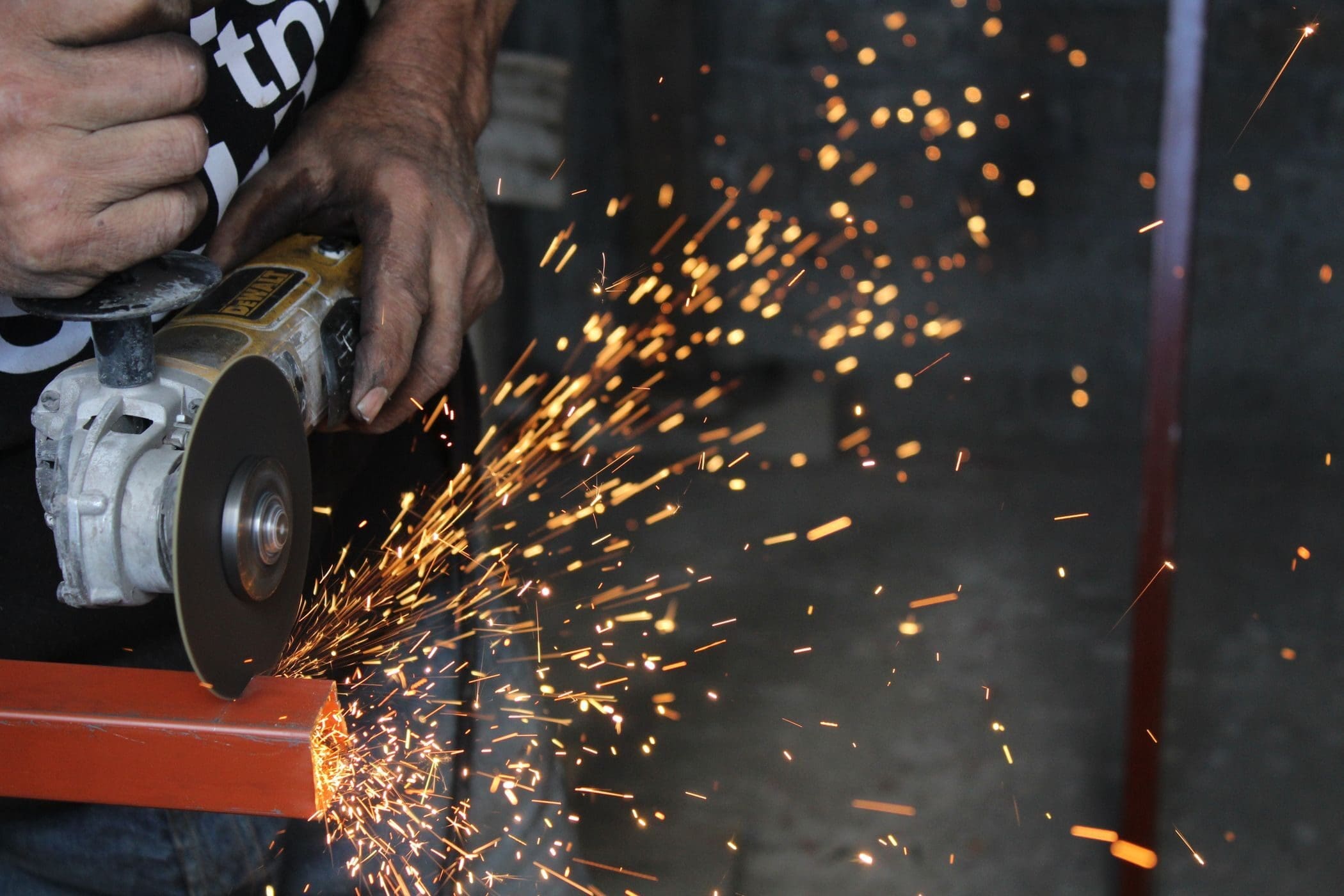
What to Know Before Buying an Angle Grinder
An angle grinder is one of the most versatile power tools in a workshop — it cuts, grinds, sands, polishes, and strips material depending on the attachment — but that versatility also makes it one of the tools with the most to think about before buying. Disc size, RPM, corded vs. cordless, and safety features all interact in ways that affect both what the tool can do and how safely it can be used. Before buying, matching the disc size and power to the jobs you’ll actually do and understanding the safety features worth paying for will narrow the field quickly.
Disc size determines both capability and how the tool handles
The disc diameter is the first decision, and it sets the tool’s weight, cutting depth, and maximum RPM. The 4.5-inch disc is the standard for DIY and general workshop use: it’s light enough to maneuver in tight spaces, accepts a wide range of wheel types, and handles the majority of tasks a home user will encounter — cutting rebar, grinding welds, removing rust, or cutting ceramic tile. The 5-inch disc offers slightly more surface area and is a common step up for heavier fabrication work. The 7-inch disc significantly increases material removal and is suited to heavy grinding on thick metal or concrete, but it’s heavier, more difficult to control for less experienced users, and the higher disc surface speed at equivalent RPM raises the consequences of disc failure. For most home workshop use, a 4.5-inch grinder handles everything well and is the size to start with unless a specific task clearly requires more.
RPM, surface speed, and why they matter for disc safety
Every grinding disc and cutting wheel has a maximum RPM rating printed on it, and exceeding that rating is a serious safety risk — a disc spinning faster than its rated speed can shatter and send fragments at high velocity. The no-load RPM listed on the tool is the speed without resistance; under load it drops. Most 4.5-inch grinders run at 10,000 to 12,000 RPM, and wheels rated for use with those tools carry the same or higher ratings. The risk increases with larger discs — a 7-inch disc at the same angular speed has far greater surface speed than a 4.5-inch disc, and the energy stored in a rotating disc scales with radius. Variable-speed grinders let you reduce RPM for tasks that benefit from lower speed, such as polishing or working with certain grinding wheels, but the minimum useful speed varies by task. Single-speed grinders are adequate for most cutting and grinding work where you’re always running at full speed.
Corded vs. cordless — real tradeoffs for each setting
Corded angle grinders deliver full, consistent power for as long as you need them — there’s no battery fade under heavy sustained cutting or grinding, and the motor is lighter because it doesn’t carry a battery pack. For shop work where you’re stationary near an outlet, corded is typically the right choice. Cordless grinders on 18V or 20V platforms work well for intermittent cuts in the field — cutting rebar during concrete work, grinding welds on a structure, or doing trim work away from power — but a single battery may last only 15 to 30 minutes under heavy use before needing a recharge. If you already use an 18V or 20V cordless platform for other tools, a cordless grinder from the same brand uses the same batteries, which significantly reduces the total cost. For both sustained heavy grinding and portability, some tradespeople carry one of each.
Disc and wheel types — compatibility and correct use
The same angle grinder body accepts a wide range of attachments with different purposes and safety requirements. Depressed-center grinding wheels are thick, designed for removing material from metal and masonry, and can handle side loading. Cutting discs are thinner, more fragile, and designed only for straight cuts — they should never be used for grinding or side pressure, which can shatter them. Flap discs consist of overlapping abrasive flaps and are used for blending, finishing, and light material removal on metal or wood. Wire cup and wheel brushes remove rust, paint, and scale. Diamond blades cut tile, concrete, and stone. All of these attach to the standard arbor (typically 5/8 inch on consumer grinders), but using the wrong disc for a job — especially using a cutting disc for grinding work — is a common cause of disc failure and injury. Circular saw blades designed for wood should never be mounted on an angle grinder; the geometry of an angle grinder’s operation creates forces that cause these blades to shatter.
Safety features worth prioritizing
Angle grinders are among the power tools most likely to cause serious injury, and the safety features on a given model make a real difference. A paddle switch (also called a dead man’s switch) requires continuous grip pressure to run — the tool stops immediately when you release it, which prevents the grinder from continuing to spin if it’s dropped or kicked out of your hand. This is generally safer than a slide-lock switch that stays on. Anti-kickback electronics detect sudden changes in resistance — such as the wheel catching in a cut — and reduce motor torque before the tool can spin out of control. A disc brake stops the wheel within two to three seconds of releasing the switch, compared to ten or more seconds of coasting on models without it. Guards are mandatory and must be positioned to deflect sparks and fragments away from the user — never remove the guard or use the tool without it. For all angle grinder work, a full face shield provides meaningfully more protection than safety glasses alone.
What to check before you buy an angle grinder
- Start with 4.5 inches for general workshop use — most DIY and light professional tasks don’t require a larger disc
- Confirm the tool’s RPM is compatible with the disc types you plan to use — check the disc’s max RPM rating before mounting
- Decide between corded and cordless based on where you’ll use it most — cordless works well for field use, corded for stationary shop work
- Look for a paddle switch over a slide-lock switch for safer operation
- Check whether the model includes anti-kickback electronics and a disc brake, especially if you’re less experienced with the tool
- Budget for a full face shield if you don’t already own one — safety glasses alone are not adequate for angle grinder work
How to choose an angle grinder
Work through these steps to find the right grinder for your tasks:
- Identify the tasks you’ll actually do — cutting metal or rebar, grinding welds, removing rust or paint, cutting tile or concrete — since each may favor a different disc type or size.
- Choose disc size based on those tasks: 4.5 inches covers most home and light professional use; go larger only if a specific job clearly requires more cutting depth or material removal.
- Decide corded or cordless based on your workspace — corded for shop use, cordless if you’re working away from outlets or already on an 18V/20V battery platform.
- Prioritize a paddle switch over a slide-lock trigger for safer day-to-day operation.
- Check whether anti-kickback electronics and a disc brake are included, especially if you’re newer to the tool or plan to use it frequently.
- Confirm the guard is intact and plan to keep it in place — and add a full face shield to your PPE before using it.
Ready to shop? Browse our full list of Angle Grinders to compare top-rated options.