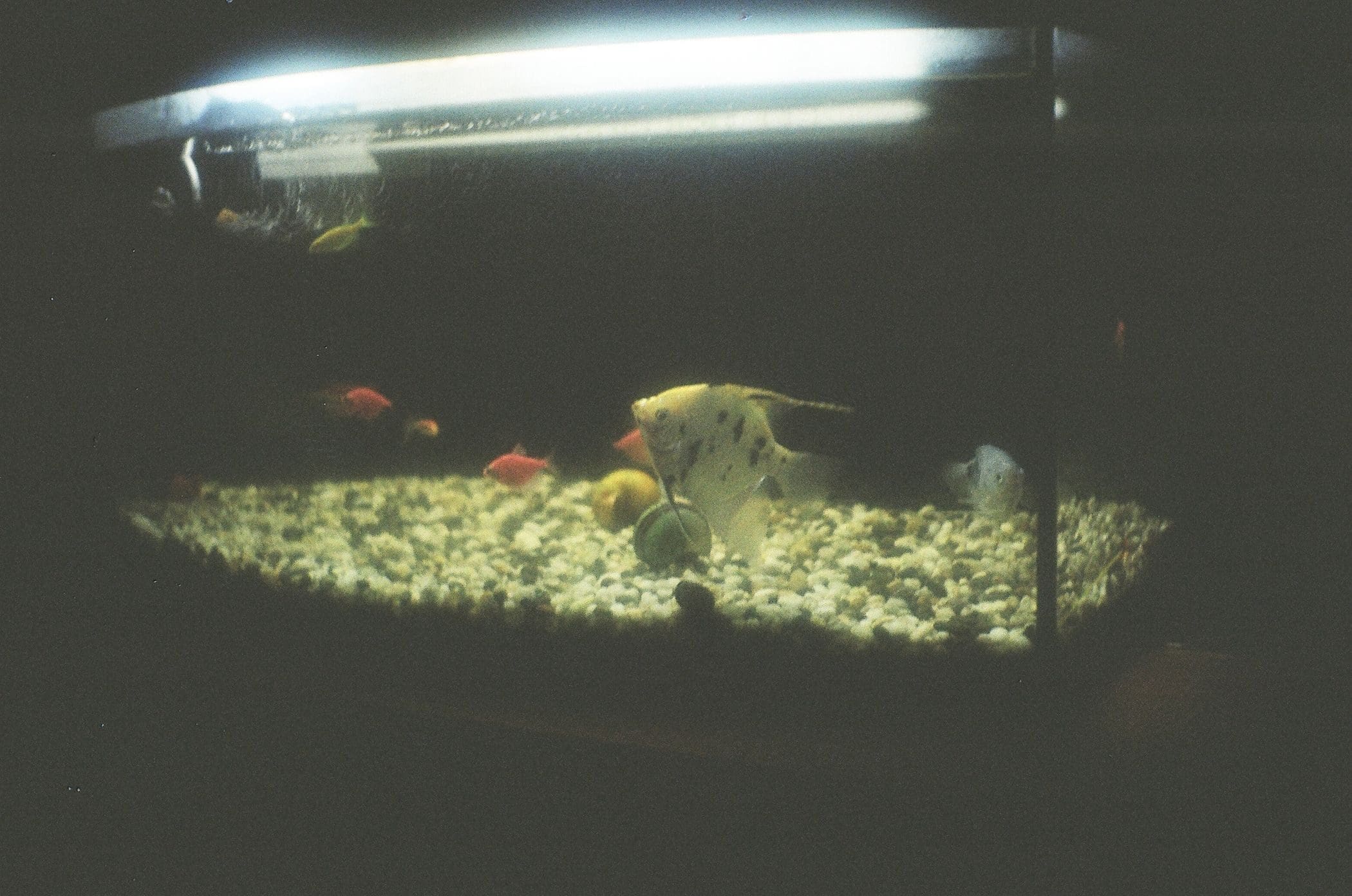
What to Look for in Aquarium Lights Before You Buy
Aquarium lighting affects fish coloration, plant growth, coral health, and algae levels — and the light requirements vary significantly between a fish-only display tank, a planted freshwater aquarium, and a reef setup. Before buying, the most useful distinctions to understand are the spectrum and intensity requirements for your specific tank type, how PAR measures what plants and corals actually use, and why photoperiod control is one of the most important tools for managing algae.
Spectrum and PAR — what actually matters by tank type
PAR (photosynthetically active radiation) measures the intensity of light in the wavelengths usable by plants and corals — roughly 400 to 700 nanometers — and it’s a more meaningful spec than watts or lumens for any tank with photosynthetic life. For planted freshwater tanks, low-light plants like anubias and java fern need PAR of about 25 to 50 micromoles per square meter per second at the substrate level; medium-light plants need 50 to 150; and high-light demanding plants need 150 or above. Using high PAR in a planted tank without supplemental CO2 injection typically results in algae outcompeting the plants for nutrients rather than healthy plant growth. For reef and saltwater tanks, soft corals and mushroom corals do well at 50 to 150 PAR, large polyp stony (LPS) corals typically need 100 to 250, and small polyp stony (SPS) corals at the most demanding end require 250 to 400 or higher. Fish-only tanks have no photosynthetic requirements — light is primarily for the keeper’s viewing experience, and the main consideration is spectrum that makes fish colors appear natural and vivid.
Fixture types and what each is suited for
LED fixtures have become the dominant choice across most aquarium applications because of their energy efficiency, low heat output, long lifespan, and the availability of programmable spectrum and intensity control. Budget LED bars work well for fish-only and low-light planted tanks; mid-range and higher-end programmable LED units provide the spectrum flexibility and PAR output that planted and reef tanks need. T5 fluorescent lighting still has a following among planted and reef hobbyists for its even, broad-coverage output — it requires bulb replacement every 12 to 18 months as the spectrum shifts even before the light visibly dims. Metal halide lights provide very high PAR output suitable for deep reef tanks and demanding SPS corals, but they run very hot, increase tank temperature, and have largely been displaced by high-output LED in new setups. Clip-on and nano LED fixtures are appropriate for tanks under 20 gallons where a full-size fixture would be oversized and PAR requirements are modest.
Intensity control and spectrum adjustability
Dimming capability is worth paying for on any light going over a planted or reef tank. For planted tanks, being able to reduce intensity during the early weeks after setup — before the tank has reached biological stability — gives plants a chance to establish without an algae explosion driven by excess light and nutrients. For reef tanks, gradual acclimation when adding new corals is important because a coral moved from low PAR to high PAR too quickly can bleach. Most mid-range and high-end LEDs now offer app or remote control over intensity and color channels, which allows programming a sunrise and sunset ramp, adjusting the blue-to-white channel ratio, and fine-tuning spectrum for specific inhabitants. For freshwater community tanks without live plants, dimming and spectrum control are convenience features rather than practical necessities.
Photoperiod and algae management
Photoperiod — how many hours per day the light runs — is one of the most important variables in controlling algae in any aquarium. Algae are opportunistic: they thrive when light duration is long and nutrient levels are elevated. For planted freshwater tanks, 6 to 8 hours per day is a common starting point; without CO2 injection, longer photoperiods provide more opportunity for algae to outcompete plants. For reef tanks, 8 to 10 hours is more typical to support coral photosynthesis. A timer or smart outlet to control the light is not optional — relying on manual switching results in inconsistent photoperiods that destabilize the tank’s biological rhythm. The siesta method — two separate three-to-four-hour photoperiods with a break in the middle of the day — is used by some planted tank keepers as an algae management technique, based on the idea that algae benefit less from interrupted light cycles than established plants do. Tank placement also matters: indirect natural light from nearby windows contributes to algae load even when the aquarium light is off, and a tank in direct sunlight will almost always develop algae problems regardless of photoperiod control.
Heat output and energy efficiency
LED fixtures run cool relative to T5 and metal halide alternatives, which is particularly important for reef tanks where even a few degrees of temperature increase from lighting can stress corals. Metal halide lights raise tank temperature significantly and typically require a chiller in warmer climates or during summer months. T5 fixtures produce moderate heat and may need a fan integrated into the hood. For large reef displays and aquaculture setups, the energy savings of LED over metal halide over a year can be significant — a four-bulb T5 fixture running 10 hours daily uses considerably more electricity than an equivalent LED. LED lifespan is typically 30,000 to 50,000 hours, which means years of operation before degradation becomes noticeable for most home tanks.
What to check before you buy aquarium lights
- Identify your tank type — fish-only, planted freshwater, or reef — since spectrum, PAR, and intensity requirements differ significantly between them
- For planted or reef tanks, look for PAR data at the distance from the light to your substrate or coral placement depth
- Look for dimming capability on any light going over a planted or reef tank — you’ll need it during setup and for coral acclimation
- Use a timer or smart outlet — consistent photoperiods are one of the most important algae management tools available
- Avoid placing the tank in a location with direct sunlight; ambient window light contributes to algae load independent of the fixture
- For reef tanks, confirm the light produces adequate PAR in the blue spectrum (420–470nm) for coral photosynthesis and fluorescence
How to choose aquarium lights for your tank
Work through these steps to find the right fixture for your setup:
- Identify your tank type and the photosynthetic needs of its inhabitants — this determines whether PAR, spectrum, and dimming are essential specs or secondary considerations.
- For planted tanks, match PAR to the light requirements of your plant species — starting at low to medium PAR is safer than high PAR without CO2 injection.
- For reef tanks, research the PAR requirements of your coral species and verify the fixture can achieve those levels at your coral placement depth.
- Choose a fixture with dimming control for planted or reef tanks — it’s a necessary feature for setup and acclimation, not a luxury.
- Set up a timer from day one — start with 6 to 8 hours for a planted tank or 8 to 10 hours for a reef, and adjust based on algae response.
- Consider heat output, especially for reef tanks — LED is significantly cooler than T5 or metal halide and avoids the need for a chiller in most home setups.
Ready to shop? Browse our full list of Aquarium Lights to compare top-rated options.