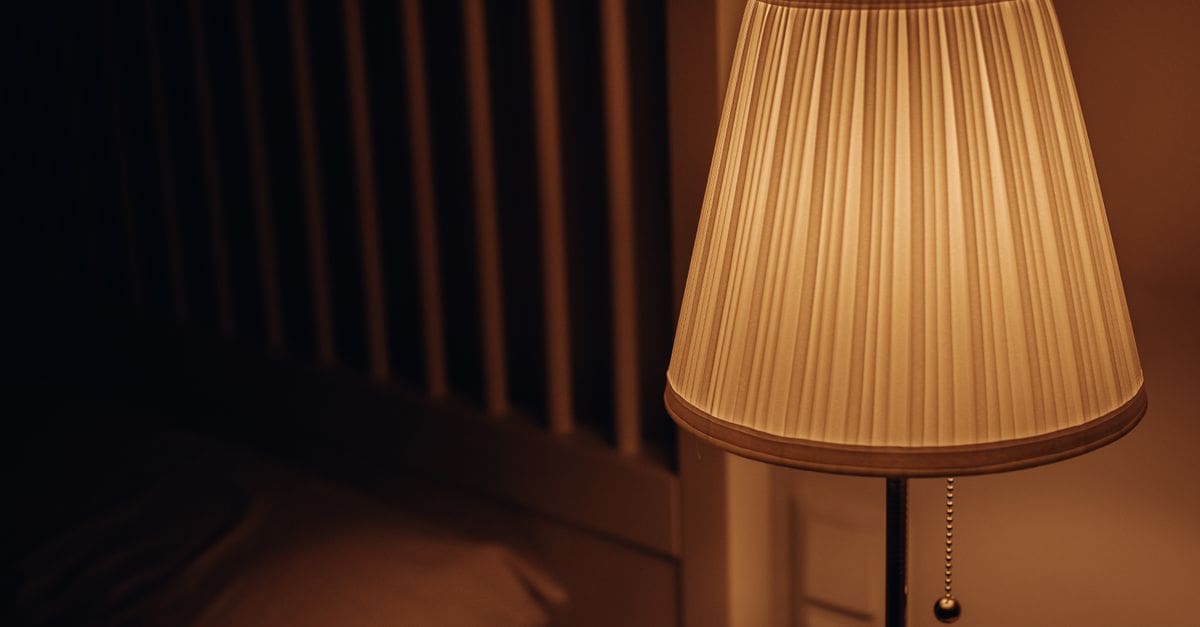
What to Look for in Bedside Lamps Before You Buy
Bedside lamps do more for bedroom function and sleep quality than most people give them credit for. The color temperature and brightness level of light in the hour before sleep directly affects melatonin production, and a lamp that delivers harsh cool-white light at full brightness works against the body’s natural wind-down process. At the same time, a lamp needs to be bright enough for reading without causing eye strain. Matching the right lamp to your actual bedtime habits makes the bedroom better for both relaxation and rest.
Color Temperature and Sleep
Color temperature is measured in Kelvin (K). Lower numbers (2,700K–3,000K) produce warm amber and yellow light that mimics sunset and supports melatonin production. Higher numbers (4,000K–6,500K) produce cool white and blue-toned light that signals daytime wakefulness to the circadian system. For a bedside lamp used in the evening, a color temperature of 2,700K–3,000K is the right target.
Lamps with adjustable color temperature allow you to use cooler light for reading tasks and shift to warmer tones as bedtime approaches. This is particularly useful for night owls who need task-level lighting late in the evening but want to support sleep onset. Smart bulbs with app control or dimmer-compatible fixtures allow this transition without changing the lamp itself.
Brightness and Dimmability
Bedside lamps for reading need enough lumens to illuminate a page without shadows — typically 400–800 lumens for most people, though individual sensitivity varies. The same lamp used for ambient bedroom light rather than active reading can run at 100–300 lumens. A lamp with a dimmer switch or compatible dimmer bulb covers both needs without requiring two separate fixtures.
Dimmability depends on the bulb type and the switch mechanism. Not all LED bulbs are dimmable, and non-dimmable LEDs flicker or buzz when used with a dimmer switch. Confirm that both the bulb and the switch are rated for dimming. If you’re retrofitting an existing lamp with a smart bulb, check that the socket wattage rating exceeds the bulb’s draw.
Lamp Size and Shade Proportions
The lamp height should position the bottom of the shade at approximately shoulder height when you’re sitting up in bed — typically 24–30 inches above the nightstand surface for most adults. A shade that sits too high floods the ceiling more than the reading surface; one that sits too low creates glare at eye level. The shade diameter should be approximately twice the width of the base for visual balance.
Shade material affects light quality. Opaque shades direct light downward and outward in a defined cone, which is good for reading. Translucent shades diffuse light more broadly and create a softer ambient glow. Linen, fabric, and frosted glass shades diffuse; metal, opaque fabric, and dark-lined shades direct.
Switch Placement and Control Options
Reaching across a nightstand in the dark to find a switch is a minor but consistently frustrating experience. The most convenient designs have a switch on the cord within easy reach, a touch-activated base, or a pull-chain accessible from the pillow position without sitting up. Rotary switches on the base require finding the switch by feel; inline cord switches are easier to locate in the dark.
Smart lamps and smart bulb setups controlled by voice or phone are genuinely useful in the bedroom — turning lights off without getting up or changing brightness from under the covers removes small friction from the sleep routine. If you use a smart home ecosystem, confirm the lamp’s bulb socket is compatible with your preferred smart bulb brand before purchasing.
Base Stability and Cord Management
A bedside lamp base needs to be stable enough that it won’t tip when the cord is accidentally pulled. Wide, heavy bases with a low center of gravity resist tipping; narrow column bases are elegant but vulnerable. Check that the base diameter is appropriate for your nightstand surface — a large base on a small nightstand leaves no room for a phone or water glass.
Cord length and direction affect how cleanly the lamp integrates into the bedside setup. A cord that exits from the back of the base and drops directly to a nearby outlet creates less visual clutter than one that loops across the nightstand surface. Cord clips or adhesive guides help manage the path to the outlet when it’s not directly behind the lamp.
What to check before you buy
- Confirm the color temperature is 2,700K–3,000K for warm, sleep-supportive evening light.
- Verify the lamp and intended bulb are both dimmable if you want brightness control.
- Measure your nightstand height and confirm the assembled lamp positions the shade bottom at shoulder level when seated.
- Check the base dimensions against your nightstand size — it should leave room for other items.
- Evaluate the switch placement for ease of use from your typical pillow position.
- Confirm smart bulb compatibility if you intend to use it with a home automation system.
- Check the maximum wattage rating on the socket before selecting a replacement or upgrade bulb.
How to choose a bedside lamp
- Determine your primary use — reading lamp, ambient mood light, or both — to set brightness and dimmability requirements.
- Select 2,700K–3,000K color temperature as a baseline for sleep-supportive light.
- Measure your nightstand height to calculate the lamp height needed for the shade to sit at shoulder level.
- Evaluate switch placement and control options based on your bedtime habits.
- Choose shade material based on whether you want directed task light (opaque) or diffused ambient light (translucent).
- Check base stability and dimensions against your nightstand before finalizing.
Ready to shop? Browse our full list of Bedside Lamps to compare top-rated options.