What to Look for in a Dumbbell Set Before You Buy
A dumbbell set that doesn’t cover the right weight range for your training level will either limit your progress or leave you paying for weight you’ll never use. Fixed-weight sets give immediate grab-and-go convenience at every increment; adjustable sets save space and cost less per pound but introduce a loading mechanism that adds time between sets. Handle diameter, coating material, and head shape affect both comfort and how the dumbbells store. Whether equipping a home gym for general fitness or lifting heavy, the right set comes down to weight range, format, and storage.
Fixed vs. Adjustable Dumbbells
Fixed-weight dumbbells are individual pairs at specific weights — you grab the pair you need and go. For home gyms where multiple people train or where sets are used in quick succession, fixed weights are faster and more convenient. The tradeoff is cost and space: a full set from 5 to 50 lbs in 5 lb increments requires 10 pairs and significant floor or rack space.
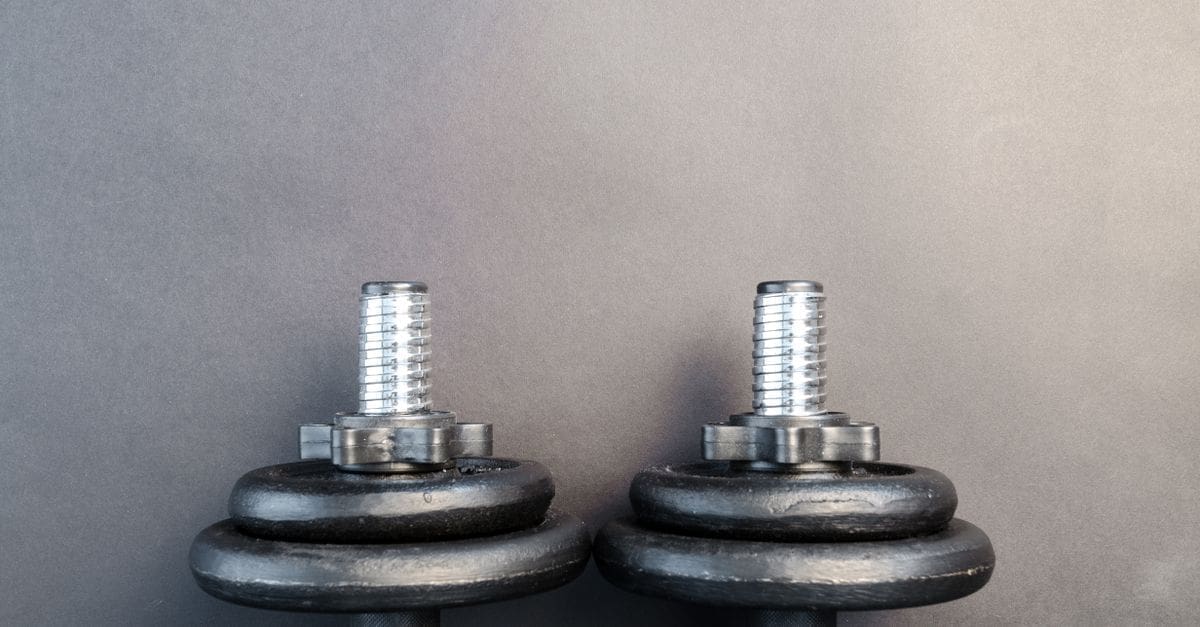
Adjustable dumbbells use a dial, pin, or sleeve mechanism to change the weight on a single handle. Popular selectorized systems (like those with a dial mechanism) let you change weight in seconds, but the mechanisms add cost and can break under aggressive use. Plate-loaded adjustable dumbbells are more durable but slower to change. For solo home gym use where cost and space are priorities, adjustable sets make practical sense.
Weight Range and Increments
The weight range should cover both where you are now and where you expect to be in 12–18 months of training. Beginners typically start in the 5–25 lb range; intermediate lifters generally need 15–50 lbs for most exercises. A set that tops out at 25 lbs will require replacement as strength improves, which often costs more than buying the right range initially.
Increment size matters for progression. Fixed sets in 5 lb increments are standard and work well for most exercises. Some adjustable systems offer 2.5 lb increments, which is more useful for upper body isolation movements where 5 lb jumps can be too large. For kettlebell-style training or one-handed work, smaller increments allow smoother progression.
Handle Diameter and Knurling
Handle diameter affects grip comfort and how the dumbbell feels during high-rep sets. Handles in the 30–32mm diameter range are standard and work well for most hand sizes. Handles thicker than 34mm create more forearm fatigue and are less suitable for high-rep work unless you’re specifically training grip strength.
Knurling — the textured pattern machined into the handle — provides grip without gloves. Light to medium knurling is comfortable for most users; aggressive knurling can tear calluses during long sets. Rubber-grip handles provide traction without any knurling but can feel slippery when sweaty in a warm gym environment.
Head Shape: Round, Hex, and Rubber-Coated
Round heads are traditional and work fine for standard exercises but will roll if set down on a flat surface. Hex (six-sided) heads rest flat on the floor or bench without rolling, which is useful during floor exercises like push-ups using dumbbells as handles. Hex heads are more popular in home gyms for this reason.
Rubber-coated heads protect flooring from damage and reduce noise when dumbbells are set down, which matters in apartments or rooms with hardwood floors. Urethane coatings are more durable than standard rubber — they don’t off-gas odors and resist cracking over time. Chrome and bare iron heads look clean but scratch floors easily.
Material and Coating
Cast iron dumbbells are the standard — durable, stable weight, and available at every weight. Rubber-encased cast iron is the most floor-friendly and quietest. Neoprene-coated dumbbells are common in the lighter (2–20 lb) range and are comfortable to hold but can crack after heavy use.
Urethane dumbbells are premium, extremely durable, and odor-free, but cost significantly more. Steel dumbbells (common in selectorized systems) are accurate in weight and durable but can damage floors if dropped without rubber floor mats. Whatever material you choose, verify that the stated weight is accurate — cheap cast iron dumbbells can vary by 5–10% from labeled weight.
Storage: Racks and Footprint
A set of fixed-weight dumbbells needs a rack to stay organized and accessible. Three-tier A-frame racks are the most space-efficient for a range of weights, typically holding 5–50 lb sets on three shelves. Flat racks are easier to load and unload but take more floor space per pair stored.
For adjustable dumbbells, the storage cradle included in the kit is typically the only storage you need. Measure the cradle’s footprint before purchasing — some systems are surprisingly large. Vertical storage stands work for thicker plate-loaded systems. Whatever configuration you choose, positioning the storage at comfortable reach height reduces the risk of back strain when picking up heavy pairs.
What to Check Before You Buy
- Determine the weight range you need now and where you’ll be in 12–18 months of training.
- Decide between fixed and adjustable based on number of users, space, and budget.
- Check handle diameter — 30–32mm is standard and works for most hand sizes.
- Verify head shape — hex heads rest flat and are more practical for floor exercises.
- Choose coating based on your floor type — rubber or urethane for hardwood, chrome for rubber mats.
- Confirm increment size — 2.5 lb increments are preferable for upper body isolation work.
- Account for rack or storage footprint in your gym space planning.
- Check warranty and mechanism durability reviews for adjustable selectorized systems.
How to Choose a Dumbbell Set
Choosing a dumbbell set comes down to training goals, space, and how many people will use the equipment.
- Assess your current and projected strength level to determine the weight range you need.
- Decide between fixed and adjustable format based on your training style and available floor space.
- Check handle diameter and knurling for comfort during the exercises you do most frequently.
- Choose head shape — hex for home gym floor use, round for traditional feel on a rack.
- Select coating based on floor type and whether noise and odor are concerns.
- Measure and plan storage before purchasing — rack footprint is often overlooked until delivery day.
Ready to shop? Browse our full list of Dumbbell Sets to compare top-rated options.