
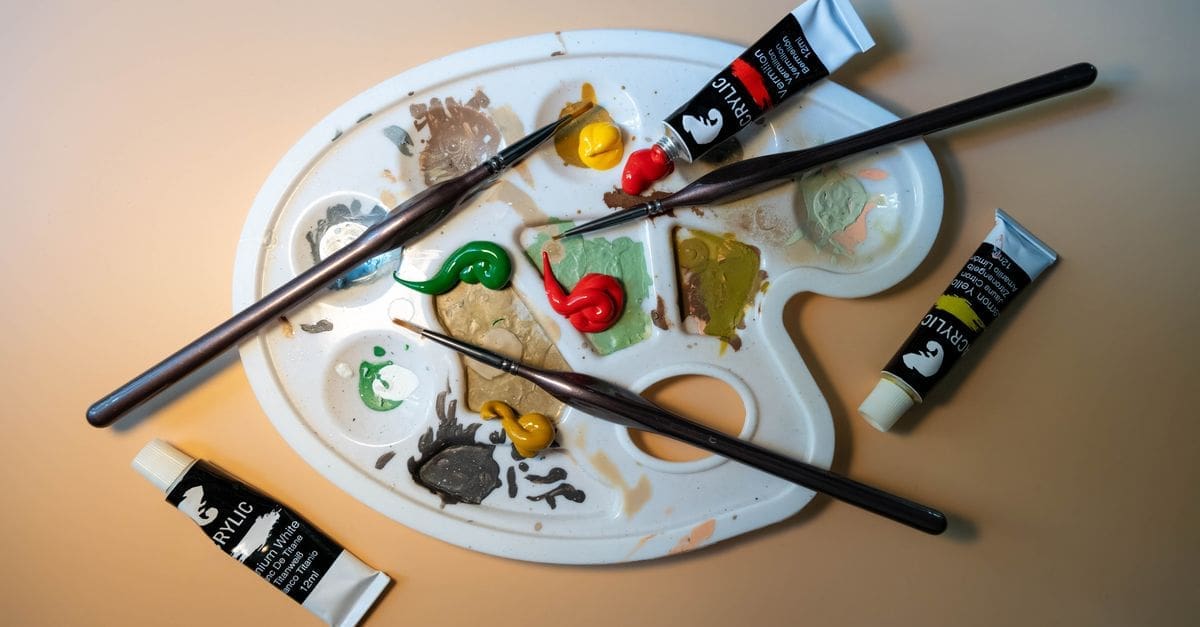
How to Choose an Acrylic Paint Set
Pigment load and the ratio of pigment to binder decide whether acrylics stay vivid or dry dull and chalky. The number of colors, their lightfastness, and the consistency between heavy body and fluid shape how the paint handles. Tube or jar packaging and drying behavior affect your workflow. Matching the set’s quality tier and range to your work keeps colors true and mixing predictable.
Pigment Quality and Grade
Artist-grade acrylics carry a higher pigment load for richer, more opaque color, while student grades use more filler and cost less. The grade shows in coverage, since student paints often need extra layers to reach the same depth.
Check whether colors are single-pigment or mixtures, as single-pigment paints mix cleaner secondaries. A set stating pigment codes signals transparency about what you are actually buying.
Color Range and Mixing
A well-chosen set covers warm and cool versions of the primaries plus useful earths, letting you mix a wide gamut. A huge set of pre-mixed colors can be convenient but overlaps and skips key mixing anchors.
Beginners often learn more from a compact, mix-focused palette than a large box of ready colors. Consider whether you prefer to mix your own hues or reach for a specific shade quickly.
Consistency: Heavy Body Versus Fluid
Heavy-body acrylics hold brush and knife marks for texture, suiting impasto and expressive work. Fluid acrylics flow for detail, pouring, and smooth blends, so the consistency should match your technique.
Some ranges offer soft-body as a middle ground that brushes smoothly while retaining some body. Think about the surfaces and effects you want before committing to one consistency.
Lightfastness and Permanence
Lightfast ratings tell you how well a color resists fading, which matters for work meant to last. Student sets sometimes include fugitive pigments that shift over time, so ratings guide durable choices.
Archival-minded artists favor colors rated highly for permanence, especially for sale or display. A set that lists lightfastness lets you avoid surprises years down the line.
Packaging and Volume
Tubes let you squeeze out just what you need and reseal, while jars suit artists who use large amounts of a color. Tube size affects value, since larger tubes cost less per milliliter for colors you use often.
Check the caps and seals, since acrylic dries fast and poor closures let tubes harden. Well-sealed packaging extends the usable life of the set considerably.
Drying Time and Mediums
Acrylics dry quickly, which speeds layering but can dry the palette before you finish blending. Retarder and flow mediums extend working time and adjust the paint, so compatibility with mediums matters.
A set that plays well with gels, pastes, and varnishes opens up texture and finish options. Consider whether you will add mediums, since they change how the paint behaves.
What to Check Before You Buy
- Decide between artist grade for pigment richness and student grade for value.
- Look for single-pigment colors for cleaner mixing.
- Choose a range that covers warm and cool primaries plus earths.
- Match the consistency, heavy body or fluid, to your technique.
- Check lightfastness ratings if your work must resist fading.
- Consider tube versus jar packaging for how much paint you use.
- Confirm caps seal well since acrylic dries fast.
- Check compatibility with mediums if you plan to add texture or flow.
How to Choose an Acrylic Paint Set
Start with your technique and how long your work must last, then weigh grade, color range, and consistency against packaging.
- Decide whether artist or student grade suits your goals and budget.
- Choose a color range built around warm and cool primaries for mixing.
- Match the paint consistency to the effects and surfaces you use.
- Check lightfastness ratings for work meant to endure.
- Pick tube or jar packaging based on your typical paint volume.
- Confirm the paint works with the mediums you plan to use.
Ready to shop? Browse our full list of Acrylic Paint Sets to compare current options and prices.


