Camping Shower Buying Guide: Heating, Capacity and Pressure
Rinsing off sand, sweat and sunscreen after a long day outside makes camp feel far more civilized. Options range from simple solar bags to battery pumps and propane water heaters, and each delivers very different water pressure and temperature. Capacity, heating method and how you hang or power the unit decide how many people can shower. Here is how to compare them.
Solar Bags, Pump Sprayers and Propane Heaters
Solar shower bags use black PVC to absorb sunlight and warm the water inside. They are cheap, light and need no fuel, but heating takes three hours or more of direct sun and depends on weather.
Battery pump showers draw water from a bucket through a handheld head, giving consistent pressure without hanging anything. Propane tankless heaters deliver hot water on demand in any weather, making them popular for families and base camps.
Water Capacity
Solar bags typically hold 2.5 to 5 gallons. A 5-gallon bag gives one or two short showers or a quick rinse for several kids.
Pump and propane systems draw from a separate bucket or jug, so capacity depends on your water supply. Plan about 1 to 2 gallons per person for a quick rinse.
Heating Speed and Temperature Control
Solar bags can reach 100 degrees or more on hot sunny days, but the water cools quickly once the sun fades. A temperature strip on the bag helps you avoid scalding.
Propane heaters offer adjustable temperature and flow controls. Look for a thermostat or flame adjustment so you can fine-tune the heat.
Water Pressure and Shower Head
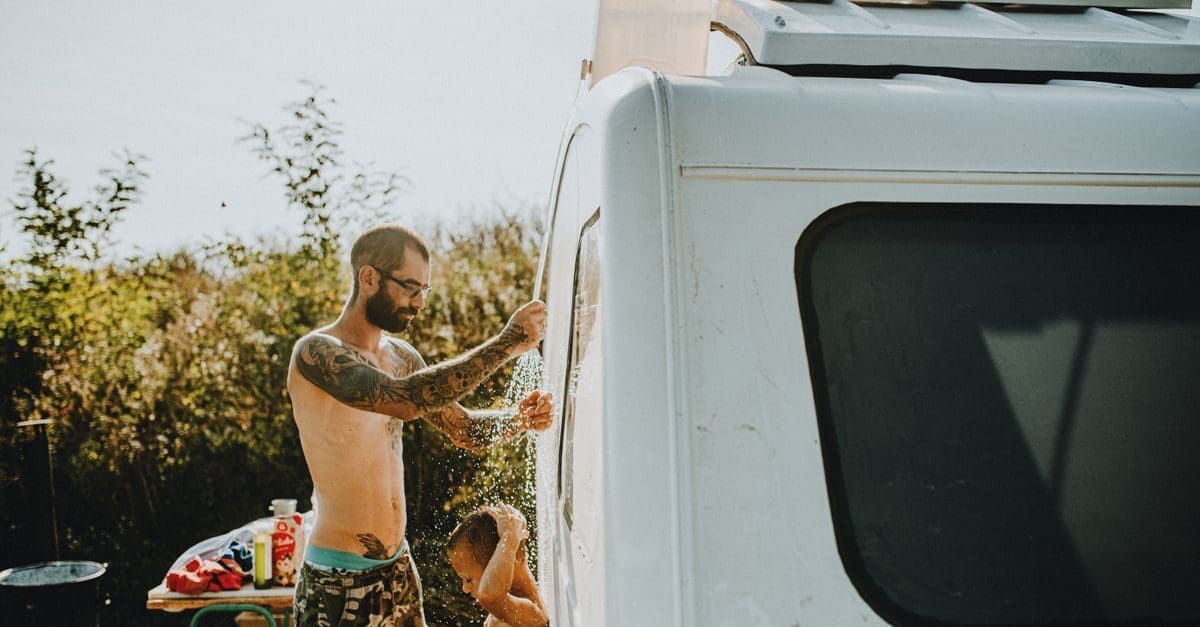
Gravity-fed bags rely on hanging height for pressure, so they work best hung 6 to 7 feet up from a sturdy branch, roof rack or shower tent hook. Battery pumps deliver steadier pressure through a handheld wand and let you set the water container on the ground.
A shower head with an on/off switch conserves water while you lather, which can double the number of rinses from one container. Wide spray heads feel more like a home shower, while narrow jet settings work better for rinsing sandy feet and muddy gear.
Power, Batteries and Charging
Rechargeable pump showers typically run 30 to 60 minutes of spray time per charge, enough for several people. USB-C charging lets you top up from a power bank, solar panel or vehicle outlet between uses.
Propane tankless heaters often need D-cell batteries for ignition and a 12V or rechargeable pump to move water from a bucket. Check what each unit requires so you are not caught without power at camp.
Durability and Packability
Thicker PVC bags with welded seams and reinforced hanging handles resist leaks when full, since 5 gallons of water weighs over 40 pounds. Pump units should have sealed battery compartments and a waterproof rating so splashes do not damage the motor.
Solar bags roll up to the size of a water bottle, and pump units fit in a small stuff sack. Propane heaters are bulky and heavier but earn their space on longer trips where hot water every day matters.
What to Check Before You Buy
- Choose solar, pump or propane heating based on climate and group size.
- Check water capacity per shower.
- Look for temperature indicators or controls.
- Compare water pressure and flow rate.
- Check battery runtime and charging options.
- Confirm durability of bags, hoses and fittings.
- Plan where you will hang or set up the shower.
How to Choose a Camping Shower
These steps help match a shower to your campsite.
- Decide how many people will shower and how often.
- Pick a heating method based on weather and fuel access.
- Choose capacity or water supply.
- Compare pressure and shower head features.
- Check power needs and charging.
- Plan privacy and drainage.
Ready to shop? Browse our full list of Camping Showers to compare current options and prices.