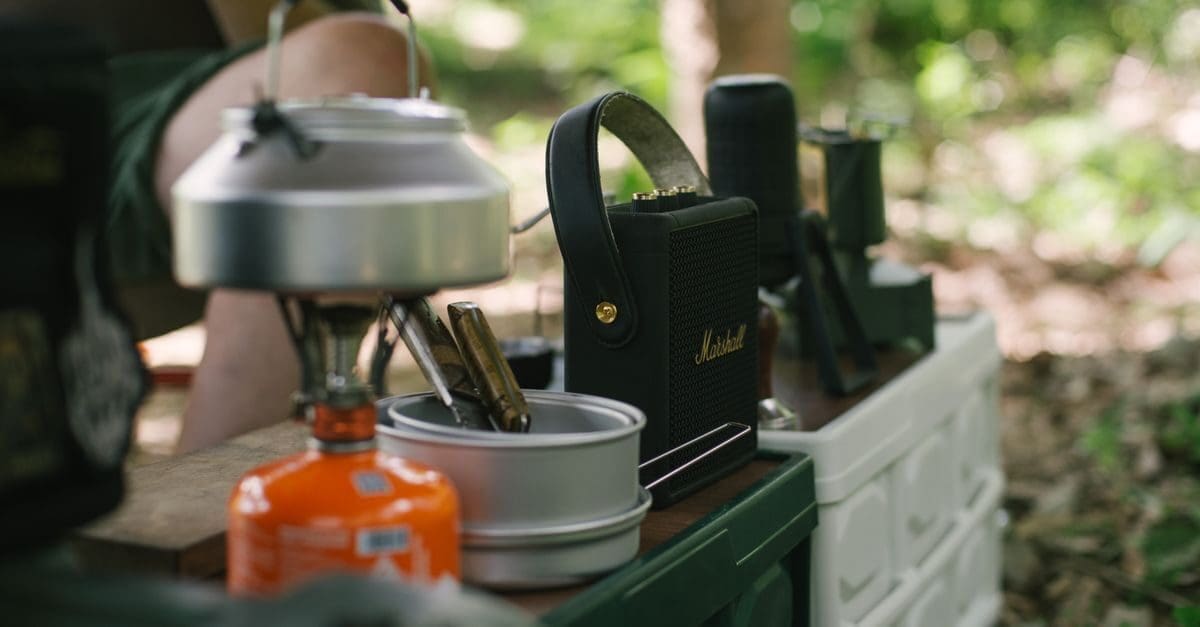
How to Choose a Camping Cookware Set
A good camp kitchen starts with pots that heat evenly, nest tightly and survive being thrown in a gear bin. Metal choice decides weight, durability and how easily food sticks, while the number and size of pieces decides how many people you can feed without cooking in shifts. Handles, lids and the way everything packs together matter just as much once you are cooking by headlamp on an uneven picnic table. The sections below break down the specs that separate a set you will use for years from one that ends up rattling around unused.
Aluminum, Titanium or Stainless Steel
Hard-anodized aluminum is the middle ground for most campers. It spreads heat well, which reduces scorching on small burners, and the anodized layer resists scratches and corrosion. It weighs more than titanium but costs far less, making it the usual pick for car camping and casual backpacking.
Titanium is the lightest and toughest option but conducts heat poorly, so it creates hot spots and is better for boiling water than simmering sauces. Stainless steel is heavy and slow to heat but nearly indestructible and easy to scrub, which suits base camps and groups that cook real meals over a campfire grate.
Piece Count and Pot Volume
Ignore the headline piece count and look at what the pieces are. A 12-piece set may include sponges, sacks and spatulas, while a 4-piece set may contain two genuinely useful pots and a frying pan. Count the cooking vessels first, then the extras.
For one or two people, a 1 to 1.5 liter pot covers coffee and dehydrated meals. Families of four should look for a 2.5 to 3 liter main pot plus a second smaller pot so pasta and sauce can cook at the same time. A 20 cm or larger frying pan makes breakfast for a group far faster.
Nonstick Coatings and Cleanup
Ceramic and PTFE nonstick linings make eggs and pancakes easy and cut down on scrubbing when water is limited. The tradeoff is durability: metal utensils, abrasive pads and high empty-pan heat all shorten coating life. Sets that include silicone or nylon utensils help protect the surface.
Uncoated stainless and titanium handle metal spoons and campfire flames without worry but need more oil and more scrubbing. If you cook mostly boil-in-bag meals, an uncoated pot is fine; if you cook from scratch at camp, a coated pan is worth the extra care.
Handles, Lids and Pour Spouts
Folding handles save space but must lock firmly when open. Look for handles with silicone sleeves so you can grab them without gloves, and test whether a full pot feels stable when lifted by one handle. Detachable gripper handles work well but are easy to lose in the dark.
Lids with built-in strainer holes make draining pasta simple, and a pour spout prevents boiling water from running down the side of the pot. Clear or vented lids help control boil-overs, while lids that double as a small frying pan add function without adding weight.
Nesting Design and Pack Size
The strongest sets nest every piece, plus a fuel canister or small burner, inside the largest pot. That turns a loose pile of gear into one compact bundle that will not clank in your pack or bin. Check the packed dimensions and weight, not just individual pot sizes.
Mesh or drawstring stuff sacks protect coatings from abrasion and keep soot off the rest of your gear. Some sets include a clip strap that holds the bundle closed, which is handy when the cookware rides on the outside of a pack.
Heat Source Compatibility
Wide, flat bases suit two-burner propane setups and campfire grates, while narrow tall pots work better on small canister burners and windscreen systems. A pot that is too wide for a compact burner wastes fuel and heats unevenly around the edges.
If you plan to cook directly over coals, choose bare stainless or hard-anodized aluminum without plastic or silicone parts near the flame. Coated pans should stay on controlled gas flames, where you can keep the heat at low to medium.
What to Check Before You Buy
- Count the actual pots and pans rather than trusting the total piece count on the box.
- Confirm the main pot volume matches your group size, roughly 0.75 liters per person for one-pot meals.
- Check whether the coating is ceramic, PTFE or uncoated and whether utensils are included to protect it.
- Open and close each folding handle to make sure it locks without wobble.
- Look for strainer lids and pour spouts if you cook pasta or boil water often.
- Verify the packed size and total weight against the space you have in your pack or bin.
- Make sure the pot base width suits the burner or grate you already own.
How to Choose a Camping Cookware Set
Use these steps to narrow the field quickly.
- Decide whether you are car camping, backpacking or cooking at a base camp, since that sets your weight limit.
- Pick a metal: hard-anodized aluminum for balance, titanium for low weight, stainless for durability.
- Size the main pot to your group and add a second pot if you cook two components at once.
- Choose nonstick if you cook from scratch, or uncoated if you mostly boil water.
- Compare handle, lid and spout designs for safe one-handed use.
- Check that everything nests into one bundle that fits your storage space.
Ready to shop? Browse our full list of Camping Cookware Sets to compare current options and prices.