
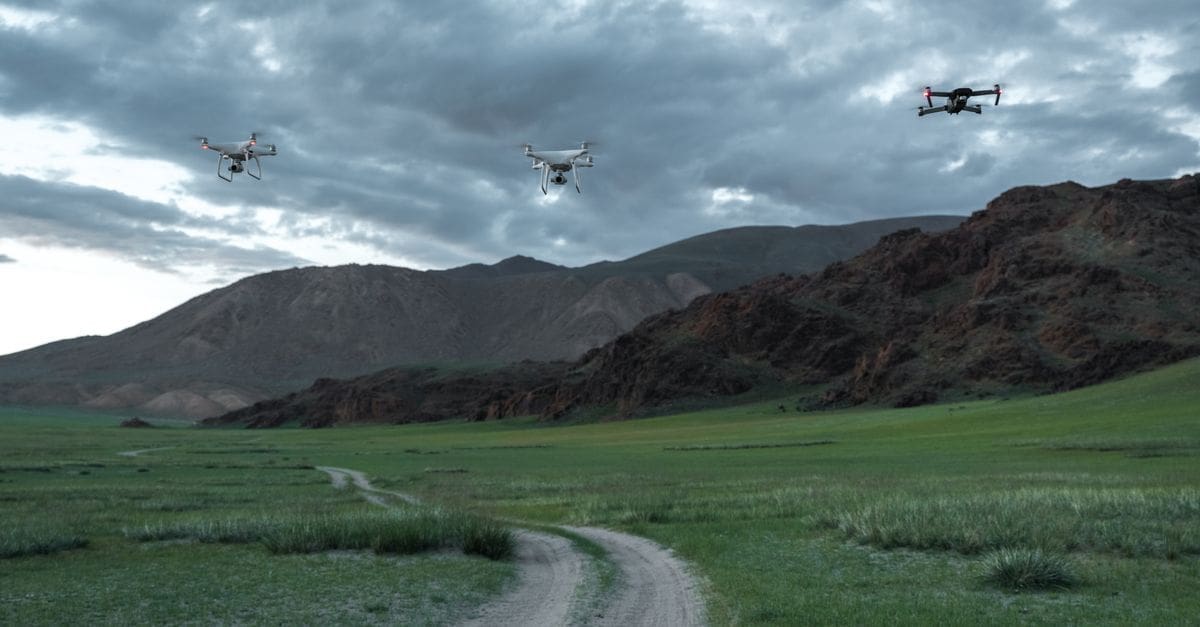
How to Choose a Drone for Photography or Recreation
Picking a drone without clarifying its primary use case almost always leads to buyer’s remorse. A drone built for cinematic aerial photography prioritizes gimbal stabilization and camera quality over agility; an FPV racing drone prioritizes speed and responsiveness over image quality. Regulatory requirements add another layer — drones over 250 grams require FAA registration in the US, and commercial use requires a Part 107 remote pilot certificate. The specs that matter most depend entirely on what you plan to do with the drone.
Defining Your Use Case First
The most fundamental decision is whether you’re buying a drone for aerial photography, recreational flying, FPV racing, or professional inspection work. Each category has a different set of priorities, and a drone optimized for one use typically compromises on the others.
Camera drones prioritize stabilized, high-resolution footage over speed. Recreational drones prioritize low cost and durability over image quality or flight time. FPV drones are typically flown in manual mode without GPS stabilization and require more skill. Knowing which category you’re buying in eliminates most of the confusion when comparing specs.
Camera Quality and Gimbal Stabilization
For photography and video drones, camera quality comes down to sensor size, resolution, and how the image is stabilized. A 3-axis mechanical gimbal provides true stabilization by physically moving the camera to compensate for drone movement — producing smooth footage regardless of wind or maneuver. Electronic image stabilization (EIS) does this digitally and works reasonably well in mild conditions but doesn’t match a mechanical gimbal in choppy air.
Sensor size matters more than megapixel count. A larger sensor at 12MP outperforms a smaller sensor at 48MP in low-light conditions. For video, 4K at 30fps covers most practical uses; 4K at 60fps or higher resolutions allow slow-motion editing and more crop flexibility. Log color profiles are worth having if you plan to color grade footage in post.
Flight Time and Battery Life
Consumer drones typically advertise 20–46 minutes of flight time, but real-world performance is usually 15–25% lower than the stated maximum measured under ideal conditions. Wind reduces flight time significantly — flying in sustained 15mph winds can cut a 30-minute drone to 22–24 minutes.
Multiple batteries are standard for serious aerial work — a two-battery kit doubles usable flight time per session. Charging time matters as much as battery life. Carry batteries in a fireproof LiPo bag when traveling by air — airlines have specific regulations for lithium battery carry-on.
Range and Signal Transmission
Controller range is the maximum distance the drone can fly while maintaining reliable signal. Consumer drones advertise 6–15km, but these figures assume ideal open-field conditions. Urban environments with buildings and RF interference drop effective range substantially.
Dedicated transmission systems like DJI’s O3/O4 maintain stable HD video feeds at range and in cluttered RF environments. Wi-Fi-based systems are more susceptible to interference and limited in effective range. For photography drones, the controller’s video feed quality matters as much as raw range.
Obstacle Avoidance and Safety Systems
Entry-level drones have no obstacle avoidance — they fly where you point them, and hitting something is entirely the pilot’s responsibility. Mid-range drones add forward and downward sensing. High-end models include omnidirectional sensing, which provides meaningful protection in complex environments.
GPS return-to-home (RTH) is universally valuable — a drone that returns to its launch point automatically when battery is low, signal is lost, or RTH is triggered manually is an important safety net. Confirm that RTH altitude is user-configurable above the tallest obstacle near your typical launch point.
Regulations and Legal Requirements
In the US, drones over 250 grams must be registered with the FAA and display the registration number. Flying for compensation or commercial purposes requires a Part 107 Remote Pilot Certificate. Recreational flying prohibits flight near airports, over crowds, and above 400 feet AGL.
Sub-250g drones are designed to fall under the FAA’s registration threshold, simplifying compliance for recreational users. LAANC authorization through apps like AirMap or Aloft makes flying near controlled airspace straightforward for compliant pilots.
What to Check Before You Buy
- Define your primary use case — aerial photography, recreation, FPV, or professional work.
- Check drone weight — sub-250g simplifies regulatory compliance for recreational use.
- Confirm camera specs: sensor size, gimbal type, and max video resolution.
- Review battery flight time and factor in a 20% real-world reduction from the advertised spec.
- Check controller range and signal technology for your typical flying environment.
- Assess obstacle avoidance level — forward-only, front/rear, or full omnidirectional.
- Verify GPS return-to-home is included with user-configurable altitude.
- Review FAA registration and operational requirements for your intended use.
How to Choose a Drone That Fits Your Use Case
Choosing a drone comes down to matching specs to your use case and staying within regulatory requirements.
- Identify your primary use — photography, recreation, FPV, or commercial — before evaluating any model.
- Decide whether sub-250g matters to you for regulatory simplicity.
- For photography drones, prioritize sensor size and gimbal type over megapixel count.
- Check real-world flight time by reading owner reviews, not just manufacturer specs.
- Assess controller range based on your typical flying environment, not the maximum rated distance.
- Confirm obstacle avoidance level matches your skill level and the environments you’ll fly in.
Ready to shop? Browse our full list of Drones to compare top-rated options.


