Outdoor Ceiling Fan Buying Guide: Wet Rating, Size and Airflow
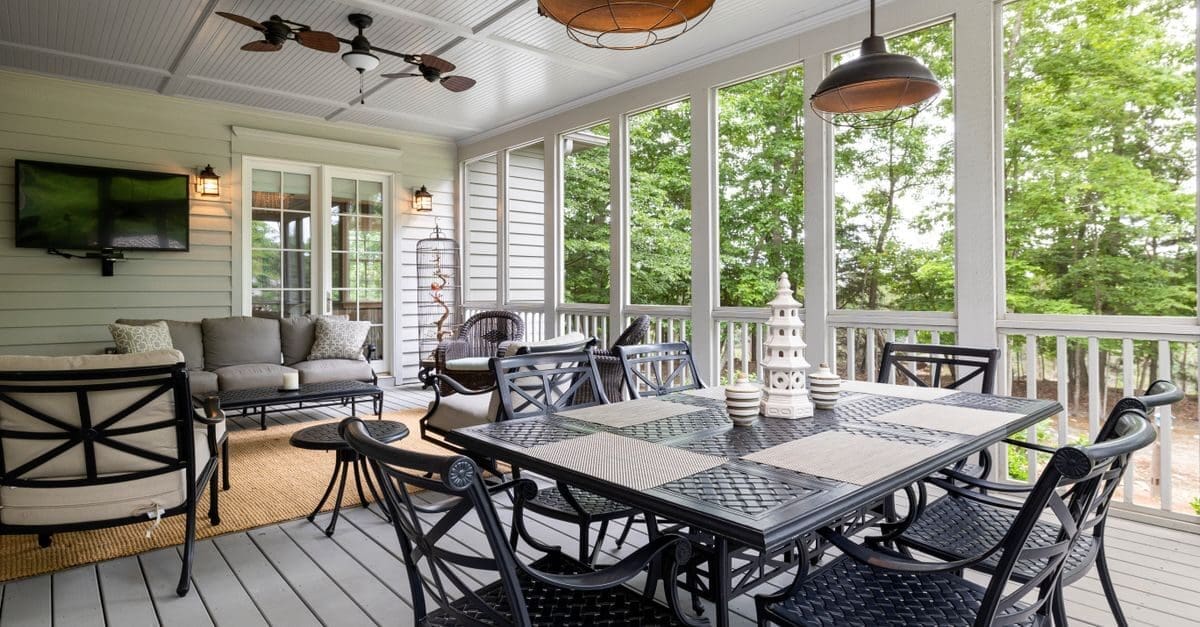
A steady breeze on a screened porch or covered patio makes hot afternoons bearable and keeps mosquitoes from settling in. Fans built for exterior spaces use sealed motors and moisture-resistant blades that indoor models lack. Choosing one comes down to the right wet or damp rating, blade span for your space, airflow and mounting height. Here is how to compare them.
Damp-Rated vs Wet-Rated
Damp-rated fans are designed for covered spaces such as screened porches and covered patios where they are protected from direct rain. They handle humidity and occasional moisture but should not be exposed to rain or hose spray.
Wet-rated fans have sealed motor housings and water-resistant blades, suitable for pergolas, open gazebos and areas exposed to rain, snow or coastal spray. When in doubt, choose wet-rated for longer life.
Blade Span and Room Size
Blade span should match the area you want to cool. Spaces up to about 144 square feet suit 36 to 42 inch fans, while patios of 225 to 400 square feet need 52 to 56 inch fans.
Large outdoor areas over 400 square feet may need fans of 60 inches or more, or two smaller fans spaced evenly to cover the seating and dining zones. Long, narrow porches often do better with two fans than one oversized fan in the middle.
Airflow and Motor Type
Airflow is measured in cubic feet per minute (CFM). Outdoor fans range from about 3,000 to over 8,000 CFM, and higher numbers move more air across larger spaces.
DC motors use up to about 70 percent less energy than comparable AC motors, run quieter and often offer five or six speed settings instead of three. They typically ship with remote controls and a reverse function, though they cost more upfront.
Mounting Height and Downrods
Fans should hang at least 7 feet above the floor for safety, ideally 8 to 9 feet for best airflow. Sloped or high ceilings need downrods to lower the fan into the living space.
Flush-mount or hugger fans sit tight against low porch ceilings but move less air because the blades are so close to the ceiling surface. Measure ceiling height and check whether the mounting bracket works with sloped or vaulted ceilings before buying.
Lighting, Controls and Materials
Integrated LED lights add illumination for evening meals without a separate fixture, and dimmable or color-temperature options set a warmer mood. If the fan is exposed to rain, make sure the light kit carries the same wet rating as the motor.
Blades made of ABS plastic or treated composites resist warping and swelling better than wood in humid air. Stainless steel hardware and powder-coated or marine-grade finishes resist corrosion, which matters most near the coast or pools.
What to Check Before You Buy
- Match the damp or wet rating to how exposed the space is to rain.
- Measure the area and choose a blade span that suits the square footage.
- Compare CFM airflow ratings for the size of your space.
- Consider a DC motor for quieter operation and lower energy use.
- Check ceiling height and whether a downrod is needed.
- Look for wet-rated LED light kits if lighting is included.
- Choose blades and finishes that resist moisture and corrosion.
How to Choose an Outdoor Ceiling Fan
These steps help select a fan for your porch or patio.
- Determine whether the space needs a damp or wet rating.
- Measure the area to select blade span.
- Compare airflow ratings and motor types.
- Check ceiling height and downrod requirements.
- Decide on lighting and control options.
- Choose materials that hold up to your climate.
Ready to shop? Browse our full list of Outdoor Ceiling Fans to compare current options and prices.