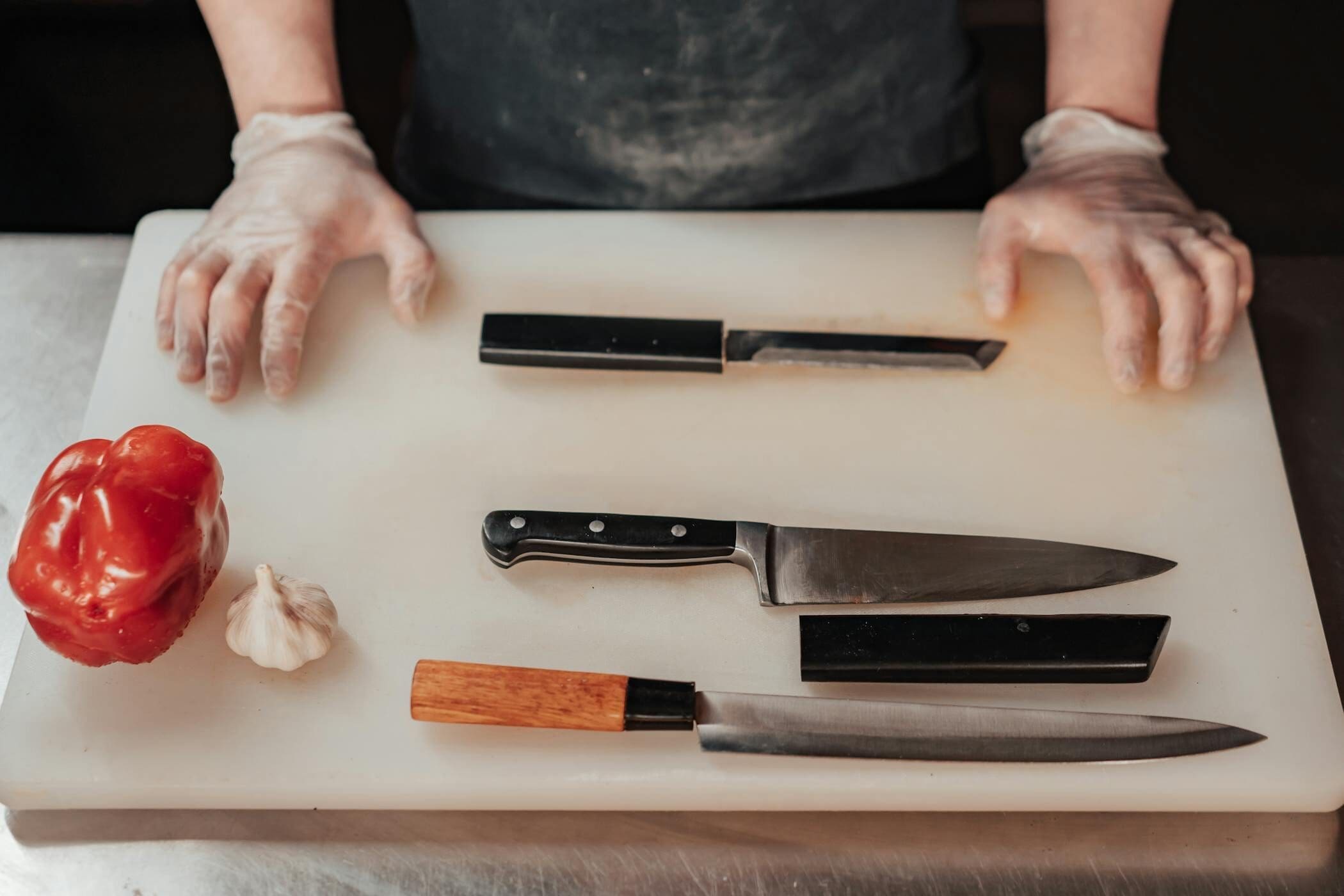
What Actually Belongs in a Good Knife Set
A good knife set should feel complete, but complete does not always mean crowded. Many sets advertise impressive piece counts, yet only a handful of those pieces handle everyday prep. The challenge is learning which knives genuinely matter before you pay for a block full of extras. Once you understand the roles, knife sets become much easier to compare.
This guide breaks down what actually belongs in a strong set for home cooking. It focuses on pre-purchase decisions: which pieces deserve priority, which accessories can be useful, and which additions may not add much value. The aim is to help you buy a set with purpose rather than one that only looks abundant on a counter.
The Core Pieces Every Knife Set Should Cover
At minimum, a practical set should cover broad prep, small detail work, and foods that benefit from a serrated edge. These roles show up in most kitchens regardless of cooking style. A set that handles those jobs well will feel useful even if it is not large. A set that misses one of those jobs may feel limited despite having many pieces.
The main prep knife is the anchor. The paring or small utility knife handles detail. The serrated knife provides a different cutting action for foods where a straight edge struggles. Together, those pieces form the backbone of a set worth considering.
The Workhorse Knife
The workhorse knife should be comfortable enough for repeated chopping, slicing, and mincing. Its length should match your cutting board and confidence level. If it feels too large, the set may become intimidating. If it is too small, prep can feel inefficient.
The Small Precision Knife
A small knife earns its place by handling jobs that are awkward with a large blade. It should feel controlled, light, and easy to maneuver. This piece matters for fruit, small vegetables, and detailed trimming. A set without a reliable small knife often feels incomplete in daily use.
Useful Support Knives vs. Filler Pieces
Support knives can make a set more flexible, but only when they solve distinct problems. A utility knife, santoku-style shape, carving knife, or bread knife may all be valuable depending on the household. Filler appears when several blades are close in size and purpose without offering a clear advantage. That is where piece count can become misleading.
- Useful support knives create a new cutting role.
- Filler pieces often duplicate the same task in slightly different lengths.
- A carving knife matters more if you serve large proteins.
- A utility knife can be valuable for quick lunches and smaller boards.
- Specialty blades should match real foods you prepare often.
A strong set feels edited. Each piece has a reason to exist, and the group covers a wider range without confusion. When a product description makes you wonder why two or three knives are included, that uncertainty matters. It may mean the set was designed to look complete rather than work efficiently.
Should Steak Knives Be Part of the Set?
Steak knives can be a nice addition, especially if you want a matching table set. They are useful for serving, but they do not improve meal prep in the same way kitchen knives do. A set with steak knives may be a good value when you need them. It may be less useful if you already have dining knives you like.
When comparing sets, separate the steak knives from the cooking knives in your mind. This reveals whether the set is truly strong for kitchen work or simply large because it includes table pieces. There is nothing wrong with including them. The problem is treating them as a substitute for prep tools.
When Steak Knives Add Value
Steak knives add value when they match your entertaining habits or replace a mismatched dining set. They can make the purchase feel more complete for a new kitchen or household setup. If the main kitchen knives are already strong, steak knives may sweeten the package. If the prep knives are weak, they should not rescue the decision.
Accessories That Can Be Worth Having
Accessories are not automatically filler. Kitchen shears, a honing rod, blade guards, or a well-designed block can add convenience. The key is whether the accessory fits the way you cook and store tools. A useful accessory supports the knives instead of distracting from them.
- Treat storage as part of the value, not a free extra.
- Consider shears useful if you often open packaging or trim herbs.
- View honing rods as helpful only if you are comfortable using them.
- Do not let accessories compensate for weak core knives.
The best accessories make the set easier to live with from day one. They protect the blades, organize the counter, or reduce the need for separate purchases. Weak accessories, on the other hand, inflate the count without improving the kitchen experience. Read the component list with that distinction in mind.
How Many Pieces Is Enough?
For many home cooks, a set between three and seven working kitchen knives offers plenty of coverage. Add steak knives or accessories only if they serve your household. A twenty-piece set is not inherently excessive, but it needs to justify its size. The more pieces included, the more carefully you should inspect overlap.
Reading the Piece Count Honestly
A listed piece count can include every item in the box, from the block to the shears. That makes it a poor shortcut for quality. Count the actual prep knives separately, then note the support items. This simple habit makes comparison shopping much cleaner.
Signs a Knife Set Is Well Edited
A well-edited set has a clear rhythm: one main prep knife, one or two support knives, one detail knife, and storage that fits the group. It does not ask you to store several blades you cannot explain. It also avoids the feeling that important roles are missing. Good editing makes the set easier to use and easier to recommend.
- Every knife has a clear purpose.
- The main prep knife looks comfortable for frequent use.
- The small knife is not an afterthought.
- The serrated blade fits foods you actually buy.
- Accessories support storage or workflow without dominating the set.
- The block or tray fits your available space.
Final Buying Perspective
What belongs in a good knife set depends on your kitchen, but the logic is consistent. Prioritize the knives that do real work, then decide whether support pieces and accessories add meaningful convenience. Avoid judging value by the largest number on the box. A focused set that works hard will usually outperform a crowded one that looks impressive but rarely gets used.
The right set should make prep feel simpler. You should know where each knife fits before it arrives. That sense of clarity is one of the strongest signs that the set belongs in your kitchen.