
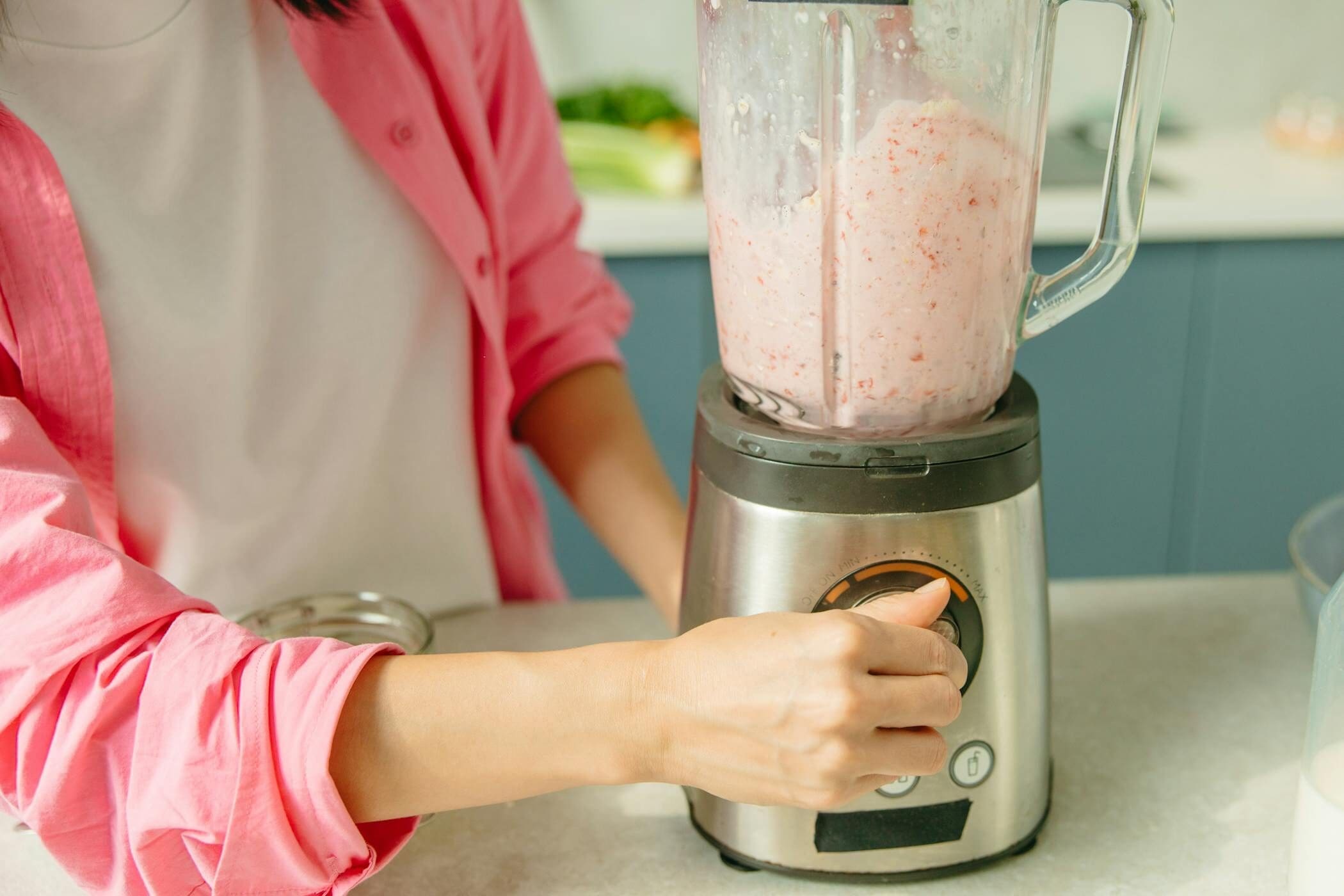
What to Check Before Buying Your First Blender
What to Check Before Buying Your First Blender starts with one practical question: how will this blender actually be used on an ordinary day? Blenders can support quick breakfasts, family drinks, sauce prep, frozen treats, and small-batch kitchen tasks, but the right model depends on space, serving size, texture expectations, and comfort. Looking at those details before purchase helps you avoid a machine that is either too limited or too much appliance for the way you cook.
Why Blenders Are Not One-Size-Fits-All
A first blender should be capable without feeling excessive. New shoppers often get pulled toward the biggest machine or the longest feature list, but a better first purchase usually balances size, control, storage, and everyday comfort. Flexibility matters, but so does simplicity.
The right choice usually shows up in small details rather than a single headline specification. A comfortable jar, clear controls, stable base, and realistic capacity can matter as much as motor strength. When those details align with your routine, the blender feels like a natural part of the kitchen instead of a bulky appliance you only use occasionally.
Start with the task you expect most
Identify the blend you will make most often before comparing features. Occasional soft blends, daily smoothies, frozen drinks, family-size batches, and single-serve routines all call for different strengths. This keeps the decision grounded in your real cooking habits rather than in a long list of optional modes.
How Blenders Fit Into Counter Space and Storage
Counter space shapes whether the appliance becomes part of your routine. A blender that is too tall for an upper cabinet or too heavy to move can slowly disappear into a pantry, even if it performs well. Measure the full assembled height with the jar and lid in place because that is what determines where it can actually live.
Think about the route between storage, outlet, prep area, and sink. If using the blender requires clearing a corner every time, convenience drops quickly. A slightly smaller model that stays within easy reach may end up being more valuable than a larger one with impressive capacity but poor placement.
- Check full assembled height, not just base dimensions.
- Consider whether the jar can rest near the sink without crowding the counter.
- Look for a cord length that reaches your preferred outlet.
- Leave room to remove the lid and pour comfortably.
Storage should feel realistic
If you plan to store the blender after every use, weight and grip deserve real attention. If you want it to live on the counter, footprint and appearance become more important. The easiest appliance to use is often the one that does not require rearranging half the kitchen first.
Capacity and Jar Shape Can Change the Result
A jar’s listed capacity does not always reflect how much it handles comfortably. Thick blends need headroom, and liquids can climb when the motor ramps up. A jar that is technically large enough may still feel cramped if you routinely prepare multiple servings or use bulky frozen ingredients.
Shape affects how ingredients move. Narrow jars can work well for smaller portions because ingredients stay close to the blades, while wider jars can be easier to scrape and pour. The ideal shape depends on whether you value small-batch efficiency, family-size flexibility, or a balance of both.
Think in servings instead of ounces alone
A single-serve household may not need a large jar, but a very small container can become limiting when guests or batch prep enter the picture. Larger households should consider how easy the jar is to lift when full. Comfort matters because a heavy jar turns every pour into a more awkward task.
Power, Speeds, and Texture Control in Blenders
Motor strength is useful, but it is not the only signal of performance. Variable speeds let you start gently, build movement, and finish with finer texture when needed. A blender with thoughtful control can feel more precise than a louder machine that jumps immediately to aggressive blending.
Texture control is especially important when you want repeatable results. Pulse settings, low-speed starts, and clear speed increments help prevent over-blending softer ingredients. For shoppers who care about smoothness and control, the control panel deserves as much attention as the wattage label.
- Decide whether you need simple on-off blending or gradual speed control.
- Look for a pulse function if texture control matters.
- Consider whether presets match tasks you will repeat.
- Notice whether controls can be used quickly with damp or busy hands.
Noise and stability are part of performance
A blender can be powerful and still unpleasant if it rattles across the counter. A stable base, grippy feet, and a jar that sits securely can make the appliance feel more confident. Noise will never disappear entirely, but a machine that sounds strained under normal use may not feel satisfying long term.
Materials, Blades, and Build Details to Notice
The build of a blender affects the day-to-day experience in subtle ways. Jar material changes weight and visibility, blade assembly influences circulation, and lid design determines how confidently you can add ingredients or pour. These details are easy to skip when shopping quickly, but they often decide whether the appliance feels polished or clumsy.
Handles deserve special attention because they turn capacity into usability. A smooth jar with an awkward grip can become frustrating once it is full. Likewise, a lid that feels secure and easy to remove adds confidence when liquid movement is strong.
Small design choices can prevent friction
Look for markings that are easy to read, a pour spout that does not dribble excessively, and a base that can be wiped without complicated ridges. These are not glamorous details, but they influence how the blender feels after the excitement of buying has passed. A well-designed machine makes repeated use feel simple.
When Extra Blender Features Are Worth It
Extra features become worthwhile when they solve a problem you already have. Presets can help if you want consistent timing, a tamper can support dense blends, and a timer can keep you from guessing. Advanced modes do not automatically make a blender better for your kitchen.
Imagine the first week of ownership. If a feature clearly fits something you will do repeatedly, it may be worth paying for. If you need to invent reasons to use it, that money may be better spent on sturdier construction, a better jar, or a size that fits your space more naturally.
- Worth considering: variable speeds, pulse, secure lid design, readable measurement marks, and stable base construction.
- Situational: presets, timers, tampers, personal cups, and specialty modes.
- Easy to overvalue: flashy displays, excessive program lists, and capacity you will rarely use.
How to Decide Which Blender Is Right Before You Buy
The strongest blender choice is the one that aligns with your real kitchen habits. Think about how often you will use it, where it will sit, what portions you make, and how smooth or controlled you want the results to be. Those answers narrow the field faster than comparing every possible feature.
Picture the blender in three moments: pulling it out, using it during a busy morning, and putting it away. If those moments feel easy, the model is probably well matched. If one already seems annoying, keep looking before committing.


