
What to Know Before Buying a Camping Grill
Grilling at a campsite means working with limited space, uneven ground and fuel you have to carry in. Portable grills trade the size of a backyard unit for folding legs, latching lids and compact cooking surfaces. The right pick depends on how many people you feed, whether you want gas convenience or charcoal flavor, and how much weight you can haul from the car to the site. Below are the specs that matter most.
Propane, Charcoal or Pellet
Propane models light instantly, heat up in minutes and give precise temperature control. Most run on 1 lb cylinders and many accept an adapter for larger tanks. They are the easiest to clean up, with no ash to dispose of at the site.
Charcoal models are lighter and cheaper and produce the smoky flavor many people associate with grilling, but they need time to heat and ash must be cooled and disposed of properly. Portable pellet grills add smoke flavor with temperature control but need power and weigh considerably more.
Cooking Area and Output
Portable grills range from about 150 to over 300 square inches of primary cooking space. Around 150 to 200 square inches handles burgers for two to four people; groups of six or more need 250 square inches or more.
For gas models, compare BTU per square inch rather than total BTU. Roughly 50 to 80 BTU per square inch delivers solid searing heat without burning through fuel too quickly.
Grate Material and Heat Retention
Porcelain-coated cast iron grates hold heat and leave strong sear marks but are heavy and need care to prevent chipping. Stainless steel grates are lighter and resist rust, though they hold less heat.
A tight-fitting lid with a built-in thermometer lets you roast or bake rather than only grill directly. Cast aluminum bodies retain heat well and do not rust, which helps on damp or windy evenings.
Portability and Setup
Weight ranges from under 10 pounds for basic charcoal kettles to over 40 pounds for larger gas units with stands. Look for lid latches, carry handles and folding legs that lock solidly.
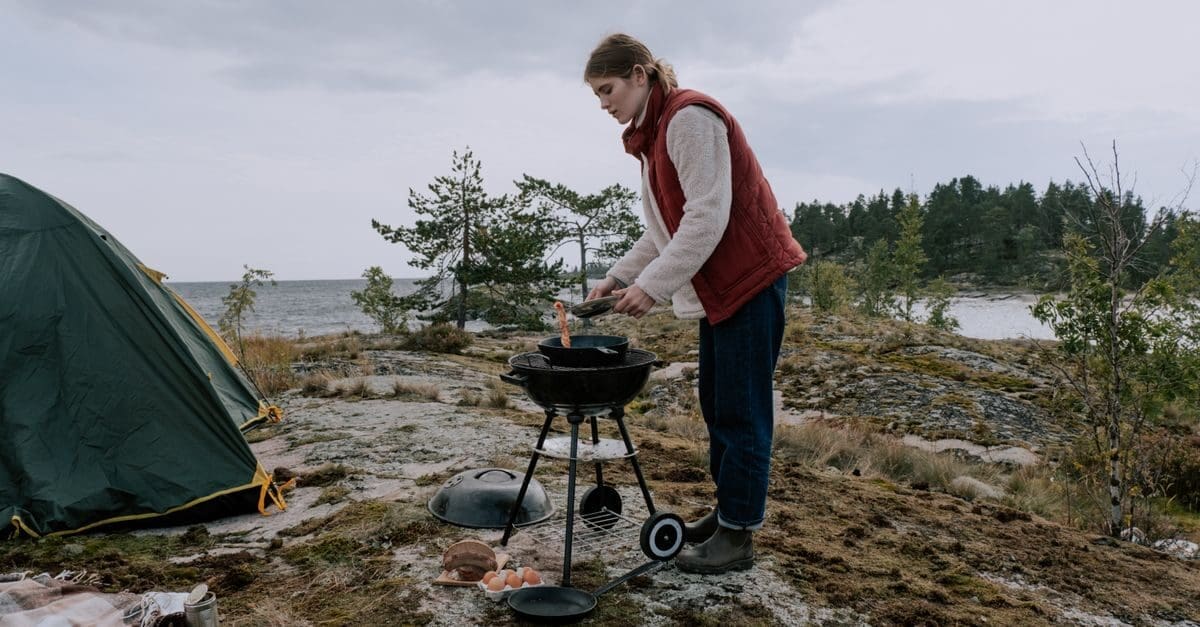
Tabletop models need a stable surface, while grills with integrated legs or carts can stand on their own. If campsite tables are scarce where you go, a freestanding design avoids balancing hot equipment on a cooler or rock.
Cleanup and Grease Management
Removable grease trays and slide-out ash pans keep drips off the ground and make cleanup faster. Check whether the tray is easy to reach when the grill is hot.
Smooth interior surfaces and removable grates are easier to scrub at a campsite water spigot. Some models offer griddle inserts for eggs, pancakes and bacon, which add versatility without needing a second appliance.
What to Check Before You Buy
- Choose between propane, charcoal and pellet based on convenience versus flavor.
- Compare primary cooking area against the number of people you usually feed.
- Check BTU per square inch for gas models rather than total BTU.
- Look at grate material and whether it suits your cleaning habits.
- Lift-test or check listed weight against how far you carry gear.
- Confirm lid latches, folding legs and handles feel secure.
- Look for removable grease trays or ash pans.
How to Choose a Camping Grill
Follow these steps to narrow your options.
- Pick a fuel type that matches your cooking style and campsite rules.
- Size the cooking area to your typical group.
- Compare heat output and lid design for searing and roasting.
- Choose grate material based on heat retention and maintenance.
- Check total weight, latches and stand style for transport.
- Look for easy grease or ash cleanup features.
Ready to shop? Browse our full list of Camping Grills to compare current options and prices.


