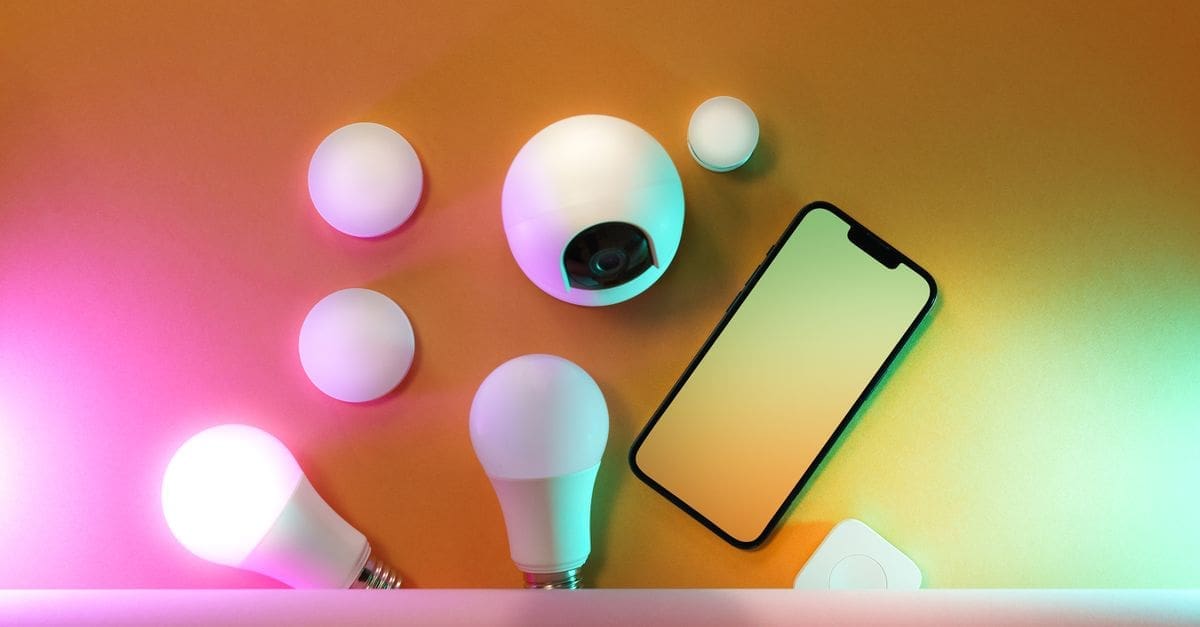
What to Know Before Buying a Smart Ceiling Light
Overhead fixtures set the baseline for how a room reads, so output, beam spread, and colour quality carry more weight here than in any accent light. Flush and semi-flush mounts suit standard ceiling heights while pendants need clearance you may not have. Wiring matters: a fixture needs a neutral wire at the box, and existing dimmer switches can conflict with integrated electronics. Support for local control determines whether the light responds instantly or waits on a server.
Output, Coverage, and Beam Spread
Aim for roughly twenty lumens per square foot as a general ambient level, adjusting upward for kitchens and workspaces. A 150 square foot bedroom therefore wants around three thousand lumens from the ceiling if it is the only source.
Beam spread determines whether that light reaches the corners or pools in the centre. Wide-diffusion flush mounts spread light broadly, while a narrow downlight concentrates it. Multiple smaller fixtures usually produce more even coverage than a single powerful one in a room of any size.
Colour Quality and Tunable White
Colour rendering index above ninety means colours look close to how they appear in daylight, which matters in kitchens, bathrooms, and anywhere you dress. Values in the low eighties are common on budget fixtures and make skin tones look flat.
Tunable white lets the fixture shift from warm evening light around 2700 kelvin to a crisp 5000 kelvin for tasks. Check whether the transition passes through natural-looking intermediate points or jumps between presets, since a limited set of steps is less useful than a continuous range.
Wiring, Neutral Wire, and Dimmer Conflicts
Connected fixtures need constant power to stay on the network, which requires a neutral wire at the ceiling box. Older homes often lack one, and that single detail can rule out an otherwise suitable fixture.
An existing wall dimmer will usually conflict with a fixture that has its own dimming electronics, causing flicker or buzzing. The dimmer generally needs replacing with a standard switch, or with a compatible connected switch from the same ecosystem.
Control, Local Operation, and Wall Switches
The wall switch remains the most common way anyone actually turns on a ceiling light. If the switch cuts power, the fixture leaves the network, so consider a connected switch or a switch guard alongside the fixture.
Locally processed commands respond immediately and survive an internet outage, while cloud-routed commands introduce a delay you notice each time. Check whether schedules are stored on the fixture, since cloud-only schedules stop running when the connection drops.
Mounting Type, Size, and Ceiling Height
Flush mounts sit tight against the ceiling and suit heights of eight feet or less. Semi-flush designs drop a few inches and add visual interest without intruding into head height.
Fixture diameter should relate to room size, with a common guide adding the room’s length and width in feet and using that sum in inches as an approximate diameter. Check the mounting plate is compatible with your existing box, particularly in older properties where box sizes vary.
Longevity, Serviceability, and Support
Integrated LED fixtures quote lifespans of twenty-five to fifty thousand hours, which is many years of normal use. The driver electronics typically fail before the diodes, so a replaceable driver extends the practical life considerably.
Where a fixture is fully sealed, failure means replacing the whole unit including the mounting work. Weigh that against the cleaner appearance, and check the warranty term, since coverage of five years or more suggests the manufacturer expects the electronics to last.
What to Check Before You Buy
- Calculate the lumens needed from room area, targeting around twenty per square foot for ambient light.
- Confirm a neutral wire is present at the ceiling box before ordering.
- Check whether an existing wall dimmer needs replacing to avoid flicker or buzzing.
- Look for a colour rendering index above ninety in living and food preparation areas.
- Verify local control and on-device scheduling if outage resilience matters.
- Match mounting type to ceiling height and check the plate fits your existing box.
- Check whether the driver is replaceable and read the warranty term.
How to Choose a Smart Ceiling Light
Electrical constraints narrow the field faster than aesthetics, so check the box first.
- Inspect the ceiling box for a neutral wire and note the existing switch type.
- Calculate required output from room dimensions and intended use.
- Choose mounting style based on ceiling height and desired appearance.
- Compare colour rendering and tunable white range across candidates.
- Confirm control method, including whether a connected wall switch is needed.
- Check serviceability of the driver and the length of the warranty.
Ready to shop? Browse our full list of Smart Ceiling Lights to compare current options and prices.