What to Look for in a Screwdriver Set
Tip precision is what separates a driver that turns a fastener from one that chews the head into a useless crater. Hardened steel tips machined to tight tolerances grip properly, while soft alloy rounds off within a few uses. Handle design determines how much torque you can apply comfortably, and bit variety decides whether the set covers the fasteners you actually meet. Magnetization and storage make the difference in daily use.
Tip Material and Machining
Chrome vanadium and S2 tool steel are the common quality materials, hardened to resist deformation under load. S2 steel is harder and holds a precise edge longer, which is why it appears on better bit sets.
Machining tolerance matters as much as hardness, since a tip that is slightly undersized cams out of the fastener and rounds it. Precision-ground tips that seat fully in the recess transfer torque properly, and this is the specification that most separates cheap sets from good ones.
Driver Types and Fastener Coverage
Phillips and slotted cover the basics, but modern assemblies use Torx, hex, square drive, and increasingly security variants with a center pin. A set missing Torx sizes will strand you on appliances, electronics, and automotive work.
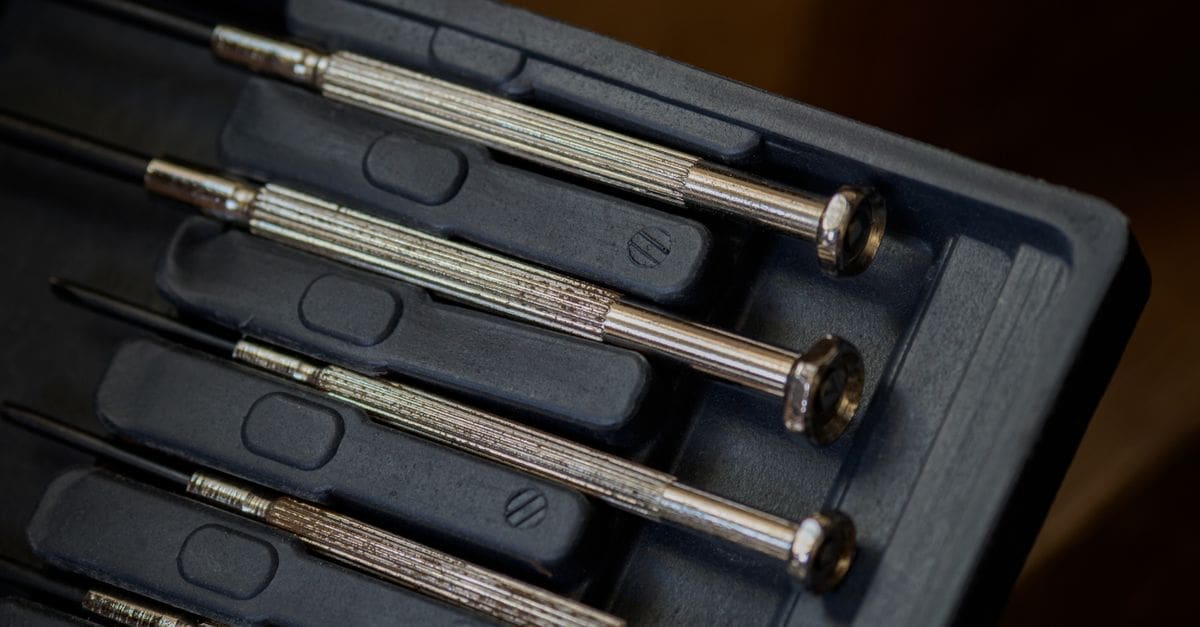
Precision sizes matter for electronics, where tiny Phillips and Torx bits handle laptops, glasses, and small devices. Check the actual size range rather than the headline bit count, since many large sets pad the number with duplicate sizes and rarely used shapes.
Fixed Drivers Versus Bit Sets
Fixed-shaft screwdrivers put steel directly between handle and tip, transmitting the most torque with no intermediate connection to twist or slip. For frequent heavy use, a set of individual drivers is the more durable choice.
Bit-and-handle sets cover far more fastener types in a fraction of the space and cost. The trade-off is a bit holder that can loosen or wobble under high torque, so many people keep both, using individual drivers for hard-working sizes and bits for variety.
Handle Design and Torque
Handle diameter determines how much torque your hand can generate, with fatter handles giving more leverage and slim ones fitting into tight spaces. A tri-lobe or contoured shape resists slipping in the palm far better than a smooth cylinder.
Rubberized overmolds improve grip with oily hands but can degrade with solvent exposure over years. A rotating cap at the end lets you apply steady pressure with the palm while spinning the handle with your fingers, which speeds up long fastener runs considerably.
Shaft Length, Access, and Magnetization
Longer shafts reach recessed fasteners and give more control, while stubby drivers fit where nothing else will. A set spanning both lengths in common sizes covers far more situations than one length alone.
Magnetized tips hold a screw while you start it one-handed, which is genuinely useful working overhead or in a cabinet. Some sets include a magnetizer and demagnetizer block, letting you add or remove magnetism, which matters when working near components that magnetism could affect.
Case, Organization, and Extras
A molded case with a labeled slot for each driver makes a missing tool obvious immediately, which is how sets stay complete. Loose bits in a pouch scatter and disappear.
Flexible extensions reach around obstructions, and a ratcheting handle speeds repetitive work without repositioning your grip. Confirm bits are a standard quarter-inch hex shank so replacements and additions are easy to source from any hardware store.
What to Check Before You Buy
- Look for S2 or chrome vanadium steel with precision-ground tips.
- Confirm the set covers Torx, hex, and square drive alongside Phillips and slotted.
- Read the actual size list rather than the headline bit count.
- Decide between fixed drivers for torque and bit sets for variety.
- Choose contoured handles with enough diameter for the torque you need.
- Look for both standard and stubby lengths in common sizes.
- Verify a molded labeled case and standard quarter-inch hex bit shanks.
How to Choose a Screwdriver Set
Listing the fasteners you actually encounter keeps the size range and driver type grounded.
- Note the fastener types you meet, from furniture to electronics to automotive.
- Decide whether you need precision sizes for small devices.
- Choose fixed drivers, a bit set, or a combination of both.
- Confirm the size range covers your fasteners without gaps.
- Check handle shape, diameter, and whether a ratchet would help.
- Verify the case organization and standard bit shank compatibility.
Ready to shop? Browse our full list of Screwdriver Sets to compare current options and prices.