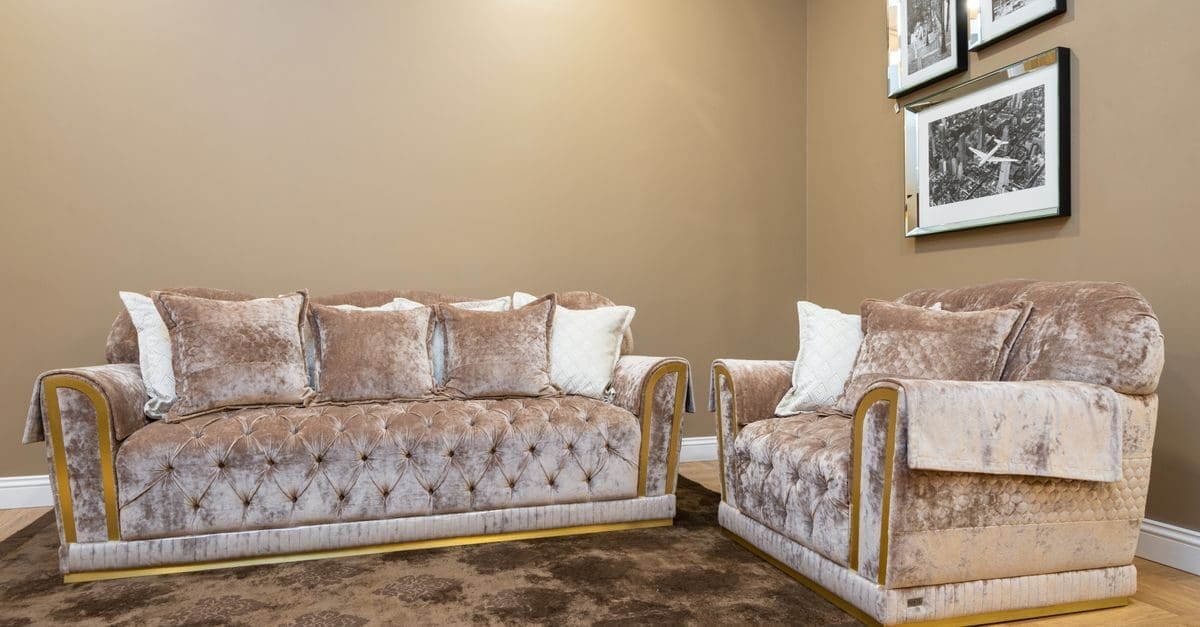
What to Look for in a Sofa
Seat depth and back height are the two measurements that decide whether a piece suits how you actually sit, whether that is upright with a book or sprawled watching a film. Frame joinery and suspension determine how many years it stays supportive. Fabric durability shows up within months in a busy household. Measure the delivery route before falling for anything, because access defeats more purchases than budget does.
Seat Depth and Sitting Posture
A depth around 21 to 22 inches suits upright sitting with feet on the floor, while 24 inches or more invites lounging with legs up. Deeper is not automatically better if you like to sit with your back supported.
Shorter people often find deep seats leave them perched forward with no lumbar contact. Test with your own posture rather than assuming, and consider whether cushions can be supplemented later.
Back Height and Support
Low backs look sleek and keep sightlines open in a small room, but they support only to the shoulder blade. High backs support the head and neck, which matters for long evenings.
Tight backs hold their shape indefinitely with no maintenance, while loose back cushions are softer but need regular plumping. Choose based on how much upkeep you are willing to do.
Frame Construction
Kiln-dried hardwood is the benchmark because it resists the warping that green or softwood suffers as it dries in a heated room. Joints should use dowels, screws, corner blocks, and glue together, not staples alone.
Lift one front corner a few inches; the opposite front leg should rise too. If it stays on the floor, the frame is flexing, which predicts loose joints within a few years.
Suspension and Cushion Construction
Eight-way hand-tied springs remain the traditional standard and give a resilient, even feel. Sinuous serpentine springs are the common alternative and perform well when the wire gauge is adequate and the clips are secure.
For cushions, high-resiliency foam around 1.8 pounds per cubic foot or denser holds shape for years. Down wraps add softness at the cost of daily fluffing to avoid a flattened look.
Upholstery Fabric and Wear
Double-rub ratings above 30,000 suit family use, and performance weaves add stain resistance without the plastic feel older treatments had. Loose weaves snag on buttons, zippers, and pet claws.
Leather ages differently: full-grain develops patina and can be conditioned, while bonded leather delaminates within a few years. Check which you are actually being sold, as the terminology is often blurred.
Dimensions, Proportion, and Access
Scale the length to the room, allowing 30 to 36 inches of walkway in front. A piece that fills the wall can still make the room feel cramped if the circulation shrinks too far.
Measure doorways, hallway turns, and stair landings, and check the diagonal depth of the sofa. Detachable legs and backs make the difference between a piece that fits and one that goes back on the truck.
What to Check Before You Buy
- Match seat depth to whether you sit upright or lounge.
- Choose back height based on whether you want head support.
- Confirm the frame is kiln-dried hardwood with corner blocks.
- Lift a front corner and watch whether the opposite leg follows.
- Check the suspension type and spring gauge.
- Look for foam density of at least 1.8 pounds per cubic foot.
- Target a fabric above 30,000 double rubs for family use.
- Measure the full delivery route including stair turns.
How to Choose a Sofa
Sit on candidates for at least ten minutes each, since the differences that matter only emerge after the novelty of a new cushion wears off.
- Measure the wall, the walkway, and the delivery route.
- Decide whether you want an upright or lounging seat depth.
- Choose a back height and style that matches your upkeep tolerance.
- Inspect frame material and test for flex at a front corner.
- Compare suspension systems and cushion foam density.
- Select upholstery rated for your household’s level of use.
Ready to shop? Browse our full list of Sofas to compare current options and prices.