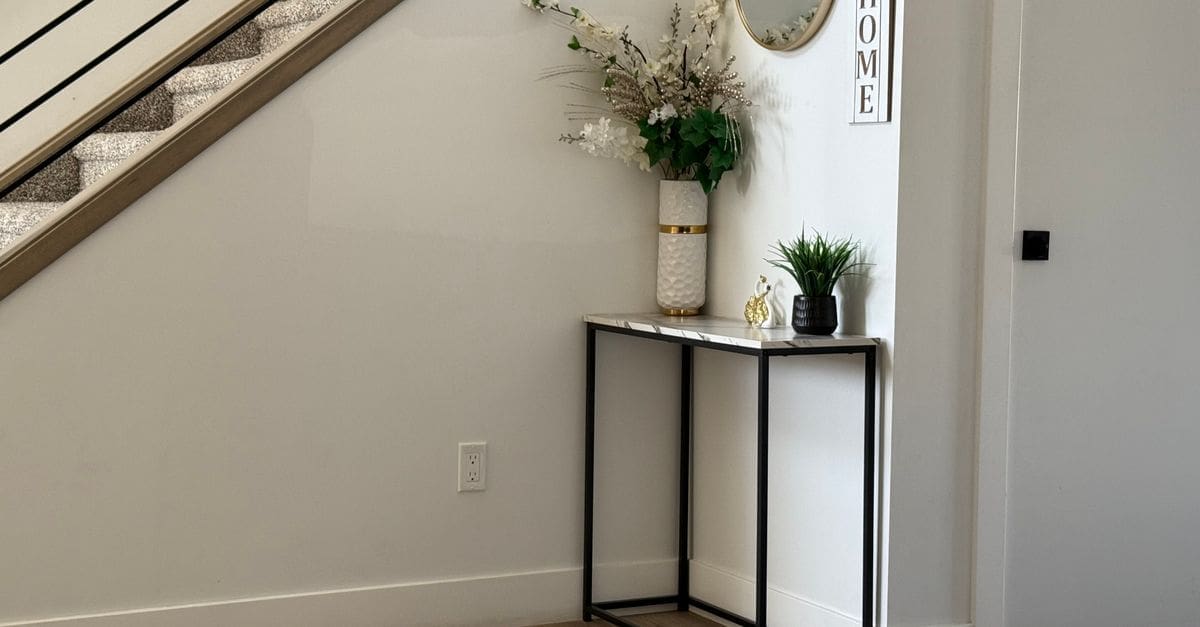
What to Look for in an Entryway Table
Depth relative to your hallway and the surface height decide whether an entryway table fits the space and works for daily drop-off or juts into the walkway. Storage, material, and stability shape function and durability. Style sets the first impression of your home. Matching the proportions and features to your entry keeps the table practical and welcoming rather than an obstacle.
Depth, Width, and Hallway Fit
A narrow console suits a tight hallway, projecting little into the walkway while still offering a surface. Measuring the available depth prevents a table that forces people to squeeze past.
The width should suit the wall without crowding a door or overwhelming a small entry. Match the footprint to the space so the table adds function without obstructing the flow through the door.
Surface Height and Use
A comfortable height for dropping keys, mail, and bags makes the table useful the moment you walk in. Too low a surface is awkward to reach, while too high looms in a small space.
The top should offer room for a lamp, a tray, or decor alongside daily items. Consider how you will use the surface so the height and size suit your routine.
Storage and Organization
Drawers hide keys, chargers, and clutter, while a lower shelf holds baskets, shoes, or bags. Open and closed storage together keep the entry tidy and functional.
Consider what tends to pile up by your door so the storage matches it. A table with a drawer and shelf handles both quick-hide items and larger everyday things.
Material and Durability
Solid wood and metal frames withstand the knocks of a busy entry, and a sealed, wipeable top resists the marks that keys and wet umbrellas leave. Stone tops resist wear but add weight.
A durable finish matters where the table meets daily traffic and weather carried in from outside. Match the material to how busy your entry is so the table stays looking good.
Stability and Construction
A stable base keeps the table from wobbling when leaned on or loaded, and solid joinery resists loosening. Wall-anchoring a slim console adds security, especially if it is tall and narrow.
Level or rubber-tipped feet stop rocking on hard floors. Check the construction, since an entry table takes daily use and should stand firm through it.
Style and First Impression
The entryway table sets the tone as guests arrive, so its style should suit your home’s look and the adjacent rooms. A mirror or art above it completes the vignette.
A finish that coordinates with nearby furniture ties the entry to the rest of the home. Decide whether you want a statement piece or a subtle, functional console.
What to Check Before You Buy
- Measure the hallway depth so the table does not block the walkway.
- Size the width to the wall without crowding the door.
- Choose a comfortable height for keys, mail, and bags.
- Look for drawers and a shelf to organize daily clutter.
- Select a durable, wipeable top for a busy entry.
- Confirm a stable base and consider wall-anchoring a slim console.
- Pick a finish that coordinates with nearby rooms.
- Leave room on top for a lamp, tray, or decor.
How to Choose an Entryway Table
Start with your hallway dimensions and how you use the entry, then weigh height, storage, and material against stability and style.
- Measure the depth and width for your hallway.
- Choose a height that suits daily drop-off.
- Pick storage that matches what piles up by the door.
- Select a durable, wipeable material for traffic.
- Confirm the base is stable and can be anchored if slim.
- Choose a style that suits your home’s first impression.
Ready to shop? Browse our full list of Entryway Tables to compare current options and prices.