
What to Look for in an Eyelash Curler Before You Buy
An eyelash curler that doesn’t match the curvature of your eye pinches lashes, produces a bent rather than a curved lift, and frequently catches lashes in the hinge mechanism. The pad material, the clamp curvature radius, and whether the curler has replaceable pads are the practical specs that determine how well it works and how long it stays usable. Heated curlers work differently from mechanical clamp curlers and are better suited to straight, stubborn lashes. Getting the right match for your eye shape and lash type makes a significant difference in both result and experience.
Clamp Curvature and Eye Shape
The inside curvature of the clamp — the radius that presses against the lash line — needs to match the curvature of your eye. A curler with too large a radius produces a sharp bend at the base rather than a gradual curl, and a curler too curved for flatter eyes doesn’t contact the full lash width evenly.
People with monolid or hooded eye shapes often struggle with standard curlers because the orbital rim leaves little clearance above the lash line. Smaller or more compact curlers with a shallower arc fit better on these eye shapes. Some brands specifically design curlers for Asian eye shapes, with a flatter, wider clamping surface that accommodates less defined orbital bone contour.
Pad Material and Replacement
The silicone or rubber pad cushions lashes during clamping and is the primary factor in preventing breakage and pinching. Pads that are too hard press unevenly on lashes; pads that are too soft compress flat and lose the firm grip needed for a lasting curl. Medium-firmness silicone pads produce consistent curl without pinching or damage.
Pads degrade over time — they compress, crack at the edges, or develop gaps where lashes can catch. Curlers with easily replaceable pads extend the useful life of the main frame indefinitely, since the frame is stainless steel and doesn’t wear out. Check pad availability and cost before choosing a curler — some high-end frames use proprietary pads sold in small quantities; others accept universal replacement pads.
Frame Material
Stainless steel frames are durable, easy to clean, and hold their shape through years of use. Aluminum frames are lighter but more prone to bending under pressure, which distorts the clamp alignment over time. Plastic frames are the lightest and cheapest but least durable and can crack at the hinge.
Hinge quality is the critical point of failure on any mechanical curler — a loose or worn hinge produces uneven clamping pressure across the lash width, which leads to crimping rather than curling. Look for curlers with a smooth, firm hinge that closes evenly along the full clamping width. Test the hinge before buying in store, or specifically check user reviews for hinge durability over time.
Heated Eyelash Curlers
Heated curlers work like a mini hair curler — the heat relaxes and reshapes the lash fiber more permanently than a cold mechanical crimp. They hold a curl longer throughout the day, particularly on straight, stubborn lashes that lose their curl within hours of mechanical clamping. They’re safer for lashes with extensions or lash lifts where clamp pressure could cause breakage.
Battery-powered heated curlers heat a wand or comb to around 80–120°F (27–49°C). Confirm the temperature range is adjustable — straight, fine lashes may need more heat; already-wavy lashes need less. Wait until fully heated before use. Use them before mascara (heated curlers can melt mascara and damage lashes); mechanical curlers can be used before or lightly after mascara, though curling after mascara increases breakage risk.
How to Use a Mechanical Curler Correctly
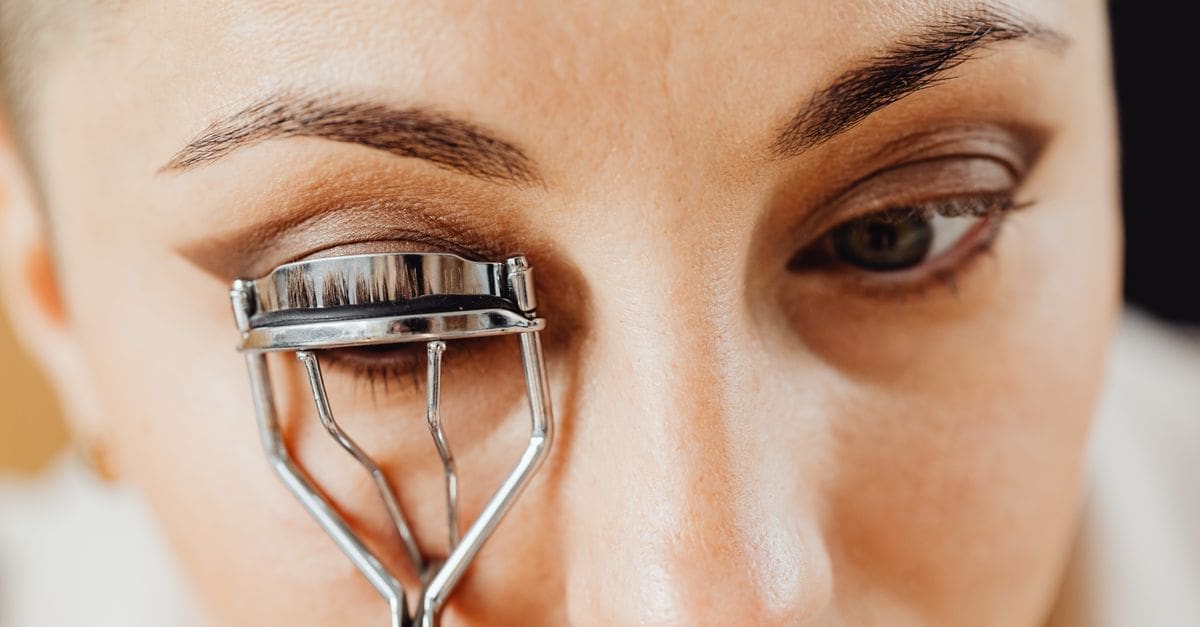
Position the clamp as close to the lash root as possible without catching skin in the clamp. Squeeze firmly for 10–15 seconds, release, then reposition slightly further along the lash and repeat. This produces a graduated curl rather than a single bend. Look straight ahead into a mirror rather than down — looking down angles the eye away from the curler and reduces lash access.
Never use a mechanical curler after applying mascara — the lashes stick to the pad and pull out when the clamp opens. Curl before mascara application only. Replace the pad when you notice any cracks, gaps, or uneven compression — a damaged pad causes the pinching and lash breakage most people associate with curler use generally.
What to Check Before You Buy
- Check the clamp curvature against your eye shape — flatter arc for monolid and hooded eyes.
- Verify pad material is silicone rather than rubber for consistent curl and longevity.
- Confirm replacement pads are available and reasonably priced.
- Choose stainless steel frame over aluminum or plastic for durability.
- Check hinge quality — even pressure across the full lash width.
- Consider a heated curler if your lashes are very straight or lose their curl by midday.
- Verify heated curler temperature range is adjustable.
- Confirm heated curler is battery-powered for convenient use.
How to Choose an Eyelash Curler
Choosing an eyelash curler is about matching the clamp curvature to your eye shape and selecting durable materials.
- Identify your eye shape — standard, monolid, hooded, or deep set — to choose the appropriate clamp curvature.
- Choose a medium-firmness silicone pad over rubber for consistent curl without pinching.
- Confirm replacement pad availability and cost before committing to a frame.
- Select stainless steel frame for long-term durability.
- Check hinge evenness — it should close uniformly across the full clamp width.
- Consider a heated curler if mechanical curlers haven’t held curl well on your lash type.
Ready to shop? Browse our full list of Eyelash Curlers to compare top-rated options.


