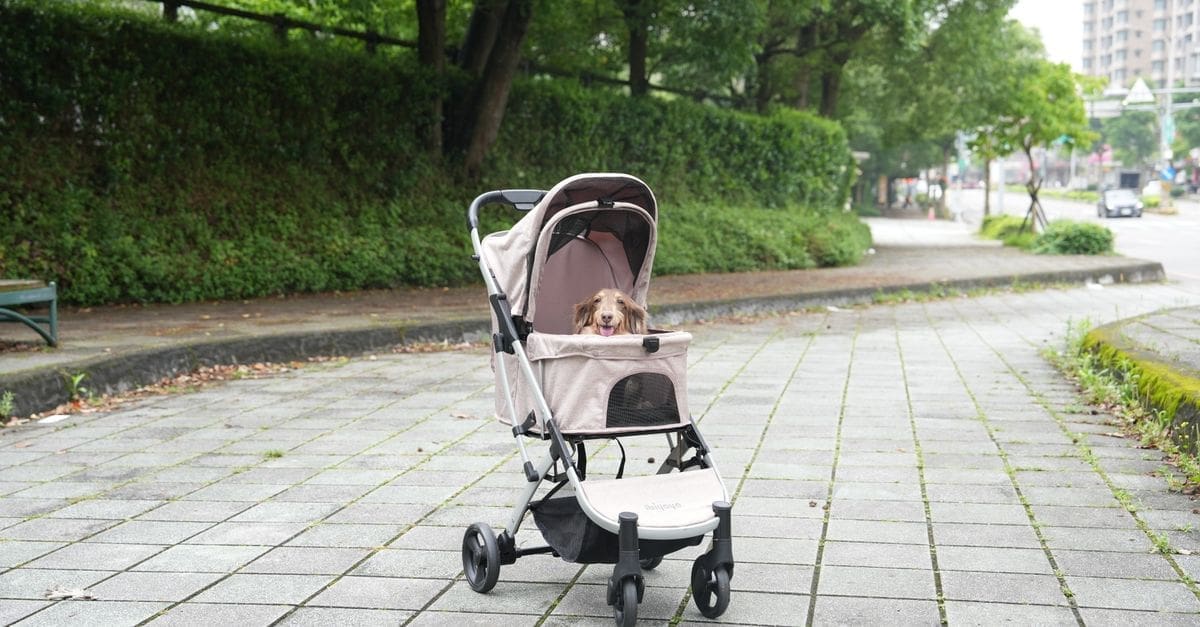
What to Look for in Dog Strollers Before You Buy
Dog strollers provide transportation for dogs that cannot or should not walk long distances—senior dogs with mobility limitations, dogs recovering from surgery, dogs with chronic pain conditions, and small breed dogs that tire quickly on longer outings. They’re also used for multi-dog households where one dog walks and another rides, and for bringing dogs to outdoor venues that allow strollers but not dogs on the floor. Key factors are weight capacity, wheel type for intended terrain, canopy and enclosure quality, entry method, and how compactly the stroller folds.
Weight Capacity and Sizing
Dog stroller weight capacities range from 15 lbs for small breed models to 70 or 80 lbs for large breed or double strollers. Choose a stroller rated above your dog’s weight, particularly for daily use—strollers used at their maximum weight rating wear faster and have less structural margin. For a dog that may gain weight during recovery, purchase for projected weight rather than current weight.
Interior compartment size matters beyond weight capacity. A dog should be able to stand, turn around, and lie down comfortably. Measure your dog’s length and shoulder height and compare to the interior cabin dimensions—these are often not the same as the exterior stroller dimensions. A stroller with adequate weight capacity but a cramped cabin is not comfortable for a dog on a longer outing.
Wheel Type and Terrain
For smooth urban sidewalks and paved paths, standard plastic or small foam-filled wheels with a front swivel wheel are adequate. For uneven terrain, gravel paths, parks, or trails, larger pneumatic (air-filled) wheels provide better shock absorption and roll more easily over obstacles. Front swivel wheels that lock forward are useful for rough terrain where a swiveling front wheel can catch.
Four-wheel strollers are more stable on flat surfaces. Three-wheel jogger-style strollers have a fixed or locking front wheel that tracks better at higher walking speeds and on varied terrain. The jogger style is better for active walkers; the four-wheel style is more maneuverable in tight spaces like stores or markets.
Canopy and Enclosure
A full-coverage canopy protects the dog from sun, light rain, and wind. Mesh panels on the sides and front allow ventilation and visibility while keeping the dog contained. A zippered front opening lets the dog look out if they prefer. Full enclosure mesh that zips closed prevents escape from curious or anxious dogs in distracting environments.
Waterproofing of the canopy material matters if using in variable weather. A stroller with only a small sunshade canopy offers little protection from rain. For dogs taken outdoors in any weather, a waterproof or water-resistant canopy that extends to fully cover the cabin opening is preferable to a partial shade cover.
Entry Method
Most strollers have a top-opening zipper and/or a front-opening zipper. Top-loading is more secure but requires the dog to step in or be lifted in from above. Front-loading with a drop-down flap allows a dog to walk in independently—useful for dogs with limited mobility that can step forward but not be lifted comfortably. A rear entry is common on pet strollers and works well for dogs that load easily.
For dogs with joint pain or post-surgical dogs, minimizing how much they need to be lifted is important. A front ramp or step-in entry that requires only a low step forward is preferable to top loading. Consider the dog’s physical limitations and the entry method that creates the least discomfort during loading and unloading.
Folding and Storage
Dog strollers that fold compactly are easier to store in apartment entrances, car trunks, or closets between uses. Most fold to a flat or compact umbrella-style fold. The fold mechanism should require one or two steps—complex multi-step folds are impractical when handling a dog at the same time. A locking mechanism that prevents accidental unfolding during transport is a practical feature.
Basket storage under the stroller cabin is useful for carrying supplies—water, treats, waste bags, a small blanket. Confirm the basket is accessible without unloading the dog, and that the basket is enclosed or has a lip to prevent items from falling during movement. Side pockets or a parent organizer tray are secondary but convenient additions.
What to Check Before You Buy
- Choose weight capacity above the dog’s weight with margin for daily long-term use
- Measure interior cabin dimensions and confirm the dog can stand, turn, and lie down
- Choose pneumatic wheels for trails and uneven terrain; standard wheels for paved surfaces
- Confirm full-canopy coverage and mesh ventilation panels
- Evaluate entry method based on the dog’s mobility limitations
- Look for a zippered enclosure that closes fully for dogs that might attempt to exit
- Check fold mechanism simplicity and trunk storage dimensions before purchasing
How to Choose a Dog Stroller
Confirm interior cabin size for your dog’s measurements first, then match wheel type to your usual terrain.
- Measure your dog’s length and shoulder height and compare to interior cabin dimensions
- Choose weight capacity well above the dog’s weight
- Select wheel type based on your primary terrain—pneumatic for trails, standard for sidewalks
- Evaluate entry method relative to the dog’s mobility needs
- Confirm full canopy coverage and mesh ventilation
- Check fold mechanism for ease of one-person operation and storage footprint
Ready to shop? Browse our full list of Dog Strollers to compare top-rated options.