How to Choose Cookware Organizers for Your Kitchen
Cookware organizers bring order to cabinets, drawers, and pantry shelves that otherwise become a pile of pots and lids. The right organizer depends on whether your cookware lives in a deep base cabinet, a drawer, or on open shelving, and how many pieces you need to store. Types range from vertical pot racks and cabinet-mounted lid holders to adjustable pan organizer inserts and wall-mounted rails. Getting the fit right requires measuring your storage space precisely before buying—most organizer returns happen because the dimensions don’t match the cabinet or the pots don’t fit the slots.
Types of Cookware Organizers
Vertical pan organizers use dividers to store pans upright, saving the stacking and unstacking effort when retrieving a specific pan. These work well in deep base cabinets and pull-out drawers. Horizontal lid racks mount inside cabinet doors or sit on shelves to hold lids separately from the pans. Overhead pot racks hang from ceiling joists and are popular in kitchens with good ceiling height and visible cooking areas.
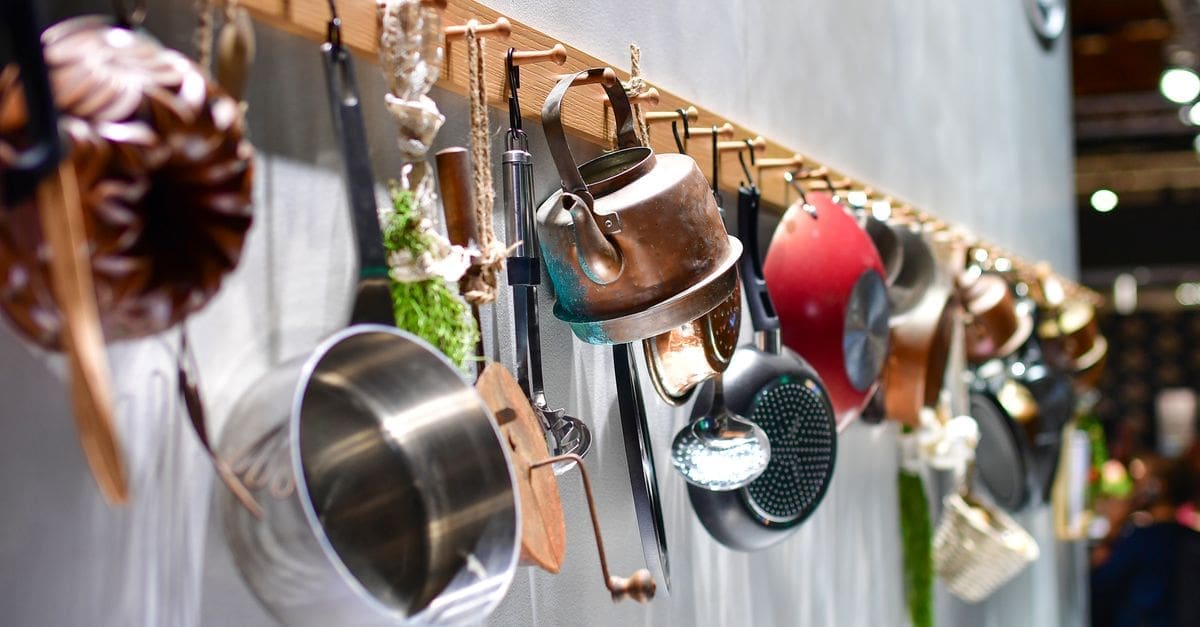
Drawer divider systems use adjustable partitions to create custom-sized sections for small pots, lids, and utensils. Cabinet shelf risers or pull-out inserts convert a single shelf into two levels of storage. Wall-mounted rails with hooks allow hanging pots, lids, and utensils on an empty wall next to the stove—effective in kitchens that lack cabinet space.
Cabinet and Drawer Dimensions
Measuring your cabinet interior precisely before purchasing is the most critical step. Width, depth, and height must all accommodate the organizer. Many pan organizers have fixed divider spacing—if your widest skillet is 12 inches and the divider slots are 10 inches apart, the skillet won’t stand upright. Some organizers have adjustable dividers that can be repositioned, which is worth prioritizing if your cookware varies significantly in size.
Door-mounted lid holders require enough clearance between the door and the cabinet shelf to close without the shelf blocking the rack. Measure the distance from the inside of the door to the nearest shelf edge before mounting any door-mounted storage solution. Even 0.5 inches of interference prevents the door from closing.
Material and Durability
Steel and iron organizers are the most durable and can support heavy cast iron or stainless steel cookware without bending. Coated steel resists rust and is easier to wipe clean than bare metal. Chrome and nickel coatings look clean and don’t chip as easily as powder coat at contact points. Steel racks are heavier, which matters for ceiling-mounted or wall-mounted versions that need to bear significant weight.
Bamboo and wood organizers are lightweight and gentle on non-stick cookware coatings. They’re a good choice for lightweight aluminum or non-stick pans. However, wood organizers can warp or crack in humid environments near the stove. Plastic organizers are inexpensive but may flex or break under the weight of heavy cast iron or large stockpots.
Lid Storage
Lids are often the hardest cookware element to store because they’re round, top-heavy, and don’t stack neatly. Dedicated lid holders—either vertical racks that store lids on edge or wall-mounted holders with pegs—solve this problem. Vertical lid racks work inside base cabinets or on countertops; wall-mounted holders require drilling but keep lids visible and accessible.
Some pan organizers include a built-in lid section on the side. These work well if your lids match your pans in a consistent size range. If your lid collection spans a wide range of diameters—from a 6-inch pot lid to a 14-inch wok lid—adjustable slots that can expand to accommodate different sizes are more versatile than fixed holders.
Installation Methods
Freestanding organizers that sit on cabinet shelves require no installation and are the easiest to reposition. They can slide or tip under weight, so models with rubber feet or non-slip bases stay put better during daily use. Cabinet door mounting uses adhesive strips or screws to attach a holder to the inside of a door—adhesive versions are easy to remove but have weight limits.
Ceiling-mounted pot racks require installation into ceiling joists and must support the full weight of all hanging cookware plus the rack itself. This installation requires confirming joist location with a stud finder and using appropriate hardware for the ceiling material. Improper installation of ceiling racks poses a safety risk and should be done carefully or by a professional.
What to Check Before You Buy
- Measure the interior width, depth, and height of the cabinet or drawer before purchasing
- Check that the divider spacing accommodates your widest pan
- Confirm door-mounted racks have enough clearance to close the cabinet door
- Choose steel or iron for heavy cast iron and stainless cookware; bamboo for lightweight non-stick
- Include a lid solution—dedicated lid rack or organizer with a built-in lid section
- For ceiling-mounted racks, confirm ceiling joist location and appropriate hardware capacity
- Look for adjustable dividers if your cookware spans a wide size range
How to Choose a Cookware Organizer
Measure your storage space and identify your cookware types before selecting an organizer style.
- Identify where the cookware will be stored—base cabinet, drawer, wall, or ceiling
- Measure the interior dimensions of that space precisely
- Note the heaviest cookware you’ll store and choose a material rated to support that weight
- Select an organizer style that matches your cabinet layout—vertical pan rack, door mount, or freestanding
- Confirm lid storage is either included in the organizer or addressed with a separate solution
- Check installation requirements against your willingness to drill, mount, or use adhesive
Ready to shop? Browse our full list of Cookware Organizers to compare top-rated options.