How to Choose a Kitchen Scale
A kitchen scale is judged by its accuracy, capacity, and readability, not the color of the platform. Precise weight measurement improves baking consistency and portion control far more than volume cups can, so the smallest increment it reads and how steadily it holds a reading matter. Unit options, tare function, and power source shape daily use. Knowing whether you bake bread, portion meals, or brew coffee helps you match the resolution and capacity that make measuring quick and reliable.
Accuracy and Resolution
Resolution is the smallest increment the scale displays, and finer resolution matters for small quantities like yeast, spices, or espresso doses. A scale reading to one gram suits general cooking, while a tenth-of-a-gram model serves precise baking and coffee.
Accuracy across the range is just as important as resolution, since a scale that drifts under load gives inconsistent results. Look for a model that holds a stable reading and returns to zero cleanly rather than wandering.
Weight Capacity and Range
Maximum capacity determines what you can weigh, from a few grams of spice to a heavy mixing bowl of dough or a whole roast. A capacity around five to eleven pounds covers most home cooking.
There is a trade-off between capacity and resolution; very high-capacity scales often read in coarser increments. If you weigh both tiny and large amounts, a mid-capacity scale with fine resolution offers the most versatility.
Tare Function and Unit Options
The tare button zeroes out the weight of a bowl or container so you measure only the ingredient, and it lets you add several ingredients into one vessel in sequence. A responsive tare is central to fast, mess-free measuring.
Multiple unit options, including grams, ounces, pounds, and milliliters for liquids, add flexibility for recipes written in different systems. Switching units easily saves conversion errors during a busy cook.
Display and Readability
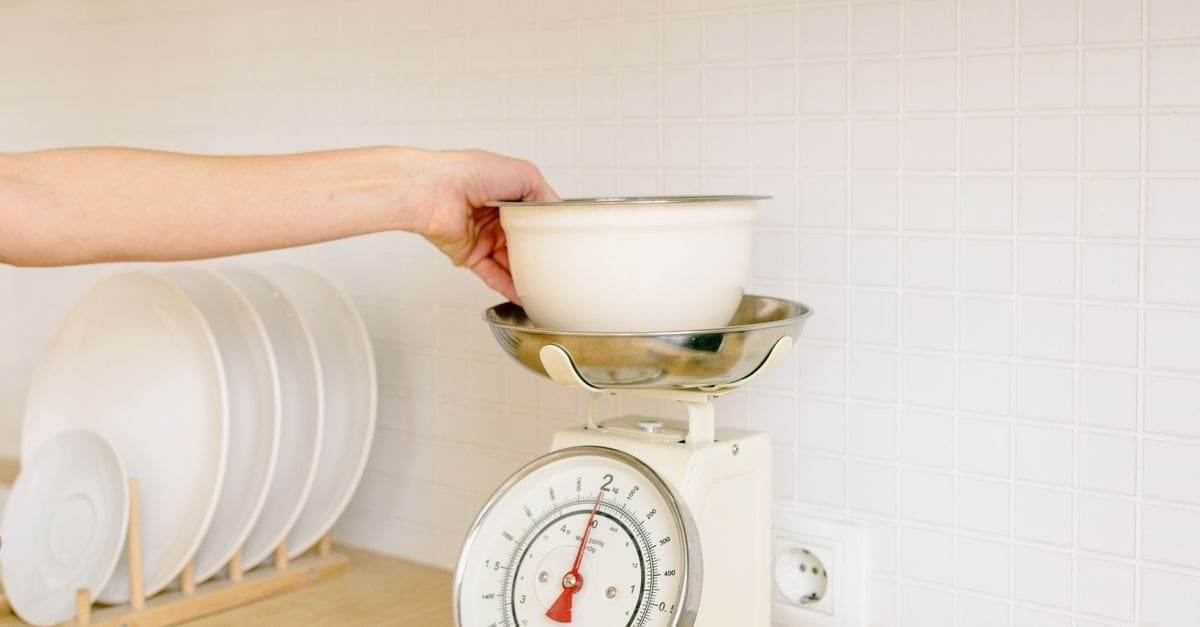
A clear, backlit display readable from above prevents you from bending awkwardly, and it stays visible when a wide bowl overhangs the platform. Some scales project the readout or place it forward to avoid being covered.
Auto-off timers save battery but can shut down mid-recipe, so a longer timeout or a disable option helps during slow tasks. A display that shows negative values after taring confirms the scale is tracking correctly.
Build, Cleaning, and Power
A stainless or sealed platform wipes clean easily and resists spills, while crevices around buttons trap flour and liquid. A removable or fully flat surface simplifies cleanup after messy baking.
Most scales run on replaceable batteries, though some offer rechargeable or USB power. Consider battery type and availability, and whether a compact, flat design stores easily in a drawer when not in use.
What to Check Before You Buy
- Match resolution to your needs, finer for baking and coffee, one gram for general cooking.
- Confirm the scale stays accurate and stable across its full range.
- Choose a capacity that handles both small amounts and heavy bowls.
- Balance capacity against resolution for versatility.
- Require a responsive tare function for measuring in a container.
- Look for multiple unit options including grams and milliliters.
- Prefer a clear, readable display that a wide bowl will not cover.
- Check for an easy-clean surface and a convenient power source.
How to Choose a Kitchen Scale
Starting from what you cook keeps the resolution and capacity choices grounded.
- Identify your main uses, such as baking, portioning, or coffee.
- Pick a resolution fine enough for your smallest measurements.
- Choose a capacity that covers your heaviest bowls.
- Confirm a quick tare and the units your recipes use.
- Check the display readability with a large bowl on the platform.
- Consider cleaning, power source, and storage size before buying.
Ready to shop? Browse our full list of Kitchen Scales to compare current options and prices.