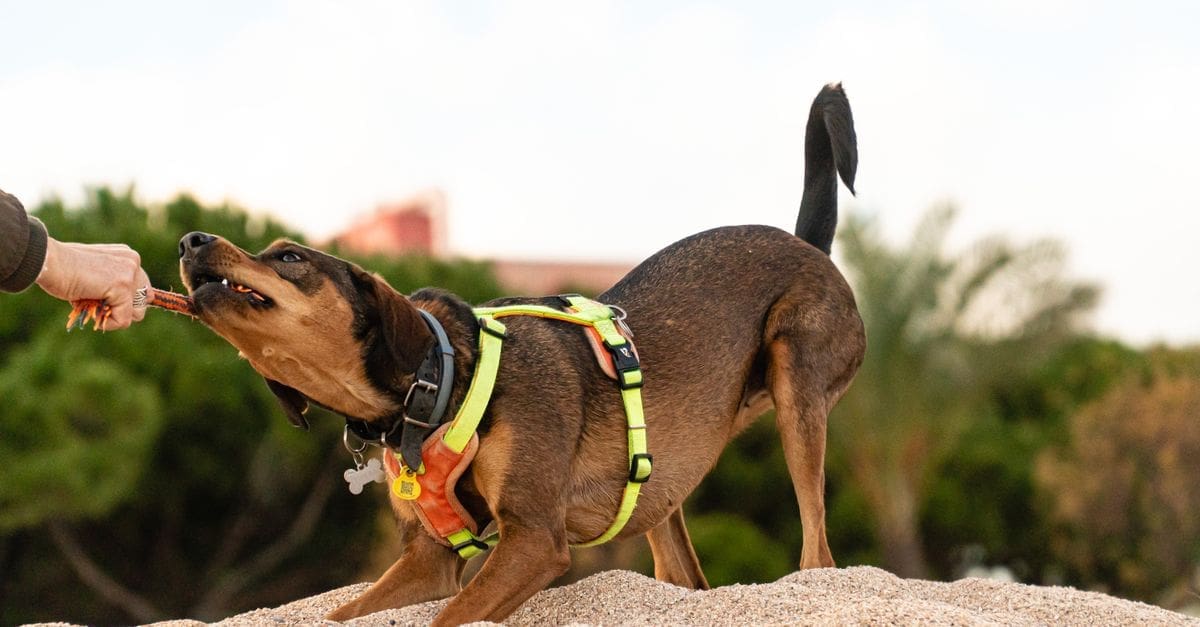
How to Choose a No-Pull Dog Harness
Stopping a dog from dragging you down the sidewalk comes down to where the leash attaches and how well the harness fits the body. A front clip redirects a lunge back toward you, while a poor fit chafes or lets a determined puller slip free. Padding, adjustment points, and material decide comfort over a long walk. Measuring your dog and understanding its pulling habits narrows the choice long before color or brand matters.
Front Clip Versus Back Clip
A leash ring on the chest turns a forward lunge sideways, gently steering the dog back toward you and discouraging the pull without a jerk to the neck. This front-attachment design is the core of most anti-pull harnesses and works best for dogs still learning leash manners.
A ring on the back is more comfortable for calm walkers and small breeds prone to tracheal strain, but it does little to curb pulling. Many harnesses offer both points, letting you use the front ring for training and the back ring once habits improve.
Fit and Sizing
A harness that fits correctly sits snug without digging, and getting there starts with measuring the chest girth behind the front legs rather than guessing by weight. Two fingers should slide under any strap, tight enough to prevent escape yet loose enough to move freely.
Escape is the risk of a bad fit, since an anxious dog can back out of a loose harness in traffic. Multiple adjustment points around the neck and chest dial in the fit across different body shapes, which matters for deep-chested or barrel-bodied breeds.
Padding and Comfort
Straps that press into the skin turn a walk unpleasant, so padded chest and belly panels spread pressure and prevent chafing on longer outings. Soft neoprene or mesh lining stays comfortable against short and long coats alike.
Comfort also depends on where straps fall, since a design that rubs the armpits will gall the skin over time. A harness cut to clear the leg joints and distribute a pull across the chest keeps an eager dog willing to walk rather than resisting the gear.
Material and Durability
A strong puller tests the seams, so heavy-duty webbing, reinforced stitching, and metal hardware outlast plastic clips that crack under strain. The buckle in particular should feel solid, since a failed clip means a loose dog.
Weather resistance keeps the harness usable year round, with quick-drying nylon shrugging off rain and mud. Breathable mesh suits hot climates, while a sturdier weave holds up to daily use and rough play without fraying at the stress points.
Ease of Putting On
A harness used daily needs to go on without a wrestling match, and step-in or over-the-head designs each suit different dogs. Anxious or wiggly dogs often tolerate a step-in style better than one pulled over the face.
Quick-release buckles speed the routine, letting you clip the harness closed around the body instead of threading legs through loops. Confirming the closure is both easy for you and secure against the dog keeps departures calm rather than a daily struggle.
Visibility and Handle
Early-morning and evening walks are safer when the harness is easy to see, so reflective stitching or piping catches headlights. A brightly colored or high-visibility design adds a margin near roads in low light.
A sturdy grab handle on the back gives quick control in a crowd or when lifting the dog over an obstacle. It also helps steady an excited dog at a curb, turning a moment of chaos into a firm, reassuring hold.
What to Check Before You Buy
- Choose a front-clip design to redirect pulling during training.
- Look for both front and back rings for flexibility as habits improve.
- Measure the chest girth behind the front legs for an accurate size.
- Confirm multiple adjustment points to fine-tune the fit.
- Prefer padded chest and belly panels to prevent chafing.
- Check for reinforced stitching and solid metal hardware.
- Pick a step-in or over-head style your dog tolerates easily.
- Look for reflective detail and a grab handle for safety and control.
How to Choose a No-Pull Dog Harness
Starting from your dog’s size and walking behavior keeps the fit and attachment choices practical.
- Measure your dog’s chest girth and neck for the right size.
- Choose a front-clip or dual-clip design based on training needs.
- Confirm the harness offers enough adjustment for your dog’s build.
- Check padding and strap placement to avoid chafing.
- Verify the material and hardware suit a strong puller.
- Pick an on-off style and safety features that fit your routine.
Ready to shop? Browse our full list of No-Pull Dog Harnesses to compare current options and prices.