What to Look for in a Ratchet Set
Working in a tight engine bay comes down to how far the handle must swing before the mechanism catches again, and that is governed by tooth count. A 72-tooth ratchet needs five degrees of arc, while a coarse 24-tooth head demands fifteen. Drive size determines the torque you can safely apply, and socket coverage decides whether the set actually fits your fasteners. Steel grade and finish then predict how long the whole kit survives.
Tooth Count and Swing Arc
Tooth count is the number of engagement points inside the ratchet head, and dividing 360 by that number gives the arc needed to advance a fastener. Higher counts mean shorter swings, which is the difference between turning a bolt and repositioning the tool endlessly.
Counts of 72 and above are common on quality tools, with 90 and 120 available for very tight work. The trade-off is that finer teeth are individually smaller and can strip under extreme torque, so heavy breaking work is better done with a breaker bar.
Drive Size and Torque Range
Quarter-inch drive suits small fasteners in electronics, interiors, and tight spaces, handling modest torque with excellent access. Three-eighths drive is the everyday workhorse for automotive and household repair.
Half-inch drive handles suspension bolts, lug nuts, and anything requiring serious torque without twisting the drive square. A set spanning quarter and three-eighths covers most home use, while adding half-inch makes sense if you work on vehicles or heavy equipment.
Socket Coverage and Point Count
Metric and SAE coverage both matter in a mixed garage, and gaps in the range are what send you to the store mid-job. Check the actual size list rather than the headline piece count, which often inflates the number with adapters and extensions.
Six-point sockets grip the flats of a fastener and are far less likely to round a tight or corroded bolt. Twelve-point sockets engage at twice as many angles for easier positioning, which helps in confined spaces but concentrates force on the corners.
Steel Grade and Finish
Chrome vanadium steel is the standard for hand sockets, strong and corrosion resistant under a polished chrome finish. Chrome molybdenum is tougher and more ductile, which is why impact sockets use it with a black oxide coating.
Never use chrome hand sockets on an impact wrench, since they can shatter rather than deform. The finish also affects handling, with polished chrome wiping clean of oil easily while black phosphate resists rust better in a damp shop.
Case, Organization, and Accessories
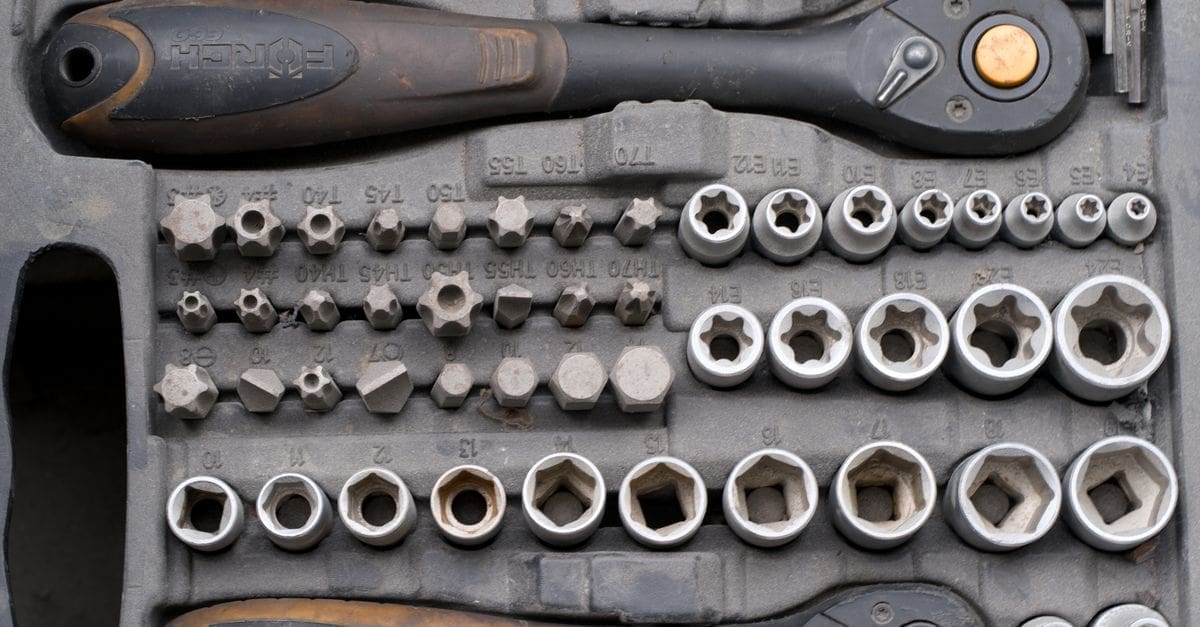
A molded case with labeled sockets makes a missing tool obvious at a glance, which is how sets stay complete over years. Loose sockets rattling in a tray get lost, and replacing individual pieces costs far more per socket than the original set.
Extensions, universal joints, and adapters extend reach around obstructions and are the pieces most often needed unexpectedly. A wobble extension that allows a few degrees of angle at the socket saves considerable frustration on recessed bolts.
Handle Design and Reversibility
A thumb-operated reversing lever lets you change direction without removing the socket from the fastener, which is essential in blind spots. Levers that are stiff or awkwardly placed slow every single operation.
Handle length trades torque for access, with longer handles giving leverage and shorter stubby versions fitting where nothing else will. Comfort grips reduce hand fatigue and improve control with oily hands, though bare steel handles are easier to wipe down and never peel.
What to Check Before You Buy
- Look for 72 teeth or more so the handle needs only a short swing arc.
- Choose drive sizes that match your fasteners, with three-eighths as the workhorse.
- Read the actual socket size list rather than the headline piece count.
- Favor six-point sockets for corroded fasteners and twelve-point for access.
- Confirm chrome vanadium for hand tools and chrome molybdenum for impact use.
- Look for a molded labeled case so missing pieces are obvious.
- Check that extensions, universal joints, and a reversing lever are included.
How to Choose a Ratchet Set
Listing the fasteners you actually turn keeps the drive sizes and socket range grounded in real use.
- Note whether your work is metric, SAE, or a mix of both.
- Identify the smallest and largest fasteners you regularly handle.
- Choose drive sizes that span that range without gaps.
- Set a minimum tooth count based on how tight your working spaces are.
- Verify the socket list covers every size you need in six-point form.
- Confirm the case, extensions, and adapters included match your work.
Ready to shop? Browse our full list of Ratchet Sets to compare current options and prices.