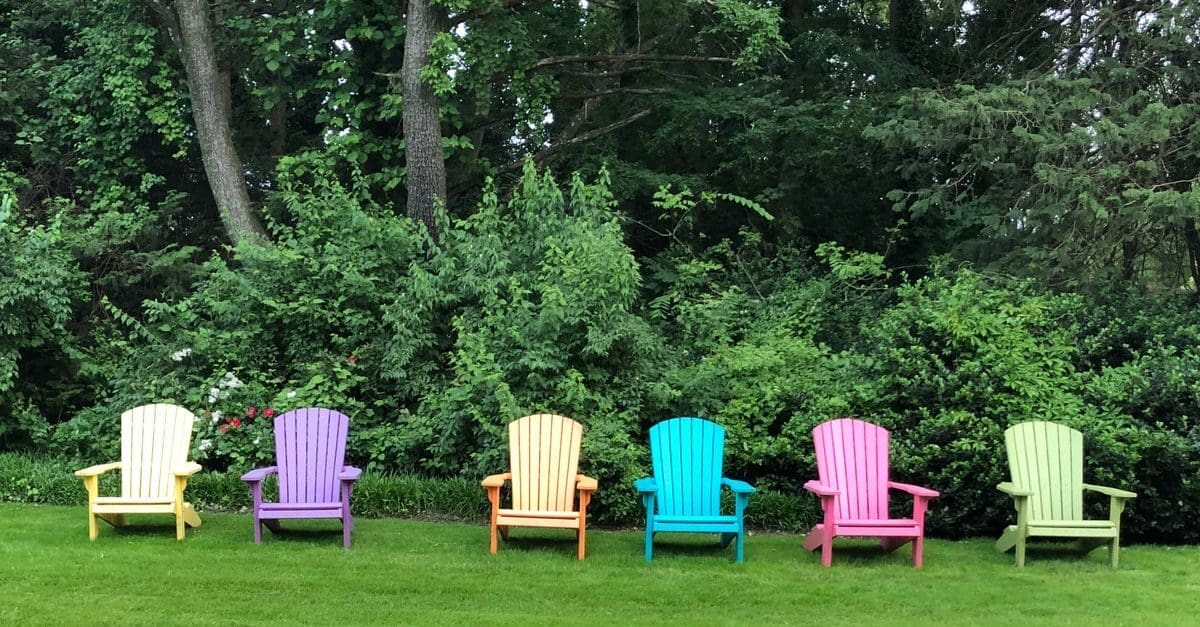
What to Look for in an Adirondack Chair
Wide armrests, a slanted back and a low seat make this classic chair a fixture around fire pits, lakeshores and lawns. Material choice affects weight, upkeep and how long the chair lasts outdoors. Seat height, back angle and folding features affect comfort and storage. Compare these points before you buy.
Materials: Wood, Poly Lumber and Composite
Cedar, teak and acacia look classic and weather naturally, but they need sealing, oiling or painting every year or two to prevent cracking and graying. Pine is affordable and easy to paint but more prone to rot if the finish wears through.
Poly lumber made from recycled HDPE resists rot, fading and insects and needs only soap and water. It is heavy, often 35 to 60 pounds per chair, which keeps chairs stable in wind but makes them harder to move.
Seat Height and Back Angle
Traditional designs have low seats around 12 to 15 inches and steeply reclined backs. That posture is very relaxing around a fire, but it can be hard to get out of for older adults.
Comfort-height versions raise the seat to around 16 to 18 inches and use a slightly more upright back. They are easier to sit down in and stand up from without losing the classic look.
Armrest Width and Comfort Features
Wide flat armrests of 5 inches or more hold drinks, plates and books securely. Some chairs add built-in cup holders or phone slots cut into the arms.
Contoured seat slats and curved backs follow the body better than flat boards. A slight waterfall edge at the front of the seat reduces pressure behind the knees.
Folding and Stacking
Folding Adirondack chairs collapse flat for winter storage or to bring along to a lake cabin. Check the folding hinge and locking hardware for sturdiness, since weak joints can wobble over time.
Stackable designs nest together to save space on a deck or in a garage. They are popular for rental properties and larger groups of chairs.
Weight Capacity and Stability
Most Adirondack chairs are rated for 250 to 350 pounds, with heavy-duty models rated higher. A wide stance and low center of gravity make these chairs naturally stable.
Heavier poly lumber chairs resist tipping and blowing over in storms. Lightweight wood or plastic chairs may need to be moved inside during high winds.
Hardware, Finishes and Warranty
Stainless steel hardware prevents rust stains on wood and light-colored poly lumber. Avoid zinc-plated screws, which corrode in damp climates and weaken joints.
UV-stabilized colors in poly lumber resist fading for years. Warranty length is a good indicator of quality, with many poly chairs carrying 10 to 20-year coverage.
What to Check Before You Buy
- Choose wood or poly lumber based on upkeep and climate.
- Check seat height for ease of getting in and out.
- Compare back angle and seat contour.
- Look at armrest width and cup holders.
- Decide whether you need folding or stacking.
- Confirm stainless steel hardware.
- Check the weight capacity and warranty.
How to Choose an Adirondack Chair
These steps help you pick a chair.
- Decide where the chair will go and how often it will move.
- Choose a material for your climate and maintenance preference.
- Check seat height and back angle for comfort.
- Compare armrests and comfort features.
- Decide on folding or stacking.
- Check hardware quality and warranty coverage.
Ready to shop? Browse our full list of Adirondack Chairs to compare current options and prices.