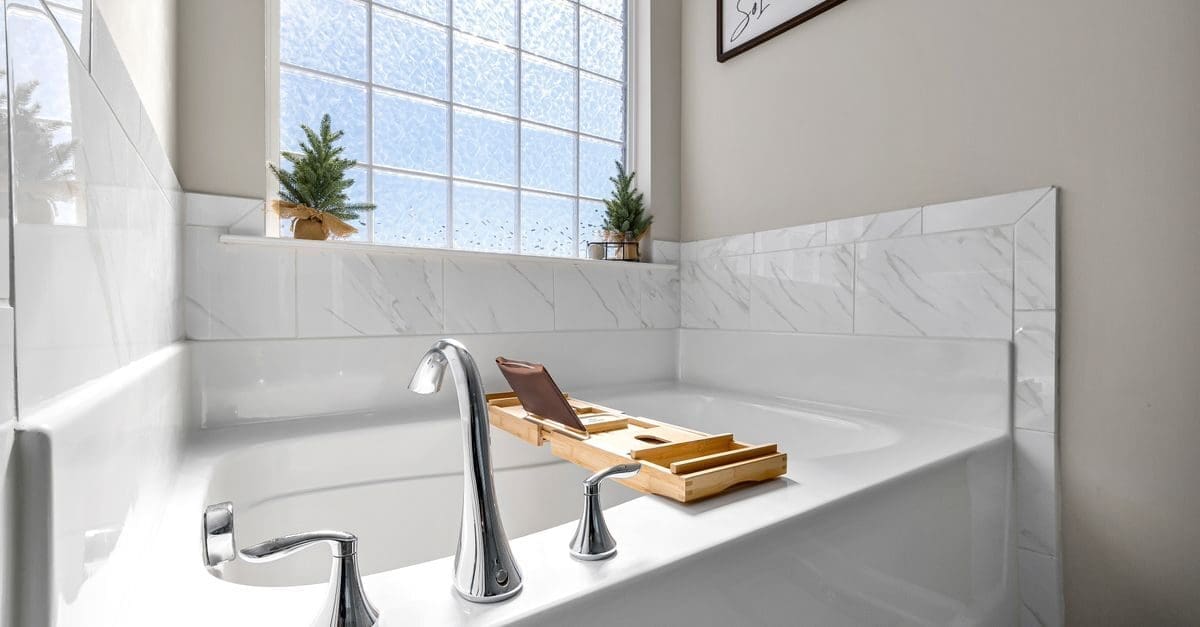
How to Choose a Bathtub Tray
Span adjustment is the first specification to verify, because tubs vary by several inches and a tray that does not reach both rims is useless. Material determines how well it survives constant humidity and splashing. Holder design decides whether a glass or a tablet sits securely or slides off at the first nudge. Weigh those against how easily the tray stores when the bath is being used normally.
Span Range and Tub Fit
Measure the outside width across your tub rims before shopping, since standard tubs range roughly 26 to 33 inches and freestanding designs vary far more. An expandable tray with sliding arms covers a wider range than a fixed one.
Check how the arms grip. Rubberized end stops that hook over the rim prevent the tray sliding sideways, which is the most common frustration with plain flat-ended designs.
Material and Moisture Resistance
Bamboo is the most common choice because it resists moisture better than most woods, but it still needs a sealed finish and drying between uses. Unsealed bamboo darkens and can develop mold at the joints.
Stainless steel and powder-coated metal shrug off humidity entirely and clean easily. Plastic and silicone are the lightest and most forgiving but read as less substantial in a finished bathroom.
Holder Design: Books, Tablets, and Glasses
A tilted slot for a book or tablet is far more useful than a flat recess, because it holds the screen at a readable angle. Check the slot depth accommodates a tablet in a protective case.
Glass holders should be a recessed cutout rather than a shallow ring, since a ring lets a wet glass slide. A stemware slot is a specific feature worth looking for if that matters to you.
Weight Capacity and Rigidity
A tray holding a tablet, a drink, and a book carries more than people assume, and thin slats flex alarmingly under that load. Look for a stated capacity and thick enough slats to resist bowing.
Expandable designs are inherently less rigid at full extension because the arms cantilever. Test how the tray feels at the span you will actually use rather than fully collapsed.
Drainage, Cleaning, and Drying
Slatted designs let water drain through instead of pooling, which reduces the standing moisture that damages wood. Solid surfaces look tidier but hold water in any recess.
Whatever the material, the tray needs to dry between uses. A hook or a vertical storage spot outside the tub is the simplest way to avoid the mold that develops on a tray left in place.
Storage and Folding
Folding trays collapse to store in a cupboard or hang on a hook, which keeps the bathroom uncluttered. The hinge adds a wear point that can corrode in constant humidity.
If the tray will live permanently across the tub, consider how it affects normal bathing and showering. A tray in the splash zone of a shower gets soaked daily and deteriorates much faster.
What to Check Before You Buy
- Measure the outside width across your tub rims first.
- Choose an expandable design if the fit is marginal.
- Look for rubberized end stops that hook over the rim.
- Prefer a tilted slot over a flat recess for tablets and books.
- Check the slot depth fits a tablet in its case.
- Confirm glass holders are recessed rather than a shallow ring.
- Choose slatted construction so water drains through.
- Plan a drying spot outside the tub to prevent mold.
How to Choose a Bathtub Tray
Measure the tub before anything else, because fit is binary here in a way that finish and features are not.
- Measure the outside rim-to-rim width of your tub.
- Decide between a fixed-width and an expandable design.
- Choose a material suited to your bathroom humidity.
- Check which holders you need for books, tablets, or glasses.
- Confirm the stated weight capacity and slat rigidity.
- Plan where the tray will dry and store between uses.
Ready to shop? Browse our full list of Bathtub Trays to compare current options and prices.