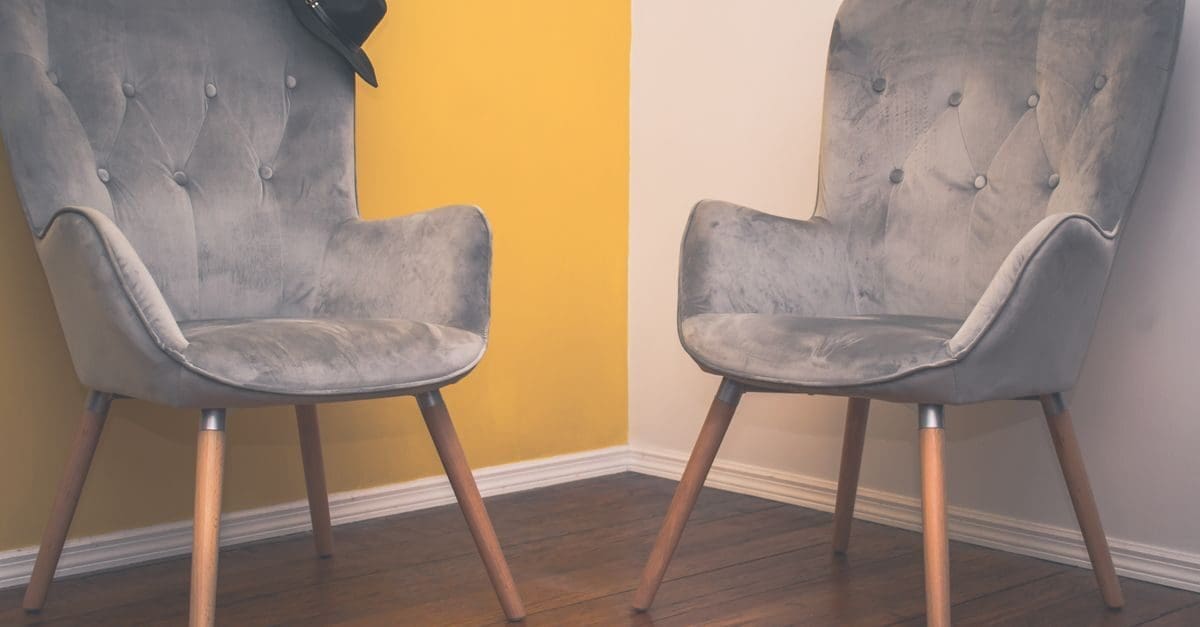
Accent Chair Buying Guide: Scale, Comfort and Fabric
Scale relative to the surrounding seating is what makes one of these pieces look intentional rather than accidental, and it is judged by seat height and visual weight more than footprint. Comfort still matters even in an occasional seat, because a chair nobody wants to sit in is just an obstacle. Frame construction determines whether a lightweight design stays tight. Fabric choice is where these pieces earn their keep visually, so durability and pattern both deserve thought.
Scale and Proportion
Seat height should sit within an inch or two of the sofa it accompanies so people converse at the same level. A chair noticeably higher or lower disrupts the grouping.
Visual weight matters as much as dimensions. A skirted, upholstered chair reads heavier than an open frame of identical size, which changes how crowded a room feels.
Comfort for Occasional Use
Even a chair used twice a week should support a full conversation without pressure points. Test seat depth and back angle rather than assuming a decorative piece gets a pass on comfort.
Firmer seats suit occasional use better than deeply soft ones, because they are easier to rise from. That matters when guests of varied ages will use the chair.
Frame Construction and Leg Attachment
Slim-legged designs carry the full load through narrow joints, so the connection between leg and frame is critical. Metal inserts and through-bolts outperform screws driven into engineered board.
Kiln-dried hardwood frames with corner blocks resist racking, which matters more on a light chair than a heavy one. A chair that rocks slightly on a flat floor has a frame problem, not a leveling problem.
Upholstery: Pattern, Texture, and Durability
These chairs often carry the pattern or texture in a room, which makes fabric choice consequential. Bouclé and chenille add tactile interest but snag on claws and zippers.
Check the double-rub rating even for occasional seating, since a decorative chair in a walkway gets brushed constantly. Above 15,000 is reasonable for light use and above 30,000 for anything heavier.
Arm Style and Accessibility
Armless designs occupy less visual space and slot into tight corners, but they offer no leverage for standing up. That makes them less suitable for older guests.
Low or sloped arms look elegant and still give something to push against. Full-height arms provide the most support and read as a more substantial, traditional piece.
Placement, Weight, and Mobility
An occasional chair often needs moving for guests, so weight matters. Anything above 40 pounds becomes a two-person job for regular repositioning.
Felt pads or glides protect floors from the dragging that inevitably happens. Check the leg profile accepts standard pads, since some tapered metal legs need specialty caps.
What to Check Before You Buy
- Match seat height within an inch or two of the nearby sofa.
- Consider visual weight, not just the physical footprint.
- Test the chair for a full conversation’s worth of comfort.
- Prefer a firmer seat that is easy to rise from.
- Check leg attachment uses inserts or through-bolts.
- Look for a double-rub rating suited to the traffic it sees.
- Decide whether arms are needed for easier standing.
- Keep the weight manageable if the chair will be moved often.
How to Choose an Accent Chair
Judge it against the room rather than on its own, since scale and contrast are what make this kind of chair work or fail.
- Measure the sofa seat height and the available floor space.
- Decide whether the chair should contrast or blend with the room.
- Sit in it long enough to judge real comfort.
- Inspect leg attachment and test for frame racking.
- Choose a fabric rated for the traffic the spot receives.
- Check the weight and leg profile for moving and floor protection.
Ready to shop? Browse our full list of Accent Chairs to compare current options and prices.