How to Choose Solar Pathway Lights
Lining a walkway with small stake lights helps guests find the front door and keeps everyone from tripping over edging after dark. Because each fixture runs on its own panel and battery, solar cell quality and battery capacity decide how bright the lights glow and how long they last into the night. Housing material and light style shape both durability and curb appeal. These are the details that separate lights that last for years from ones that fade after one season.
Brightness and Light Output
Many decorative path lights produce only 2 to 10 lumens, which marks the edge of a path but does not light the ground. Brighter models in the 20 to 100 lumen range actually illuminate the walkway surface, which helps on steps and uneven pavers.
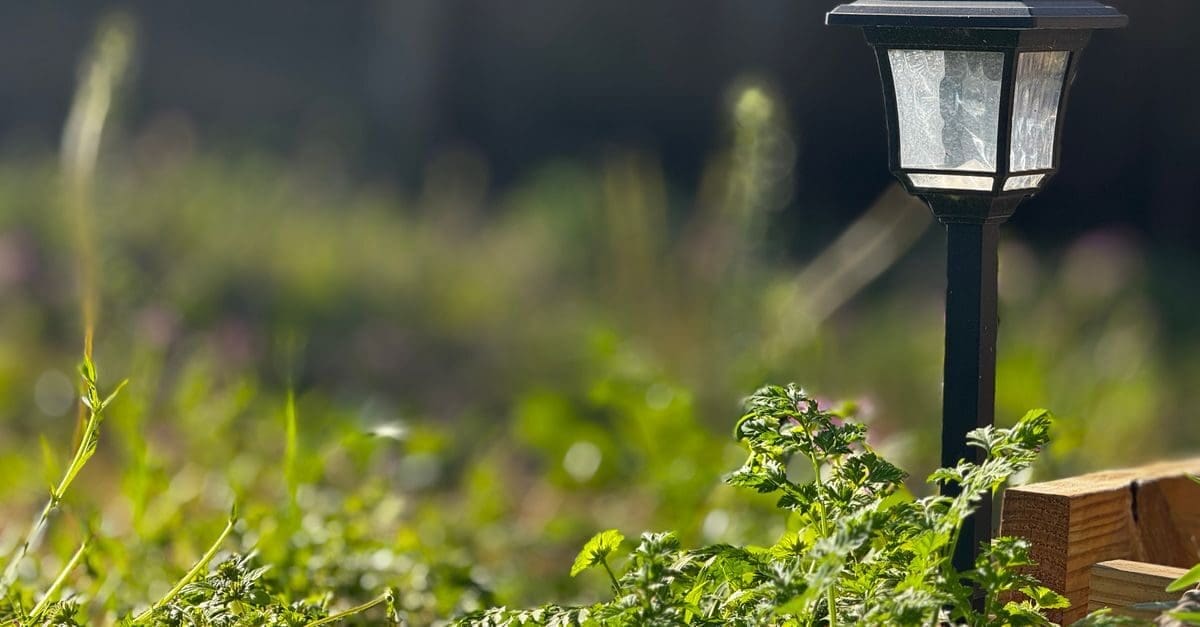
Downward-facing hoods direct light onto the path rather than into eyes and windows, giving more useful light for the same output. Patterned or textured glass casts decorative shadows but reduces how much light reaches the ground.
Solar Panel and Battery Capacity
Monocrystalline panels charge more efficiently than polycrystalline ones, especially in partial shade, on cloudy days and in winter. A larger panel area helps each light reach a full charge when daylight hours are short.
Rechargeable NiMH and lithium batteries store the day’s energy for the night. Look for capacities of 600 mAh or more and replaceable batteries, since swapping a worn cell can bring a fading light back to full runtime.
Runtime and Sensors
Fully charged path lights typically run 6 to 12 hours. Expect shorter runtimes in winter and after a string of cloudy days, when the panel cannot fully recharge the battery.
Dusk-to-dawn light sensors turn the lights on automatically at sunset. Some models include motion sensors that run on a dim setting and brighten when someone walks by, which saves battery for later in the night.
Color Temperature and Modes
Warm white light around 2,700 to 3,000K suits traditional homes, brick and gardens, while cool white looks crisp next to modern architecture and concrete. Some lights let you switch between the two or cycle through RGB colors for holidays.
Flicker and flame effects create a cozy mood on patios but provide very little usable light on a path. Choose a steady mode for walkways that people use after dark.
Housing Materials and Durability
Stainless steel, cast aluminum and glass housings last far longer than thin plastic, which can turn brittle and yellow in the sun. Look for an IP65 or higher rating so rain and sprinklers do not short the circuit.
Sturdy stakes resist bending in hard or rocky soil, and multi-piece stakes should lock tightly so the light does not lean. Pre-loosening the soil with a screwdriver makes installation easier and prevents broken stakes.
Placement and Spacing
Space lights 6 to 8 feet apart for a clearly defined path, or closer for more even ground lighting. Staggering lights on alternate sides of the walk looks more natural than a straight runway pattern.
Place panels where they receive at least six hours of direct sun each day. Avoid spots under eaves, dense shrubs or trees, and wipe panels clean every few weeks to keep charging efficient.
What to Check Before You Buy
- Check lumen output, not just decorative style.
- Look for monocrystalline panels.
- Confirm battery capacity and whether batteries are replaceable.
- Check runtime and any motion or dusk sensors.
- Choose a color temperature that suits your home.
- Compare housing materials and IP rating.
- Plan spacing and sun exposure along the path.
How to Choose Solar Pathway Lights
These steps help light your walkway well.
- Measure the length of your path and plan spacing.
- Decide how much light you need on the walking surface.
- Check solar panel type and battery specs.
- Choose light color and style.
- Compare materials and weather resistance.
- Test placement for full sun exposure before installing all lights.
Ready to shop? Browse our full list of Solar Pathway Lights to compare current options and prices.