
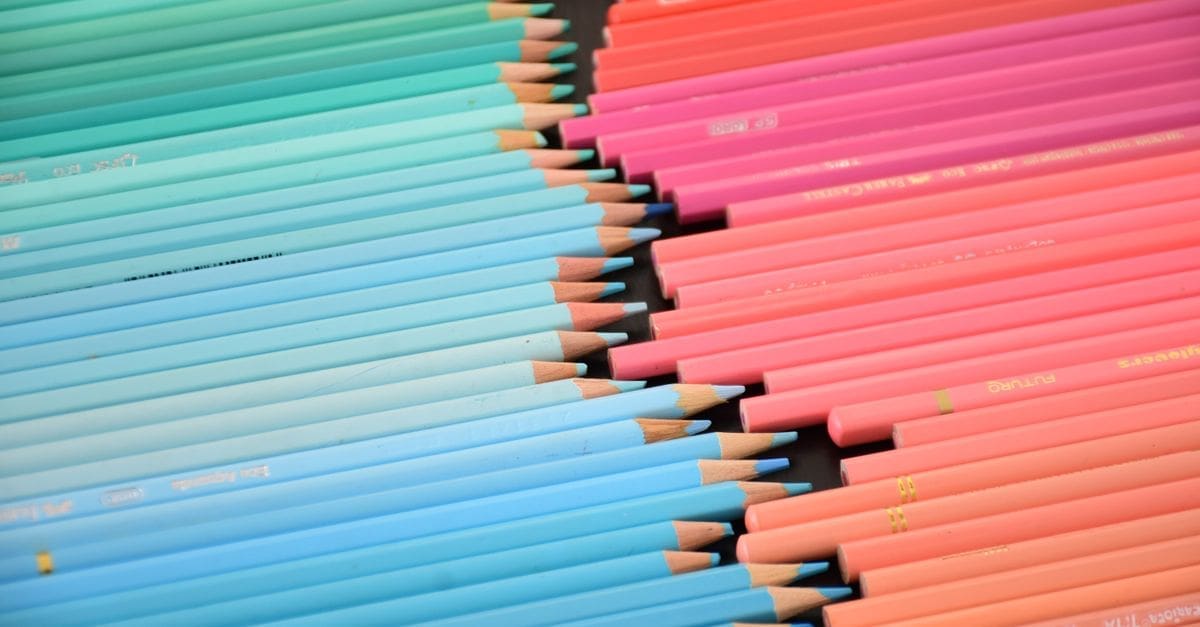
How to Choose a Colored Pencil Set
Core softness and pigment quality decide whether colored pencils lay down rich, blendable color or leave scratchy, waxy lines. The count of colors, whether the core is wax or oil based, and lightfastness shape both handling and longevity. Barrel build and point retention affect comfort and sharpening. Matching the set’s core type and range to your technique keeps layering smooth and shading controlled.
Wax-Based Versus Oil-Based Cores
Wax-based pencils lay down soft, buttery color that blends easily but can develop a hazy wax bloom over time. Oil-based cores are firmer, hold a sharper point for detail, and resist bloom, though they can feel less creamy.
Many artists mix both, using wax for smooth coverage and oil for crisp detail. Your technique, whether broad burnishing or fine linework, should guide which core suits you.
Pigment Quality and Blendability
Higher pigment concentration gives stronger color that layers into deep, saturated tones without excessive pressure. Weak, filler-heavy cores need many passes and still look pale, which frustrates blending.
Smooth, blendable pigment lets you build gradients and mix colors on the paper. Consider whether you want to blend with a colorless pencil or solvent, since core quality affects how well those techniques work.
Color Range and Selection
A mid-sized set with a balanced spread of hues plus neutrals covers most subjects and lets you mix the rest. Very large sets add convenience but include colors you may rarely reach for.
Open-stock availability lets you replace the colors you use most rather than rebuying a whole tin. Think about your subjects, since a portrait artist and a landscape artist favor different ranges.
Lightfastness and Permanence
Lightfast ratings show how well colors resist fading, which matters for framed or sold work. Some bright student pigments fade in months of light exposure, so ratings guide durable choices.
Artist-grade lines typically publish lightfastness per color, letting you avoid fugitive hues in lasting pieces. Pairing lightfast pencils with quality paper keeps a finished drawing stable.
Barrel, Grip, and Point Retention
A well-centered core inside a sturdy barrel resists breakage during sharpening, saving pencils and patience. Off-center or poorly glued cores snap repeatedly and waste length.
Barrel shape affects comfort over long sessions, with triangular or hexagonal barrels resisting rolling off the desk. Firmer cores hold a point longer, reducing how often you stop to sharpen.
Sharpening and Care
Soft wax cores need a sharp, quality sharpener to avoid crumbling, while firmer oil cores tolerate more. A handheld sharpener with a fresh blade gives cleaner points than a dull electric unit.
Storing pencils flat or point-up prevents internal core breakage from drops. A roll-up case or tin protects tips and keeps colors organized during transport.
What to Check Before You Buy
- Decide between wax cores for smooth blending and oil cores for fine detail.
- Look for high pigment concentration that layers without heavy pressure.
- Choose a balanced color range plus neutrals for your subjects.
- Check for open-stock availability to replace favorite colors.
- Confirm lightfastness ratings for framed or sold work.
- Prefer well-centered cores in a sturdy barrel to resist breakage.
- Consider barrel shape and grip for long drawing sessions.
- Match a quality sharpener to your chosen core softness.
How to Choose a Colored Pencil Set
Start with your subjects and technique, then weigh core type, pigment quality, and lightfastness against range and durability.
- Decide whether wax or oil cores suit your blending and detail needs.
- Choose a set with strong, blendable pigment for your style.
- Pick a color range balanced for the subjects you draw.
- Check lightfastness ratings if your work will be displayed.
- Confirm well-centered cores and a comfortable barrel.
- Plan for a suitable sharpener and protective storage.
Ready to shop? Browse our full list of Colored Pencil Sets to compare current options and prices.


