What to Look for in a Marker Set
Ink type and tip design decide whether markers blend into smooth gradients or streak and bleed. The nib shapes offered, whether the ink is alcohol or water based, and refillability shape both results and running cost. Color range and cap or barrel design affect organization and drying. Matching the ink and tips to your work keeps blends clean and colors consistent.
Alcohol Versus Water-Based Ink
Alcohol markers blend smoothly and layer into seamless gradients, favored for illustration and design, though they bleed through thin paper. Water-based markers are less prone to bleed and easier to clean up, but they blend less smoothly and can pill the paper surface.
Your project and paper should guide the ink: alcohol for rich blending on marker paper, water-based for lettering and everyday use. Some ranges offer both, so match the ink to the result you want.
Nib Shapes and Tip Options
A brush nib flexes for expressive strokes and lettering, while a chisel tip handles broad fills and defined edges. A fine bullet tip suits detail and outlining, so a dual-tip marker covers more tasks in one pen.
Consider which tips your work needs most, since a brush-and-chisel combination suits illustration and calligraphy. Replaceable nibs extend a marker’s life when a tip frays from heavy use.
Blending and Layering
Smooth blending depends on the ink flowing and reactivating slightly as you layer, which alcohol inks do well. A colorless blender pen softens edges and lightens color for highlights.
Blend while the ink is still workable, since drying between passes leaves streaks. Marker paper or a smooth, less absorbent surface keeps colors from soaking in unevenly.
Color Range and Consistency
A range with graduated tones in each color family makes blending easier because you can step between close values. A scattered set of unrelated hues is harder to blend into smooth transitions.
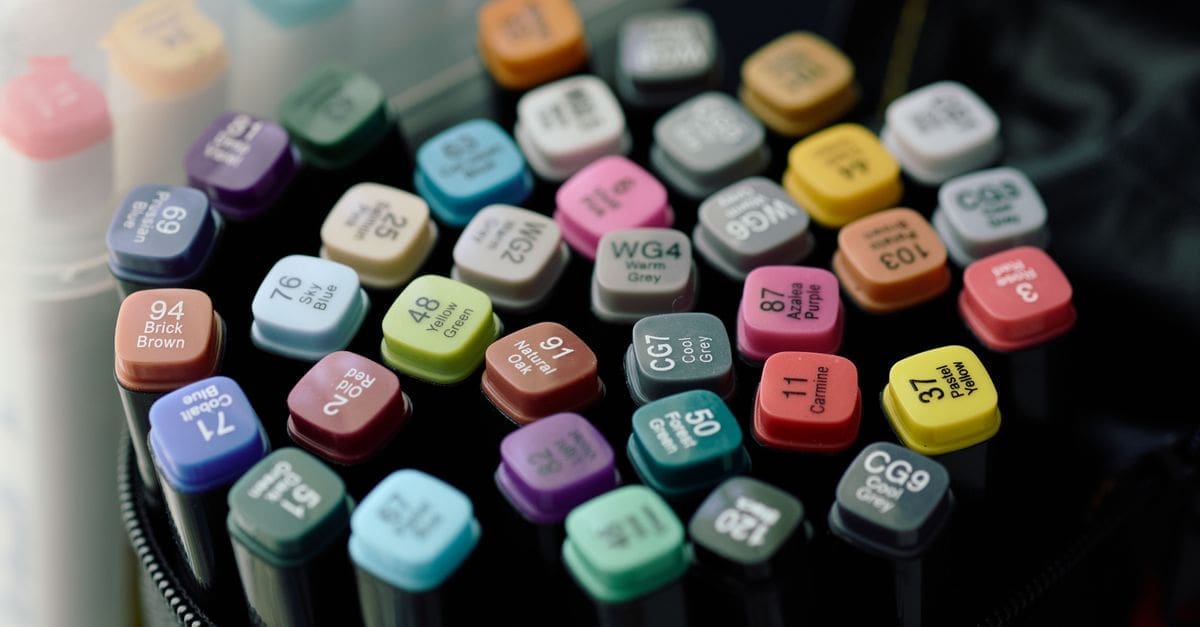
Consistent color between batches matters when you replace or add markers, so established coding systems help. Think about your subjects, since skin tones, greys, and greens vary in how many steps you need.
Refillability and Running Cost
Refillable markers cost more upfront but save money and waste over time, since ink refills are cheaper than new pens. Non-refillable markers suit occasional use but add up for heavy users.
Check that refills and replacement nibs are readily available for the range you choose. A system with easy refills keeps your most-used colors going for years.
Caps, Barrels, and Storage
Secure caps prevent the tips drying out, and color-coded caps or barrel ends speed finding the right pen. A barrel that shows the true color helps you pick accurately at a glance.
Storing markers horizontally keeps ink evenly distributed across dual tips. A case or stand organizes a growing collection and protects nibs from damage.
What to Check Before You Buy
- Choose alcohol ink for smooth blending or water-based for less bleed.
- Match the nib shapes, brush, chisel, or bullet, to your work.
- Look for a colorless blender if you want soft gradients and highlights.
- Prefer graduated tones in each color family for easier blending.
- Consider refillable markers to cut long-term cost and waste.
- Confirm refills and replacement nibs are available for the range.
- Check caps seal securely so tips do not dry out.
- Plan storage that keeps markers horizontal and organized.
How to Choose a Marker Set
Start with your projects and paper, then weigh ink type, nib options, and blendability against range and refill cost.
- Decide whether alcohol or water-based ink suits your work and paper.
- Choose the nib shapes your illustration or lettering needs.
- Pick a range with graduated tones for smooth blending.
- Add a colorless blender if you want soft transitions.
- Consider refillable markers to control long-term cost.
- Confirm refills, nibs, and secure caps for lasting use.
Ready to shop? Browse our full list of Marker Sets to compare current options and prices.