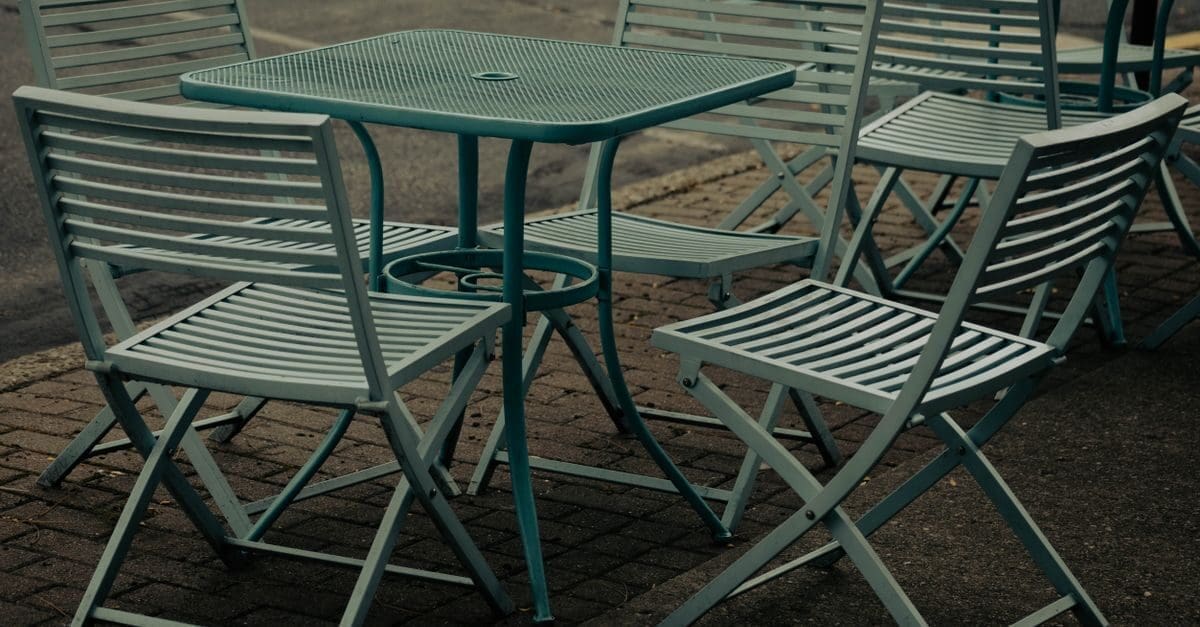
How to Choose a Patio Dining Set
Dinners outside go better when everyone has room for a plate and a chair that is comfortable through a long meal. Frame material decides how a set handles sun, rain and winter, while table shape and size decide how many people fit around it. Cushions, umbrella holes and care needs add to the long-term cost. Here is how to compare outdoor dining furniture before you buy.
Frame Materials
Powder-coated aluminum is lightweight, rustproof and low maintenance, making it a common choice for coastal and rainy climates. Wrought iron and steel are heavier and stay put in wind, but steel needs a quality finish to resist rust at scratches and welds.
Teak, acacia and eucalyptus wood bring warmth and weather well when maintained. Teak resists moisture naturally and weathers to silver if left untreated. All-weather resin wicker over aluminum frames gives a woven look without the decay of natural rattan.
Table Size and Seating Capacity
Allow about 24 inches of table edge per diner for comfortable elbow room. A 60-inch round table seats four to six, while a 72 to 84-inch rectangle seats six to eight. Measure your patio and leave at least 36 inches behind each chair so people can pull out and walk past.
Extendable tables add flexibility for gatherings. Check that the extension mechanism works smoothly and that the leaf stores inside the table or close by.
Table Shape and Layout
Round tables encourage conversation and fit square patios. Rectangular tables suit long narrow decks and larger groups. Square tables seat four neatly and can be pushed together for parties.
Counter-height and bar-height sets create a casual feel and can improve views over railings. They need sturdy chairs with footrests for comfort.
Tabletop Surfaces
Tempered glass looks clean but shows water spots and can be slippery for plates in the wind. Slatted aluminum or wood drains rain quickly. Ceramic, stone and HPL tops resist heat, stains and scratches but add weight.
Check whether the tabletop has an umbrella hole and whether it fits a standard 1.5 to 2-inch pole. A removable hole cap keeps the surface clean and tidy on days when the umbrella is stored.
Chairs and Cushions
Sling chairs dry quickly and need no cushions, while padded chairs offer more comfort but need storage or covers. Look for cushion fabric made from solution-dyed acrylic or olefin that resists fading and mildew.
Stackable or folding chairs save a lot of space in a garage or shed over winter. Armchairs feel more relaxed for long dinners but take more room around the table, so a 60-inch round may only fit four armchairs comfortably.
Maintenance and Storage
Covers protect tables and chairs from sun, pollen and winter weather. Aluminum needs only occasional washing, while wood needs oiling or sealing to keep color.
Check warranty coverage on frames, finishes and slings separately, since terms often differ. Longer frame warranties usually indicate better powder coating and welds that will not rust through after a few seasons.
What to Check Before You Buy
- Measure your patio and allow 36 inches of clearance around the table.
- Choose a frame material suited to your climate.
- Match table size to the number of diners.
- Decide on round, rectangular or square layout.
- Check tabletop material for durability and cleaning.
- Look for fade-resistant cushions or quick-dry sling seats.
- Plan for covers or winter storage.
How to Choose a Patio Dining Set
These steps help you choose a set that fits your space and style.
- Measure your patio and plan traffic paths.
- Count how many people you usually seat.
- Pick a frame material for your climate.
- Choose a table shape and size.
- Compare chair comfort and cushion fabric.
- Check maintenance, covers and warranty.
Ready to shop? Browse our full list of Patio Dining Sets to compare current options and prices.