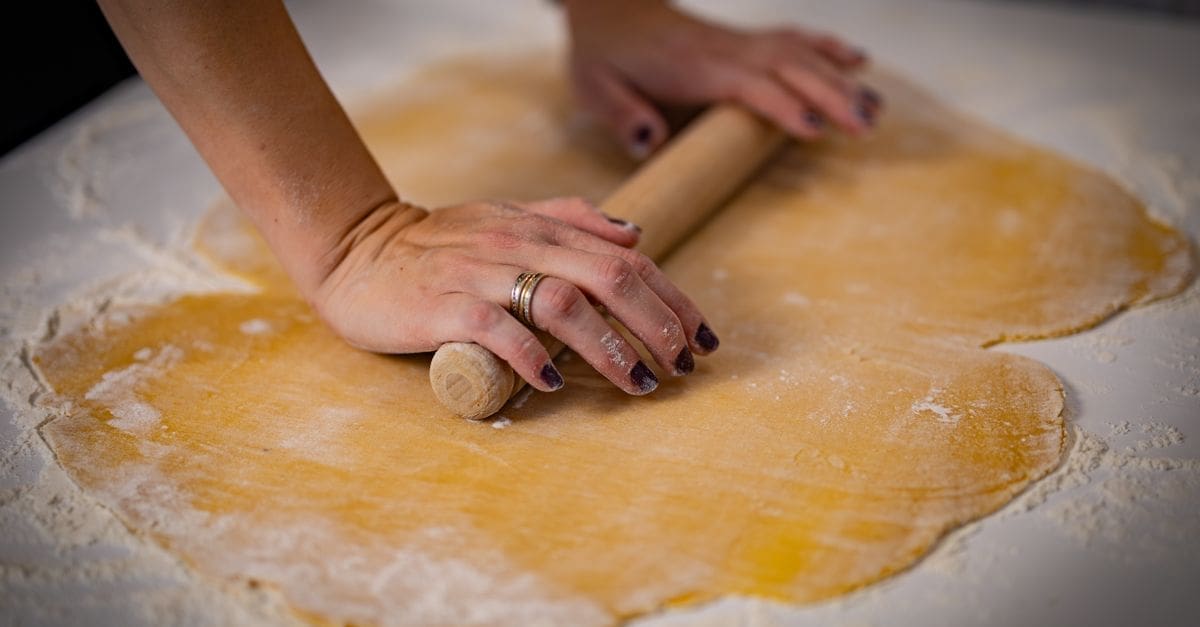
Rolling Pin Buying Guide: Style, Material and Weight
Rolling dough evenly has less to do with strength than with the weight and shape of the pin in your hands. French tapered pins let you feel the dough directly and pivot easily, while heavy rod-and-handle pins do the work through sheer mass. Material affects how much flour you need and how the surface behaves with sticky pastry. Matching the style to what you roll most keeps the choice straightforward.
Style: French, Tapered, or Handled
A straight French pin is a single dowel with no handles, giving direct contact with the dough and precise pressure control. Bakers who roll pastry and pie crust often prefer it because the hands sit right over the work.
Tapered pins narrow at both ends, which makes pivoting to roll circles almost effortless and suits pie and tart work. Rod-and-handle pins spin on an axle, letting the weight of the barrel flatten stiff dough while the hands stay still.
Material and Dough Interaction
Hardwood such as maple or beech is the traditional choice, warm to the touch and gentle on delicate dough, though it needs to stay dry and should never soak. It requires occasional mineral oil to prevent drying and cracking.
Stainless steel and marble stay cold, which helps keep butter firm in laminated pastry and shortcrust. Silicone-coated pins resist sticking with the least flour, useful for fondant and sticky enriched doughs, but they lack the heft that flattens stiff bread dough.
Weight and Diameter
Heavier pins do more of the flattening under their own mass, reducing arm effort on cold or firm dough. Lighter pins give more feedback and are easier to control for thin, delicate sheets where too much pressure tears the layers.
Barrel diameter shapes the contact patch. A wider barrel around two and a half inches flattens quickly with fewer passes, while a slimmer pin around two inches suits detailed work and small pastries where you want more control per stroke.
Length and Working Surface
Length determines how wide a sheet you can roll in one pass. A barrel of eighteen inches or more handles full pie crusts and large sheets of laminated dough without repeated repositioning.
Shorter pins in the ten to twelve inch range store easily and suit cookie dough or small batches, and they are far more manageable on a cramped counter. Consider both your usual batch size and the drawer or crock where the pin will live.
Thickness Rings and Guides
Some pins ship with removable rings that clip onto the ends and hold the barrel a set distance above the counter. They produce sheets of consistent thickness, which matters for cookies that must bake at the same rate.
Adjustable pins with graduated settings do the same job with a built-in mechanism. They add moving parts and cost, but they take the guesswork out of sugar cookies, pasta sheets, and any recipe where uneven thickness ruins the batch.
Care, Storage, and Longevity
Wooden pins should be wiped rather than washed, since submerging raises the grain and invites cracking. A light coat of food-safe mineral oil once in a while keeps the surface sealed against moisture and odors.
Metal and marble pins clean easily and can be chilled before use to keep butter cold. Store any pin flat or hanging rather than leaning in a crowded drawer, where knocks can dent a barrel and leave marks in every future sheet of dough.
What to Check Before You Buy
- Pick French or tapered for pastry control and rod-and-handle for stiff dough.
- Choose hardwood for feel, steel or marble to keep butter cold, silicone for sticky dough.
- Consider weight, with heavier pins doing more work and lighter ones giving more feedback.
- Check barrel diameter, since wider flattens faster and narrower gives finer control.
- Confirm the barrel is long enough for the sheets you usually roll.
- Look for thickness rings or adjustable settings if you bake cookies in batches.
- Verify the pin fits your storage drawer or crock without leaning against other tools.
How to Choose a Rolling Pin
Thinking through your usual dough and counter space points to the right style quickly.
- Identify the dough you roll most, from pie crust to cookies to pasta.
- Choose a style that matches, with tapered for circles and handled for heft.
- Pick a material based on whether you need cold surfaces or minimal sticking.
- Match barrel length to your largest usual sheet of dough.
- Decide whether thickness rings would improve your consistency.
- Confirm the weight feels manageable for the length of a full baking session.
Ready to shop? Browse our full list of Premium Rolling Pins to compare current options and prices.