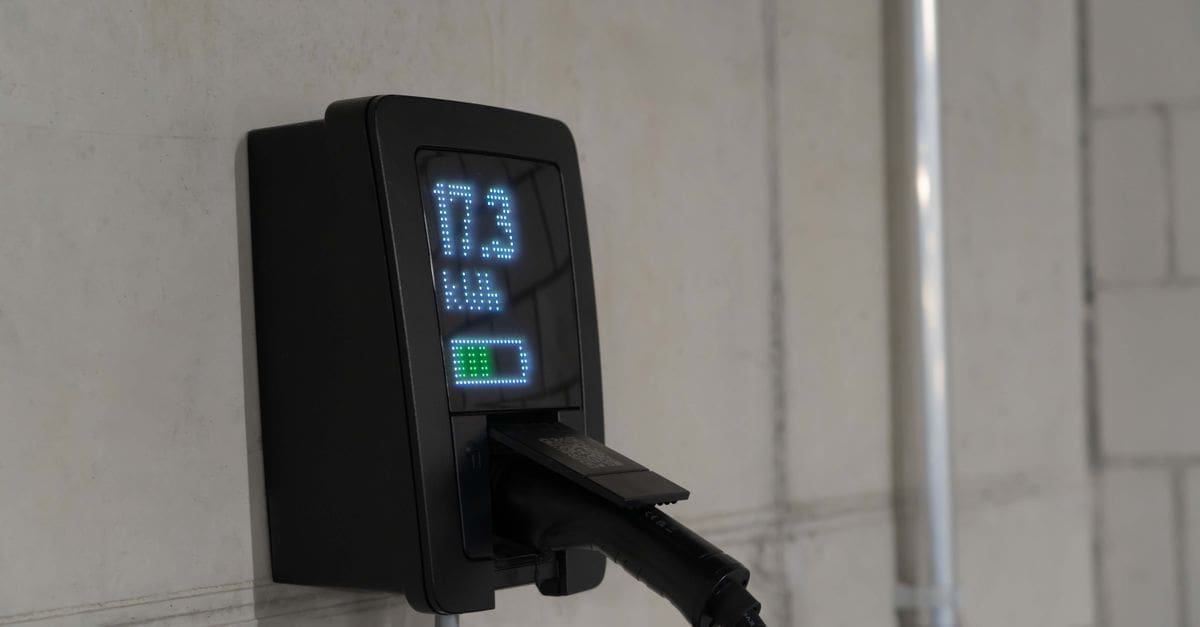
Smart EV Charger Guide: Amperage, Circuits and Load
Home charging equipment is rated by the current it delivers, and that figure has to match both your vehicle’s onboard charger and the circuit feeding the unit. Amperage beyond what the car accepts adds nothing, while a circuit that cannot supply the rating means derating or an expensive upgrade. Connector standard determines which vehicles can plug in directly. Scheduling against off-peak tariffs is where the connected features pay for themselves.
Power Rating, Amperage, and Real Charging Speed
Units are commonly available at 32, 40, and 48 amps, delivering roughly 7.7, 9.6, and 11.5 kilowatts on a 240 volt supply. The circuit must be rated at 125 percent of continuous load, so a 48 amp unit needs a 60 amp circuit.
Charging speed is capped by whichever is lower: the unit’s output or the vehicle’s onboard charger. Many vehicles accept only 32 or 40 amps, so paying for a 48 amp unit delivers no additional speed unless a future vehicle can use it.
Connector Standards and Vehicle Compatibility
Connector standards differ by region and manufacturer, and adapters exist for most combinations but add bulk and a potential failure point. Check which connector your current and likely next vehicle use before committing.
Units with a captive cable are simpler and always ready, while socketed units let you swap cables as standards change. The socketed approach adds flexibility at the cost of storing a heavy cable and having to plug in at both ends each time.
Hardwired Versus Plug-In Installation
Hardwired installation connects the unit directly to the circuit and is required for the highest current ratings. It is more permanent, generally more robust, and avoids the failure mode of a heavily loaded plug and receptacle.
Plug-in units connect to a dedicated high-current receptacle, which allows the equipment to be unplugged and taken to another property. Receptacles used daily at high current do wear, so quality of the outlet itself matters considerably in this arrangement.
Load Management and Panel Capacity
Many homes lack spare capacity for a high-current circuit, and a panel upgrade is a substantial expense. Dynamic load management monitors total household consumption and reduces charging current when other loads rise, often avoiding the upgrade entirely.
Some units share capacity between two charging points for households with two vehicles, splitting available current rather than requiring two full circuits. Confirm whether load management needs an additional sensor module and whether it operates independently of any cloud service.
Scheduling, Tariffs, and Cost Control
Charging overnight on a time-of-use tariff can halve the cost of the same energy. Scheduling from the unit rather than the vehicle keeps behaviour consistent when several drivers share the equipment.
Energy reporting per session shows exactly what charging costs, which matters for anyone claiming business mileage. Check whether the unit can respond automatically to a utility signal, since some suppliers offer reduced rates for equipment that participates in demand response.
Weather Rating, Cable Handling, and Durability
Outdoor units need a NEMA 4 rating or better to handle rain and wind-driven moisture. Operating temperature range matters in cold climates, where cables stiffen and become awkward to handle at low temperatures.
Cable length of twenty to twenty-five feet covers most driveway layouts, but longer cables are heavier and harder to store tidily. A holster and a cable management arm keep the connector off the ground, which prevents grit entering the contacts and extends the connector’s life considerably.
What to Check Before You Buy
- Confirm your vehicle’s maximum onboard charging rate before paying for higher amperage.
- Check panel capacity and remember the circuit must be rated at 125 percent of continuous load.
- Decide between hardwired and plug-in based on permanence and current rating.
- Verify the connector standard matches your current and likely next vehicle.
- Consider dynamic load management if panel capacity is limited.
- Confirm scheduling runs on the unit rather than depending on a cloud service.
- Check the weather rating and cold-weather operating range for outdoor installation.
How to Choose an EV Charger
Electrical capacity and vehicle limits set the ceiling; features fill in below it.
- Check your vehicle’s maximum accepted charging current.
- Have your panel assessed for available capacity and spare breaker space.
- Select an amperage rating that matches the lower of vehicle and circuit capability.
- Decide on hardwired or plug-in installation and confirm connector type.
- Add load management if a panel upgrade would otherwise be required.
- Confirm weather rating, cable length, and that scheduling works locally.
Ready to shop? Browse our full list of Smart EV Chargers to compare current options and prices.