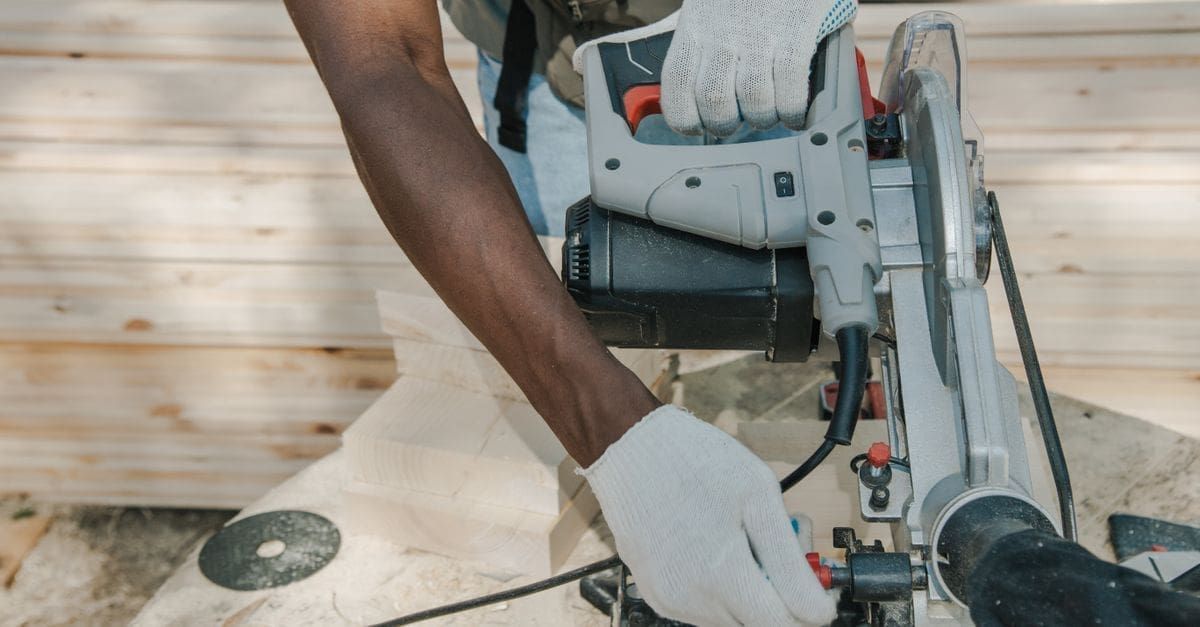
What to Know Before Buying a Circular Saw
A circular saw is the most versatile cutting tool for construction, carpentry, and DIY projects involving sheet goods, lumber, and boards. The right circular saw depends on what you’re cutting, how often you’ll use it, and whether you need the freedom of cordless operation or the consistent power of a corded model. Key specs to evaluate are blade diameter, motor amperage, maximum depth of cut, bevel angle capacity, and the quality of the blade guard and base plate. Understanding these specs before buying prevents choosing an underpowered saw for demanding cuts or an overpowered one that’s unnecessarily heavy for occasional use.
Blade Size and Depth of Cut
The most common circular saw blade sizes are 6.5 inch and 7.25 inch. A 7.25-inch blade can cut through lumber up to 2.5 inches thick at 90 degrees and 1.75 inches at 45 degrees—enough for most dimensional lumber and plywood. A 6.5-inch blade is adequate for sheet goods and lighter framing but limits your depth capacity for thicker stock.
Maximum depth of cut is the spec that tells you the most material you can cut in a single pass. Compare this against the thickest material you typically work with. For cutting 4×4 lumber in a single pass, you need a saw with at least a 2.5-inch depth capacity at 90 degrees, which a standard 7.25-inch saw handles comfortably.
Corded vs. Cordless
Corded circular saws deliver consistent power throughout use without battery fatigue, making them better for extended cutting sessions and heavy-duty applications like cutting many sheets of plywood. They’re typically more affordable and lighter at the same amperage level compared to cordless equivalents. The limitation is the cord, which restricts movement and requires proximity to an outlet.
Cordless circular saws offer mobility for job sites without power access, roofing work, or cutting in the middle of a large space. Modern brushless motor designs at 18 to 20V deliver performance close to corded models for moderate use. Battery runtime limits extended cutting sessions, particularly on dense materials. If you already own a battery platform, a cordless saw on the same platform is more economical than buying a different brand.
Motor Amperage and Cutting Power
Corded circular saws range from 10 to 15 amps. A 15-amp saw handles hardwood and thick sheet goods without bogging down. A 10 to 12-amp model is sufficient for framing softwood and plywood. Motor amperage is the primary power indicator for corded saws—higher amperage means more torque available for tough cuts.
For cordless models, motor quality (brushless vs. brushed) and battery voltage matter more than listed wattage. Brushless motors extract more power from the same battery and run cooler, extending both runtime and motor life. Avoid choosing a cordless saw based on wattage claims alone—look for brushless motor designation and test reviews from independent sources.
Bevel Capacity and Angle Adjustment
Bevel capacity determines how far the blade can tilt for angled cuts. Most standard circular saws bevel to 45 degrees, which covers common miter cuts in framing and trim work. Some saws offer 56-degree bevel capacity for more acute angles. A dual-bevel saw that tilts both left and right is rare in circular saws but eliminates flipping the workpiece for cuts from both directions.
Bevel adjustment should lock positively at common angles—0, 22.5, and 45 degrees—with a readable scale. Loose or imprecise bevel adjustment leads to angled cuts that are off by a degree or two, which compounds into visible gaps in trim work. Check that the bevel lock is accessible with one hand while holding the saw.
Base Plate, Blade Guard, and Ergonomics
The base plate (shoe) should be flat, rigid, and made from heavy-gauge aluminum or magnesium—not stamped thin sheet metal that flexes. A flat shoe is critical for accurate cuts along a straight edge or guide rail. Magnesium shoes are lighter than aluminum while maintaining rigidity. Check user reviews for reports of a warped or flimsy shoe.
The lower blade guard must retract smoothly and spring back fully each time to prevent the blade from being exposed after cuts. A guard that sticks or doesn’t fully retract is a safety hazard. Front-facing depth adjustment levers and bevel adjustments that can be reached without awkward hand placement reduce fatigue during extended cutting.
What to Check Before You Buy
- Confirm the blade diameter provides sufficient depth of cut for your thickest material
- Decide between corded for consistent power and cordless for mobility
- For corded saws, choose at least 15 amps for hardwood or heavy cutting; 10 to 12 amps is adequate for general use
- For cordless, look for brushless motor designation for better runtime and longevity
- Check the bevel range and confirm it locks securely at 45 degrees
- Inspect the base plate material—aluminum or magnesium, not thin stamped metal
- Verify the lower blade guard retracts and springs back fully
How to Choose a Circular Saw
Start with your material thickness and job site power situation before comparing features.
- Identify the thickest material you’ll cut to determine the minimum blade diameter needed
- Decide between corded and cordless based on your work environment and battery platform
- Set the minimum amperage or voltage based on the hardness and thickness of your typical material
- Check bevel capacity against the angles you regularly need
- Evaluate base plate rigidity and blade guard quality as safety and accuracy factors
- Compare weight for fatigue considerations if you’ll be using the saw for extended periods overhead or on a ladder
Ready to shop? Browse our full list of Circular Saws to compare top-rated options.