
What to Know Before Buying a Facial Cleansing Brush
Facial cleansing brushes work by providing mechanical cleansing action on top of your cleanser — the oscillating or rotating bristles or silicone nubs dislodge makeup, dead skin cells, and debris more thoroughly than hands alone. The difference between sonic vibration and manual rotation matters, as does bristle material (nylon vs. silicone), head size, and speed settings. Overuse is the most common problem — cleansing brushes used too aggressively or too frequently cause more irritation than they solve.
Sonic vs. Rotating/Oscillating
Sonic cleansing brushes vibrate at high frequency (up to 300+ movements per second) without circular rotation. The rapid vibration creates microfluidic currents in the cleanser that loosen debris without the mechanical scrubbing action of rotation. Sonic brushes are gentler than rotating models and are better tolerated by sensitive skin.
Rotating or oscillating brush heads spin in one direction or alternate directions (oscillating). The rotation provides more noticeable physical exfoliation but also more friction — which is effective for removing stubborn makeup and product buildup but more likely to cause irritation on reactive or compromised skin. For daily use, sonic is generally more appropriate; for occasional deeper cleansing sessions, oscillating can be effective.
Bristle Type: Nylon vs. Silicone
Nylon bristle brushes provide more thorough cleansing through micro-filaments that reach into pores more effectively than silicone. The tradeoff is that nylon bristles harbor bacteria more readily — they require regular cleaning and replacement (typically every 3 months) to avoid reintroducing bacteria to the face during cleansing. Bristle softness matters: ultra-fine, densely packed nylon is gentler than coarser, more widely spaced bristles.
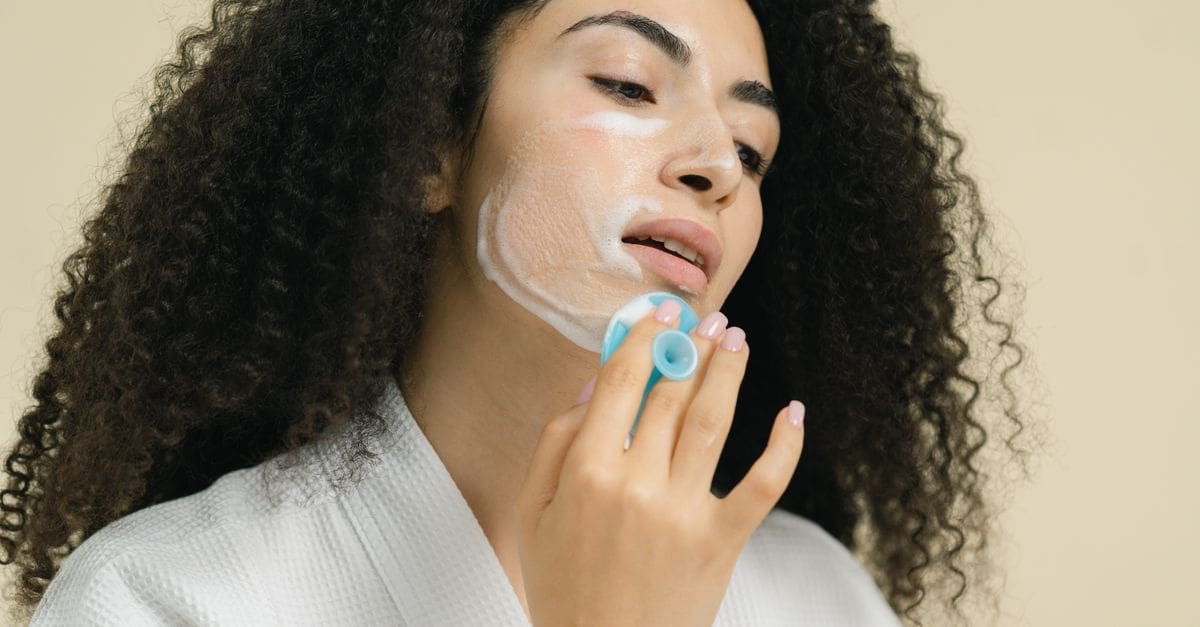
Silicone cleansing brushes use raised nubs or ridges to provide cleansing action. They’re non-porous, don’t harbor bacteria, and are essentially self-sanitizing. The cleansing action is gentler than nylon and doesn’t penetrate as deeply into pores, but silicone brushes are more hygienic and more suitable for daily use without the replacement schedule. For sensitive skin or anyone concerned about bacteria on brush heads, silicone is more practical.
Speed Settings
Multiple speed or intensity settings allow you to use a gentler mode on sensitive areas (around the eyes, nose, and jawline) and a higher setting on areas needing more thorough cleansing (forehead, T-zone). A single-speed brush is less versatile and often defaults to an intensity appropriate for normal skin that may be too aggressive for sensitive areas or not thorough enough for heavy product buildup.
For beginners, starting on the lowest setting and using the brush only twice or three times per week is safer than immediate daily high-intensity use. The skin takes time to adjust to mechanical cleansing, and starting aggressively causes the micro-irritation and barrier disruption that makes people abandon the product.
Head Size and Coverage
Standard brush heads are designed for cheeks, forehead, and chin — the larger flat areas. Smaller precision heads target the nose, under-eye area, and lip perimeter where product buildup is common but the skin is thinner and more contoured. Brushes that come with interchangeable head sizes are more versatile.
Head size also determines how long a full face cleansing takes. Smaller heads cover less area per movement and require more passes for full face coverage. For a quick daily cleanse, a standard head is more efficient; for thorough targeted work, smaller heads are more precise.
Water Resistance and Battery
A facial cleansing brush should be at minimum water-resistant for sink use — brush heads that corrode or handles that short circuit after a few weeks of water exposure are a common complaint on budget models. IPX5 (water jet resistant) is the minimum practical rating for shower use; IPX7 (submersion) allows the brush to be used and rinsed in the shower freely.
Rechargeable models with USB charging are more convenient than AA or AAA battery models. Inductive charging (waterproof coil system) is the cleanest for fully waterproof models. Battery life on quality models typically runs 2–4 weeks between charges at daily use.
What to Check Before You Buy
- Decide between sonic and rotating based on skin sensitivity — sonic for sensitive skin, rotating for thorough occasional deep cleanse.
- Choose bristle type — silicone for hygienic daily use, nylon for deeper pore cleansing with replacement schedule.
- Verify multiple speed settings are included for versatility across face zones.
- Check head size and whether precision heads are available for targeted areas.
- Confirm water resistance rating — IPX5 minimum for sink use, IPX7 for shower use.
- Verify brush head replacement availability and cost for nylon models.
- Check battery type — prefer USB rechargeable over disposable batteries.
- Start with low speed and 2–3 uses per week to allow skin to adjust before daily use.
How to Choose a Facial Cleansing Brush
Choosing a facial cleansing brush comes down to skin sensitivity, hygiene preference, and how you incorporate it into your routine.
- Decide on sonic or rotating based on how your skin responds to mechanical cleansing.
- Choose silicone for hygienic, low-maintenance daily use or nylon for deeper cleansing with a replacement schedule.
- Confirm multiple speed settings for adaptable use across sensitive and less sensitive face zones.
- Check water resistance rating against where you plan to use it.
- Verify replacement head availability if buying a nylon-bristle model.
- Plan frequency — start at 2–3 times per week and adjust based on how skin responds.
Ready to shop? Browse our full list of Facial Cleansing Brushes to compare top-rated options.


