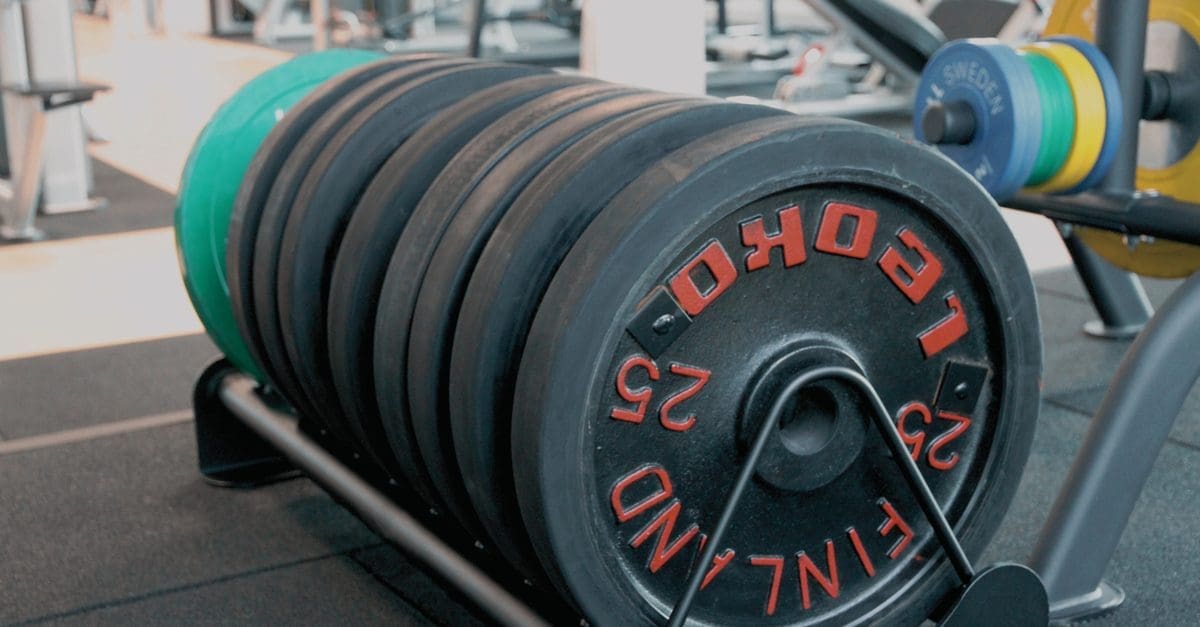
What to Look for in Weight Plates
Tolerance on the stated weight matters more than most buyers expect, because a plate marked forty-five pounds can drift several percent either way on budget sets. Coating, collar-hole fit on your bar, and whether the plates are bumper or iron shape how they load, drop, and last. Diameter and thickness decide how many plates fit on a sleeve and how a loaded bar behaves. Matching plate type to your lifts and flooring keeps training smooth and your bar spinning true.
Plate Type: Bumper Versus Iron
Rubber bumper plates share a uniform diameter so a loaded bar sits at the right height even with light weight, and they absorb the shock of a dropped lift. Cast iron plates pack more weight into less width, which suits pressing and slow strength work where you never drop the bar.
Bumpers protect your floor and bar during Olympic lifts, but they cost more and take up sleeve space fast. Iron is denser and cheaper per pound, though dropping it risks cracking plates and damaging both the bar and the ground.
Weight Tolerance and Accuracy
Quality plates state a tolerance, often within one to three percent, so a matched pair loads evenly on each side of the bar. Cheaper plates skip calibration, and an uneven pair throws off balance during a heavy lift.
Calibrated plates cost more but hold tight tolerances that competitive lifters rely on. For general training, a modest tolerance is fine as long as left and right sides roughly match to keep the bar level.
Coating and Corrosion Resistance
Rubber and urethane coatings resist chips, quiet the clang of loading, and protect floors, with urethane holding its finish longest. Raw or painted iron is cheaper but rusts in a humid garage and flakes where plates knock together.
Powder-coated iron sits between the two, shedding light moisture while keeping the slim profile of bare metal. Consider how humid your space is, since bare cast iron needs wiping and occasional oiling to stay clean.
Collar Opening and Bar Fit
Standard bars use a one-inch hole while Olympic bars need a two-inch opening, and a mismatch makes plates rattle or refuse to seat. A snug bore keeps plates from sliding and clanking as you lift.
Machined bumper plates often have a steel or brass insert that resists wallowing out over years of loading. A loose fit accelerates wear on both the plate hole and the bar sleeve, so confirm the bore matches your bar.
Diameter, Thickness, and Loadability
Olympic bumper plates share a standard diameter, but thin iron plates let you stack more total weight on a sleeve before running out of room. Thick rubber bumpers fill a sleeve quickly, which limits maximum loading on a standard bar.
Handles or cutouts on larger plates make carrying and loading easier, sparing your fingers when moving a stack. Check the sleeve length on your bar against how wide your target load will sit.
Set Composition and Increments
A useful starter set spans small change plates through larger jumps so you can add weight in sensible steps as you progress. Micro plates in the low single-digit range let you nudge a lift up without stalling on a big increment.
Buying a graduated set costs less than piecing plates together later and keeps increments consistent. Think about your current lifts and near-term goals so the set covers the loads you will actually use.
What to Check Before You Buy
- Decide between bumper and iron based on whether you drop the bar and your flooring.
- Check the stated weight tolerance so matched pairs load evenly on the bar.
- Match the collar opening to your bar: one inch standard or two inch Olympic.
- Consider the coating against your space’s humidity to avoid rust and chips.
- Compare plate thickness against your bar’s sleeve length for maximum loading.
- Look for handles or cutouts on larger plates to ease carrying and loading.
- Choose a set with small increments so you can progress in sensible steps.
- Confirm bumper plates have a durable insert that resists wallowing over time.
How to Choose Weight Plates
Begin with your lifts and flooring, then weigh plate type, accuracy, and increments against the bar you own.
- Decide whether you drop the bar, which points toward bumper plates and floor protection.
- Confirm your bar’s sleeve size so the collar opening seats snugly.
- Check the weight tolerance if you want evenly matched pairs for heavy work.
- Pick a coating that suits your space’s humidity and noise tolerance.
- Compare plate thickness to your sleeve length for the loads you plan to reach.
- Choose a graduated set with small increments to keep progression smooth.
Ready to shop? Browse our full list of Weight Plates to compare current options and prices.