What to Look for in Adjustable Dumbbells Before You Buy
Adjustable dumbbells replace a full rack of fixed weights with a single compact pair, which makes them one of the most space-efficient strength training tools available for home use. Before buying, the most important things to think through are the weight range you actually need for the exercises you plan to do, how the adjustment mechanism works under real training conditions, and whether the handle dimensions are comfortable for your hand size and grip style.
Start with the weight range you actually need
Adjustable dumbbells come in a wide range of maximum weights, from 25-pound entry-level pairs up to 90- or 120-pound sets for advanced lifters. Buying a higher maximum than you’ll realistically reach is wasteful, but underbuying is equally problematic — you’ll outgrow the set within months. A good starting point is to identify the heaviest weight you currently use for compound movements like rows or goblet squats, then buy a set with a maximum about 20 to 30 percent above that to leave room to progress. Most intermediate home gym users find a 50-pound-per-dumbbell maximum covers the majority of exercises without paying for range they won’t use.
Adjustment mechanisms — speed and reliability differ significantly
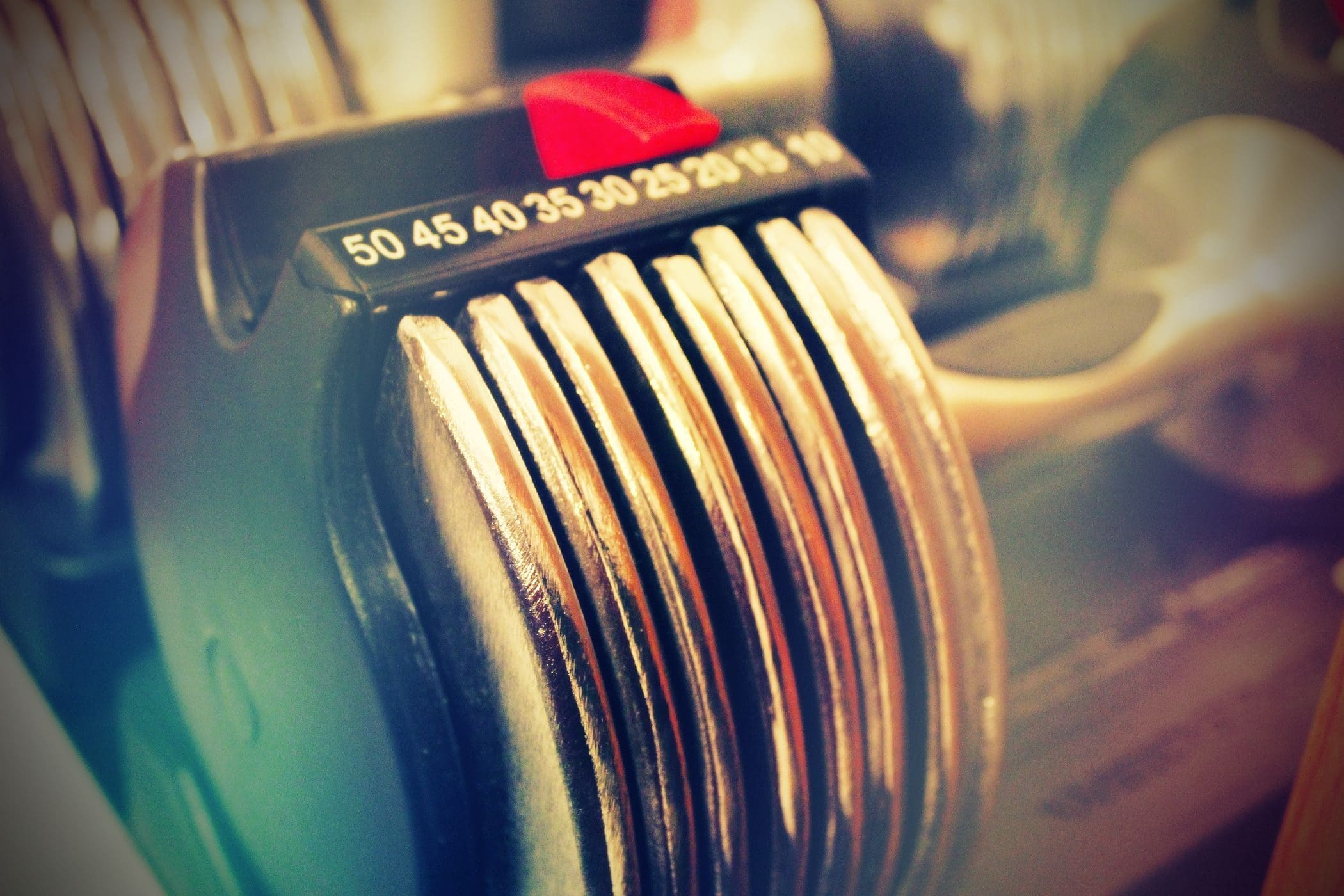
The adjustment mechanism determines how quickly you can change weights between sets, and different systems make very different tradeoffs. Dial-based systems — where you twist a selector to a weight increment and lift the dumbbell out of the tray — are the most popular for home use because adjustment takes about three seconds. Pin-based systems use a sliding selector pin and are similarly fast. Selectorized plate systems, where you pull a tab and the unused plates stay in the cradle, tend to be slightly slower. Increment size also matters: sets that adjust in 2.5-pound increments give more precision than 5-pound jumps, which matters more for isolation exercises than compound movements. Whichever system you choose, adjustment speed only stays fast when the mechanism is clean and undamaged — dropping adjustable dumbbells or rough handling degrades the selector over time.
Handle dimensions affect grip and exercise comfort
Handle diameter, knurling texture, and overall handle length all affect how the dumbbell feels during different exercises. Thicker handles are better for grip strength work but can cause fatigue during higher-rep sets for people with smaller hands. Handle length is worth checking specifically for exercises like close-grip movements or lateral raises — some adjustable dumbbell handles are longer than standard fixed dumbbells because they need to accommodate the plate-stacking mechanism, which can feel awkward if the weight balance point shifts. Look for handles with moderate knurling, not aggressive diamond-cut patterns that cause palm abrasions during longer sets.
Storage tray footprint and durability under regular use
Every adjustable dumbbell system requires its storage tray to function — the dumbbell must return to the tray for the mechanism to engage properly when changing weights. The tray footprint is typically about 16 to 18 inches long and 8 to 10 inches wide per dumbbell. Most full sets require a dedicated bench or stand to keep the trays at a usable height; placing them on the floor means bending over every time you adjust, which gets old quickly. Durability is a real variable between brands: sets with metal weight plates and a well-machined selector last longer than those with injection-molded plastic plates, which can crack over time. Most manufacturers void the warranty if the dumbbells are dropped, so factor that into your decision if you train in a way that involves set-ending drops.
Where adjustable dumbbells fall short compared to fixed weights
Adjustable dumbbells work well for most controlled exercises — curls, rows, presses, lateral raises, lunges — but they have real limitations in certain contexts. Explosive movements like dumbbell snatches or high-pull exercises put stress on the selector mechanism in ways it wasn’t designed to handle, and some competition-style Olympic movements require the kind of grip freedom that adjustable handles don’t provide. If you regularly drop weights at the end of a heavy set, adjustable dumbbells are a poor fit for your training style. They’re also slower to adjust than reaching for a fixed pair from a rack, which matters during timed or superset training where rest intervals are short.
What to check before you buy adjustable dumbbells
- Identify the maximum weight you’ll realistically need within the next 12 months before choosing a set’s range
- Check the adjustment increment — 2.5 lb vs 5 lb jumps matters more for some exercises than others
- Measure your available floor or bench space for the tray footprint before buying
- Look at reviews specifically mentioning handle comfort, especially for high-rep and isolation exercises
- Check the weight of the plate material (plastic vs metal) and what the warranty says about drops
- Consider whether you’ll want a matching stand — bending to tray level repeatedly adds up
How to choose adjustable dumbbells
Work through these steps before you buy:
- List the exercises you plan to do and note the heaviest weight you currently use for each — buy a set with a maximum about 20–30% above your current heaviest working weight.
- Decide how important fast adjustment is to your training style — if you frequently do drop sets or supersets with different weights, prioritize a dial or pin-based mechanism over slower selectorized systems.
- Check the increment size to make sure fine adjustments are possible for exercises where 5-pound jumps feel too large.
- Measure the space available and decide whether you’ll also need a stand — budget for both if you’ll store them off the floor.
- Check handle length and diameter in reviews, especially if you have smaller hands or plan to do close-grip exercises.
- Confirm the warranty terms and what they say about drops before choosing a set if heavy or fatiguing lifts are part of your routine.
Ready to shop? Browse our full list of Adjustable Dumbbells to compare top-rated options.